 What are the differences in demand between Oil-immersed transformers and Dry-type transformers in Africa
Jul 29, 2026
In Africa, the demand for oil-immersed and dry-type water treatment systems differs significantly—oil-immersed systems overwhelmingly dominate in terms of quantity, while dry-type systems represent a niche growth driver characterized by "small scale and high growth rate." They are not competing in the same arena, but rather serving entirely different scenarios. In terms of unit quantity, the African transformer market is characterized by "Oil-immersed transformers being the majority".
l Why is there a much greater demand for oil-immersed containers in Africa?
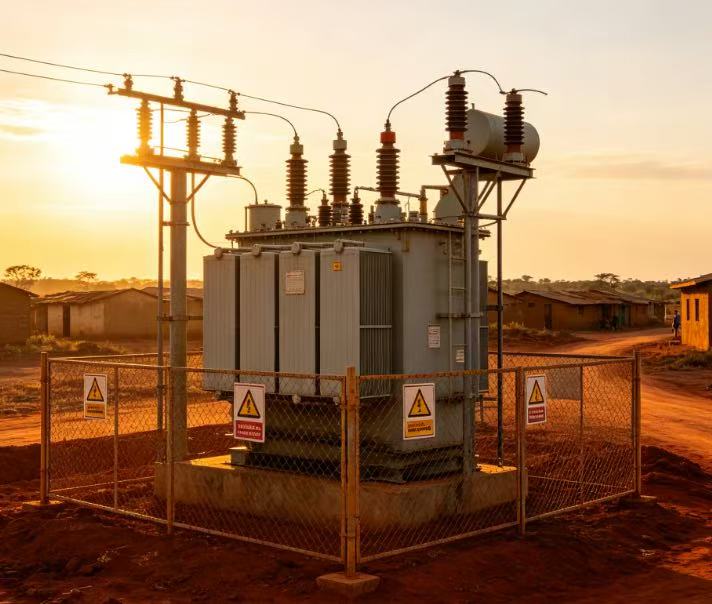
Africa's natural environment and socioeconomic conditions are almost tailor-made for Oil-immersed transformers:
1. Adaptability to extreme high-temperature environments: Temperatures in Africa (especially North Africa, the Sahel, and the Gulf region) often exceed 50°C. Oil-immersed transformers use insulating oil as their cooling medium, and their thermal management system remains stable at high temperatures; Dry-type transformers rely on air convection for heat dissipation, which significantly reduces their efficiency in high-temperature environments. This is the core physical reason why Oil-immersed transformers dominate in North Africa, the Sahel, and the Gulf region.
2. Outdoor Scenarios Dominate Africa's electricity demand primarily comes from: Rural electrification (outdoor pole-mounted/ground-mounted transformers)、Mining microgrids (open-pit mines)、 Distributed photovoltaic power stations Urban power grid expansion (outdoor box-type transformers). Over 90% of these scenarios are outdoors, and Oil-immersed transformers outperform Dry-type transformers in terms of cost-effectiveness, strong overload capacity, and weather resistance.
3. Cost Sensitivity
Standard oil-immersed distribution transformers cost approximately $15-30/kVA, while Dry-type transformers cost $30-50/kVA, more than double the price. In most African countries and projects with tight budgets, Oil-immersed transformers are preferred over Dry-type transformers whenever possible.
4. Technological Maturity and Ease of Maintenance
In Africa, there is a shortage of local skilled workers. Oil-immersed systems are mature equipment with globally applicable inspection and maintenance systems. Dry systems, on the other hand, require more technical expertise from maintenance personnel should problems occur.
However, with the increase in urbanization rates in Africa, the accelerated construction of data centers in South Africa, Nigeria, and Kenya, and the development of commercial real estate, the proportion of dry-type roofing will continue to climb from the current penetration rate of ~17%, and is expected to reach 30%+ in the commercial building sector around 2030. Even so, in terms of unit numbers, the overwhelming advantage of oil-immersed roofing in Africa is unlikely to be shaken in the next 10-15 years.
Read More




 IPv6 network supported
 en
en fr
fr es
es