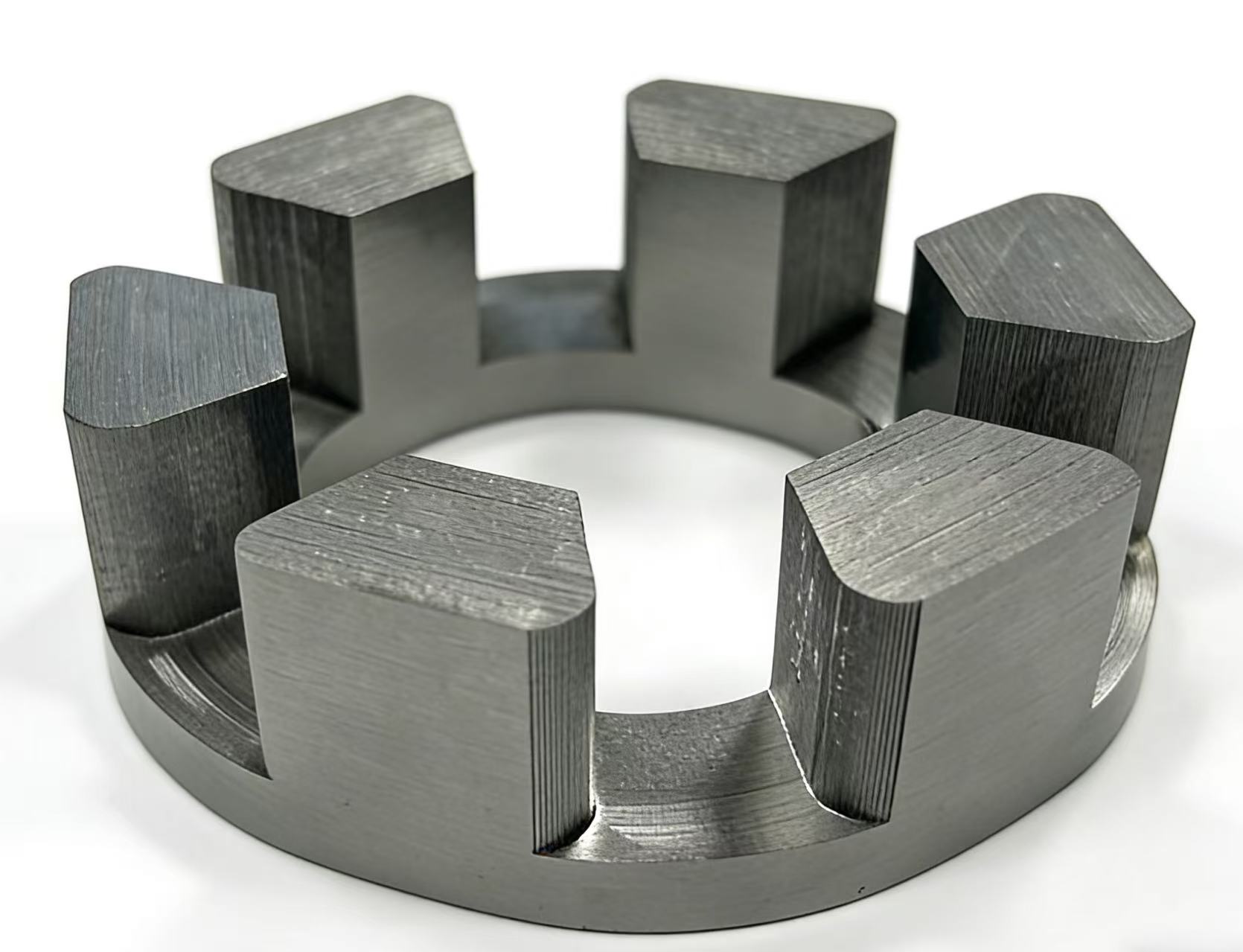
 In what situations would an Axial core be used?
Sep 09, 2026
The application of axial cores is primarily concentrated in scenarios with an extreme pursuit of "thinness, lightness, and high torque density." Its essence is a flat electromagnetic conversion core, so wherever there is a need to "make the motor flat, light, and powerful," it will be found.
Currently, the more mature and cutting-edge applications are mainly concentrated in the following areas:
1. New Energy Vehicles: In-Wheel Motors and Main Drive Motors
This is currently the most watched and imaginative application scenario.
In-Wheel Motors: The motor is directly inserted into the wheel. The flat shape of the axial core perfectly fits the limited space inside the wheel, and its inherent high torque characteristics allow it to directly drive the wheel, eliminating the need for a reducer and differential. Mercedes-Benz, Ford, GM, BYD, Dongfeng, and other automakers have related in-wheel motor concept cars or mass production plans, with the axial core being the core component.
Hybrid/Pure Electric Main Drive: Some high-end models are beginning to use axial flux motors as auxiliary drive on the front or rear axle. Due to its extremely short length, it can be easily placed between the engine and transmission, or nestled in a chassis gap, without occupying valuable cabin space.
2. Joint Motors for Humanoid Robots
Humanoid robot joints require extremely high power and torque density, while maintaining a very compact size.
Traditional radial motors are often too long, protruding outside the joint and affecting aesthetics and flexibility.
Axial motors, with their flattened shape, can be perfectly integrated into the joints of robot arms and legs, like a "muscle package." Many are researching or already using axial iron-core motors to achieve more natural movements and greater explosive power.
3.Industrial Automation and Machine Tools: High-Speed Spindles and Servo Motors
High-Speed Spindles: Axial cores, due to their short magnetic circuits and low iron losses, are ideal for high-frequency, high-speed rotating spindles. For example, the spindles of PCB drilling machines and engraving machines can reach speeds of tens of thousands or even hundreds of thousands of revolutions per minute (RPM). Axial cores effectively reduce heat generation and energy loss.
Servo Motors: In automated equipment requiring rapid start-stop and precise positioning (such as the seventh axis of a robot and packaging machinery), the low inertia of axial motors allows for extremely fast response times, making them more suitable than traditional radial servos.
4.Home Appliances & Consumer Electronics
Air Conditioner Compressors: Some high-end Japanese air conditioners are beginning to use axial core motors in their inverter compressors. Its flat structure allows for a shorter overall compressor profile, making it easier to integrate into ceiling or wall-mounted units.
Vacuum Cleaners & Hair Dryers: While radial structures are the mainstream for high-speed digital motors from some high-end brands, axial solutions are under research. Axial motors allow for shorter overall lengths, making them more comfortable to hold, while maintaining high suction power.
Drones/Flying Cars (eVTOL): For electric vertical takeoff and landing (eVTOL) aircraft, every gram of weight is critical. The high power density and lightweight advantages of axial core motors are amplified here, and many eVTOL projects utilize axial topology for their propeller motors.
Read More

 en
 fr
 es



 IPv6 network supported