内页banner
Search
Home

Search

  • Why choose ultra-thin non-oriented electrical steel? Why choose ultra-thin non-oriented electrical steel?
    Nov 05, 2025
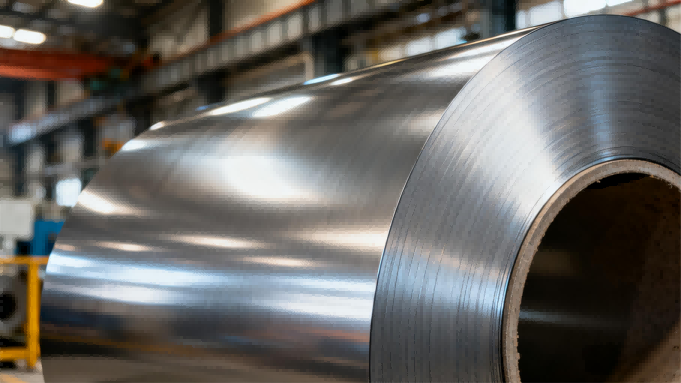
    Today, with increasingly strict energy efficiency standards for motors and transformers, ultra-thin non-oriented electrical steel is becoming a key material for enhancing the performance of electromagnetic equipment. So, why are more and more engineers choosing this material? Significantly reduce core loss The greatest advantage of ultra-thin non-oriented electrical steel lies in its outstanding energy-saving capacity. As the thickness decreases (typically 0.10mm-0.25mm), the eddy current loss of the material in an alternating magnetic field significantly reduces. Especially in medium and high-frequency application scenarios, the iron loss can be reduced by 30% to 50%, which is crucial for improving the efficiency of the motor.   Enhance the efficiency and power density of motors Modern motor design pursues higher power density and energy efficiency grades. Ultra-thin non-oriented electrical steel, with its excellent magnetic permeability and low loss characteristics, enables motors to achieve a smaller volume while maintaining the same output power, meeting the requirements of compact design.   Optimize high-frequency performance With the development of power electronics technology, the driving frequency of motors is constantly increasing. Traditional silicon steel experiences a sharp increase in loss at high frequencies, while ultra-thin non-oriented electrical steel is specifically optimized for high-frequency applications and can maintain stable magnetic properties within the frequency range of 400Hz to 2000Hz.   Adapt to the demands of intelligent manufacturing Ultra-thin non-oriented electrical steel features excellent stamping performance and surface quality, making it suitable for high-speed automated production. Its consistent material properties ensure the stability of motor performance in mass production, providing a reliable material basis for intelligent manufacturing.   Conclusion Choosing ultra-thin non-oriented electrical steel is not merely about selecting a material; it is about choosing higher energy efficiency standards, more compact design solutions, and superior high-frequency performance. With the continuous improvement of energy-saving requirements, this material is bound to become the mainstream choice in the motor industry.
    Read More
  • Which Motors Is Used In Drones?
    Sep 22, 2025
    The types of motors used in drones mainly depend on their size, purpose, and performance requirements. Generally speaking, the vast majority of consumer and industrial drones use brushless motors, while some micro or toy drones may adopt brushed motors or special hollow cup motors. When choosing a motor, the following points need to be comprehensively considered: 1. Types and uses of drones: Clearly define whether your drone is for aerial photography, racing, agricultural spraying or heavy-lift transportation. 2. Total weight and load: Estimate the total take-off weight of the drone, including the frame, battery, camera and all other equipment. This determines the total thrust you need. 3. Propeller matching: Motors and propellers need to be optimally matched. Large propellers go with low KV motors, and small propellers go with high KV motors, following the principle of "big with low, small with high". It's best to refer to the "motor-propeller thrust table" provided by the motor manufacturer for selection. 4. Battery voltage: The KV value of the motor needs to be matched with the battery voltage (such as 3S, 4S, 6S, etc.) to ensure the motor operates within an appropriate power range. How to understand motor parameters: 1. KV value: The KV value represents the increase in rotational speed (RPM/V) that a motor can achieve for each additional volt of voltage in an unloaded state. A higher KV value means a faster motor speed but relatively smaller torque. Motors with high KV values are typically paired with small propellers for racing drones; while low KV value motors focus more on torque output and can drive larger propellers, making them suitable for agricultural and logistics drones that require greater load capacity and stability. 2. Stator size: Usually expressed as diameter*height (e.g., 100*33mm). Under the same KV value, a larger stator size generally indicates greater power and torque potential for the motor. 3. Rated power: The power at which a motor can operate continuously, directly affecting the load capacity and continuous flight performance of a drone. The power of motors for industrial drones is significantly higher than that for consumer drones. 4. Matching and efficiency: The motor, electronic speed controller (ESC), propeller, and battery need to be properly matched to achieve optimal performance. An unmatched configuration may lead to low efficiency, overheating, or even damage.   The motors of consumer-grade drones focus on high integration, low noise and efficiency; the motors of industrial-grade drones, on the other hand, aim for high torque, high reliability and strong load capacity, with significantly increased power; while the motors in the DIY market (such as Hobbywing and T-Motor) offer enthusiasts a wide range of performance options and customization space.
    Read More

  • Do you know the classification of control motors? Do you know the classification of control motors?

    Dec 05, 2023
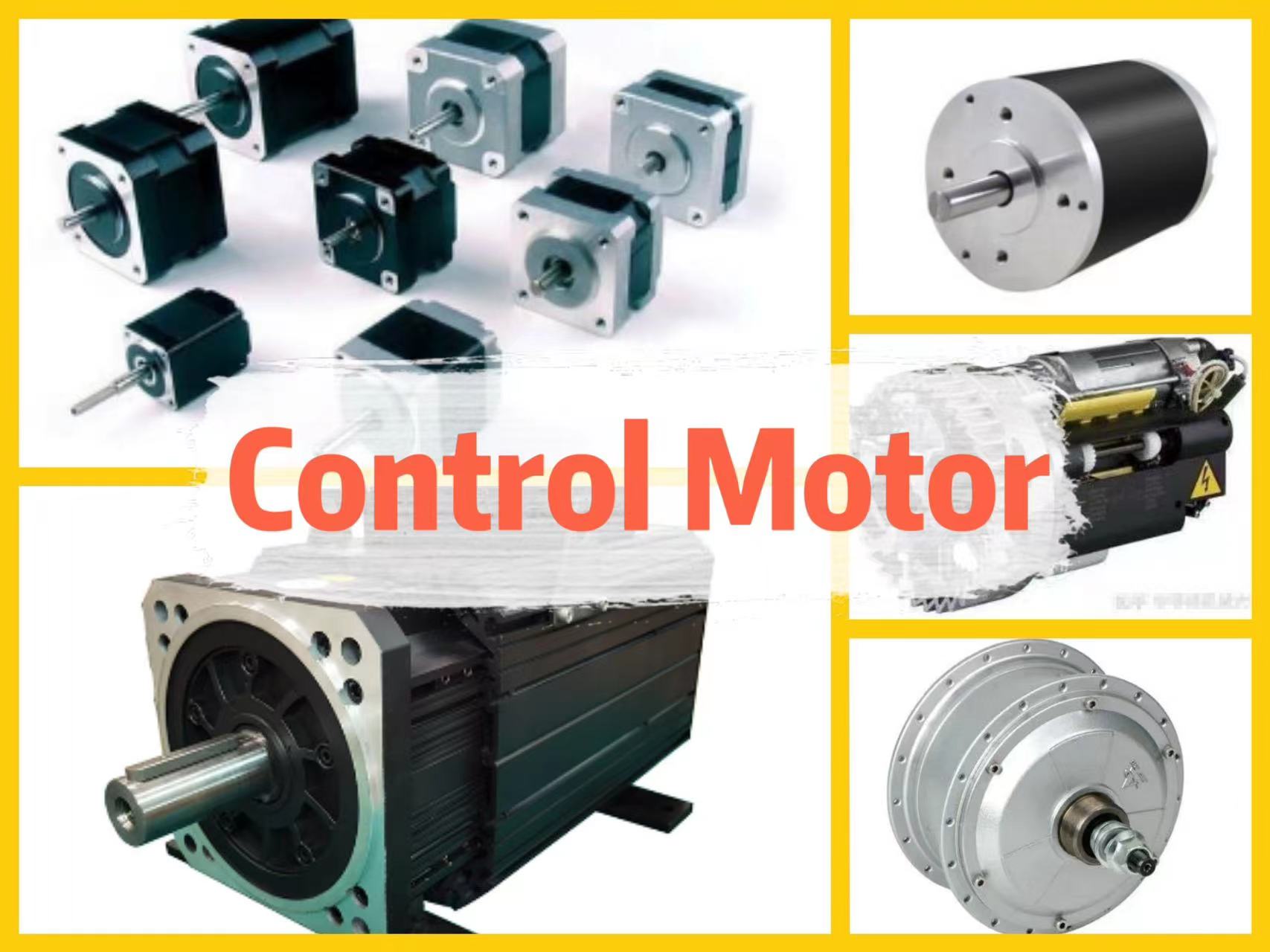
    Control motors can be categorized into different types based on their functionality and application. The classification includes servo motors, stepper motors, torque motors, switched reluctance motors, and brushless DC motors. 1. Servo Motors Servo motors are extensively used in control systems for precise speed and position control. They convert input voltage signals into mechanical output, allowing controlled components to be manipulated. Servo motors are available in both DC and AC variants, with AC permanent magnet synchronous and DC brushless motors being commonly used. 2. Stepper Motors Stepper motors translate electrical pulses into angular displacement. By controlling the number of pulses, precise positioning, speed regulation, and acceleration can be achieved. Common types of stepper motors include reactive stepper motors, permanent magnet stepper motors, hybrid stepper motors, and single-phase stepper motors. 3. Torque Motors Torque motors are flat multi-pole permanent magnet DC motors designed to minimize torque and speed pulsations. They exhibit a good response and their output torque is proportional to the input current, regardless of rotor speed or position. Torque motors can operate at low speeds without the need for gear reduction, providing a high torque-to-inertia ratio. 4. Switched Reluctance Motors Switched reluctance motors feature a simple and robust structure, low cost, and excellent speed regulation performance. They are a competitive alternative to traditional control motors, although they may exhibit torque pulsation, noise, and vibration which require optimization and improvement for practical applications. 5. Brushless DC Motors Derived from brushed DC motors, brushless DC motors rely on AC drive current. They can be classified into brushless speed motors and brushless torque motors. The drive currents for brushless motors can be trapezoidal waves (commonly referred to as "square waves") or sine waves. Brushless DC motors are compact and lightweight compared to brushed DC motors, with reduced moment of inertia. Their capacities typically fall below 100kW. These classifications provide a comprehensive breakdown of control motors, each serving specific functions across various industries and applications.
    Read More

Need Help? leave a message

leave a message

We will contact you as soon as possible

Submit

home

products

whatsApp

contact

Need Help? Chat with us

Start a Conversation

Hi! Click one of our members below to chat on