
 en
 fr
 es
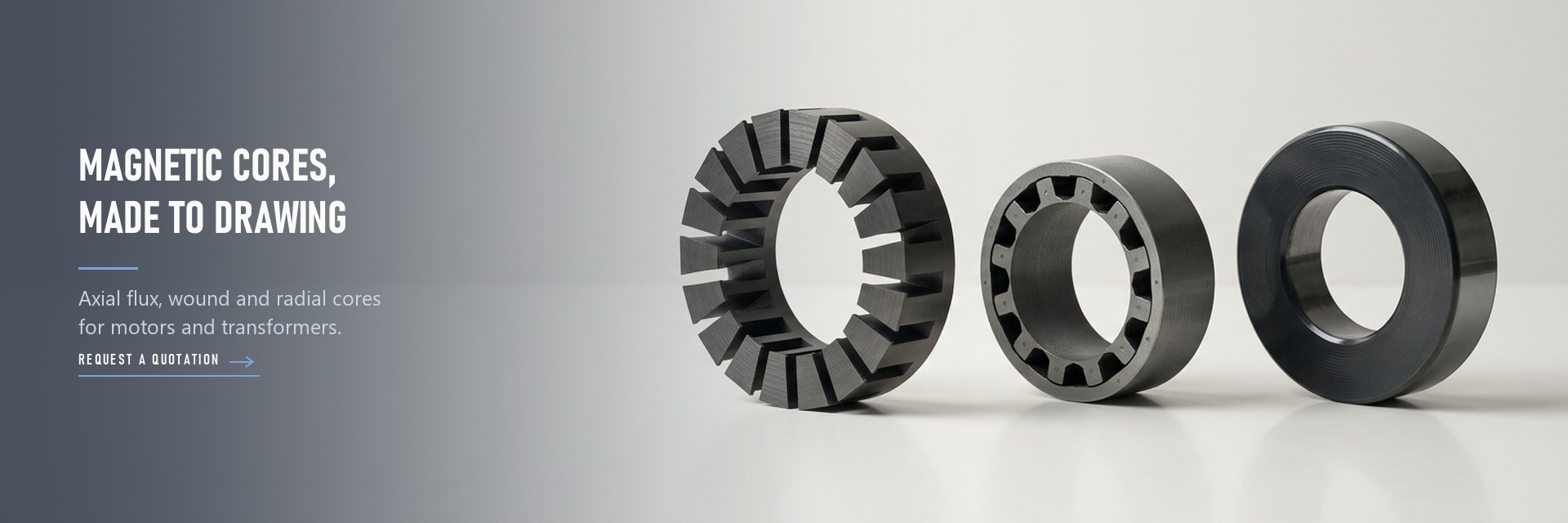
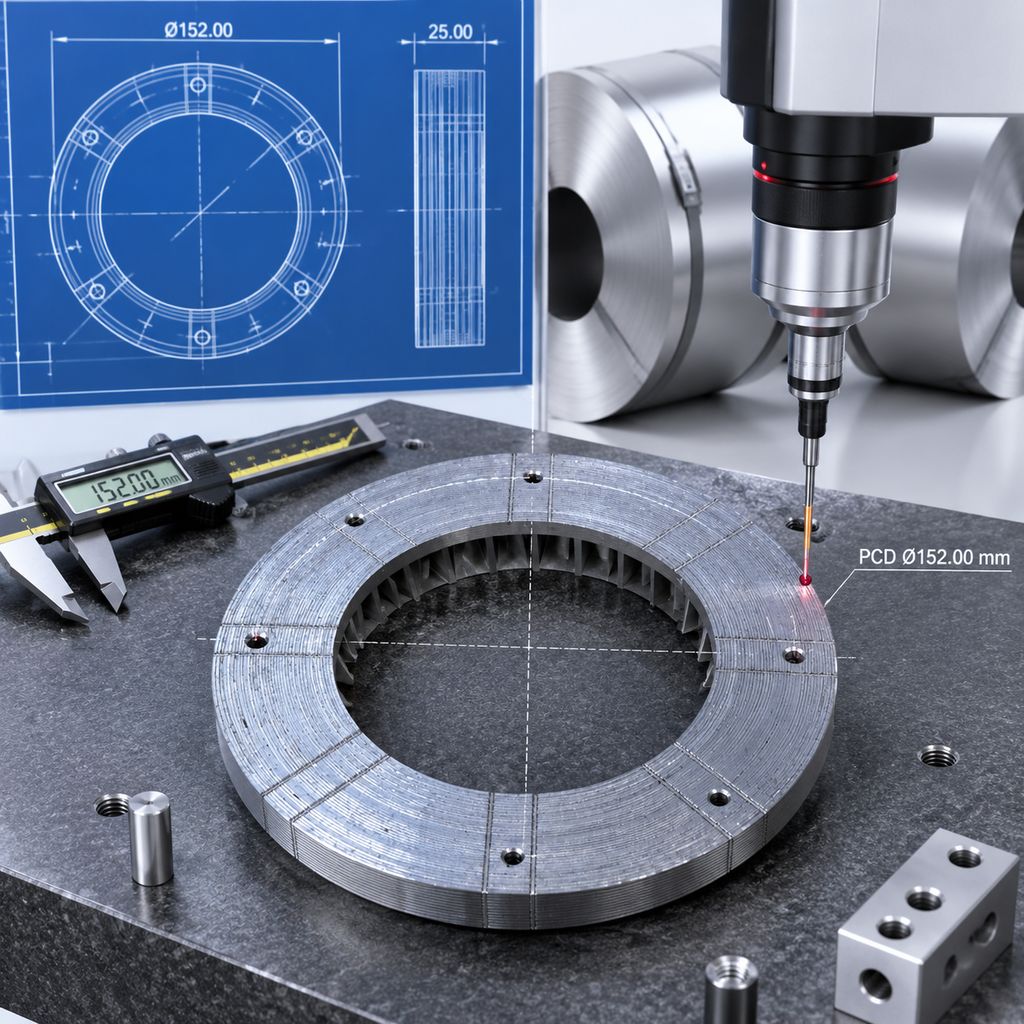
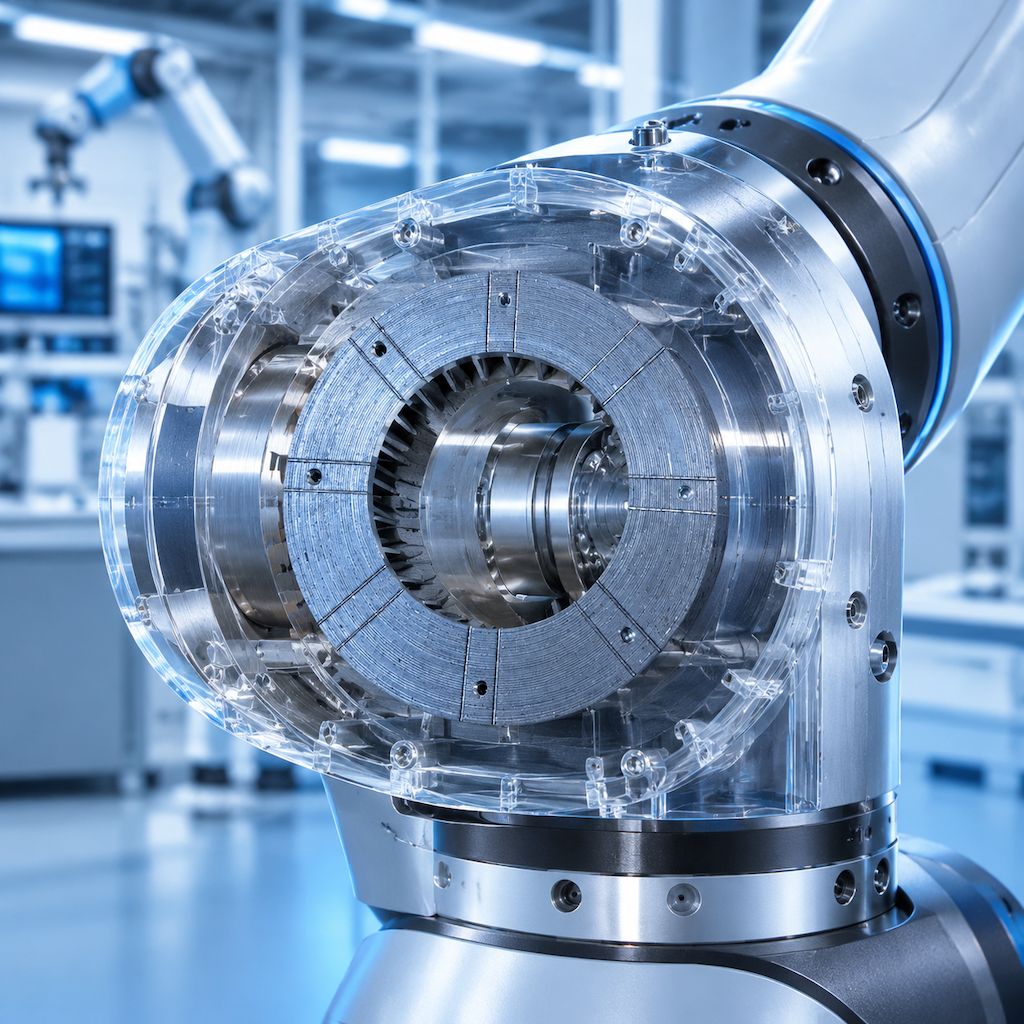
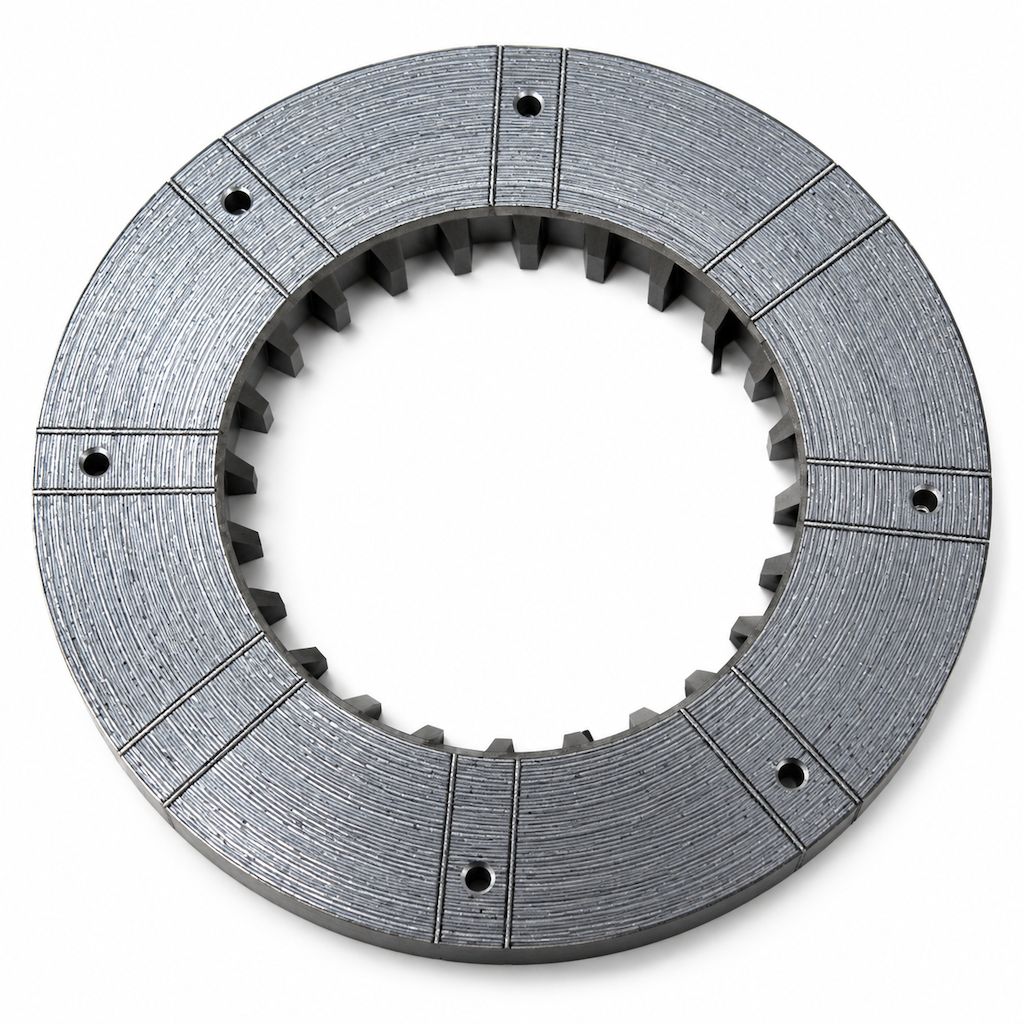
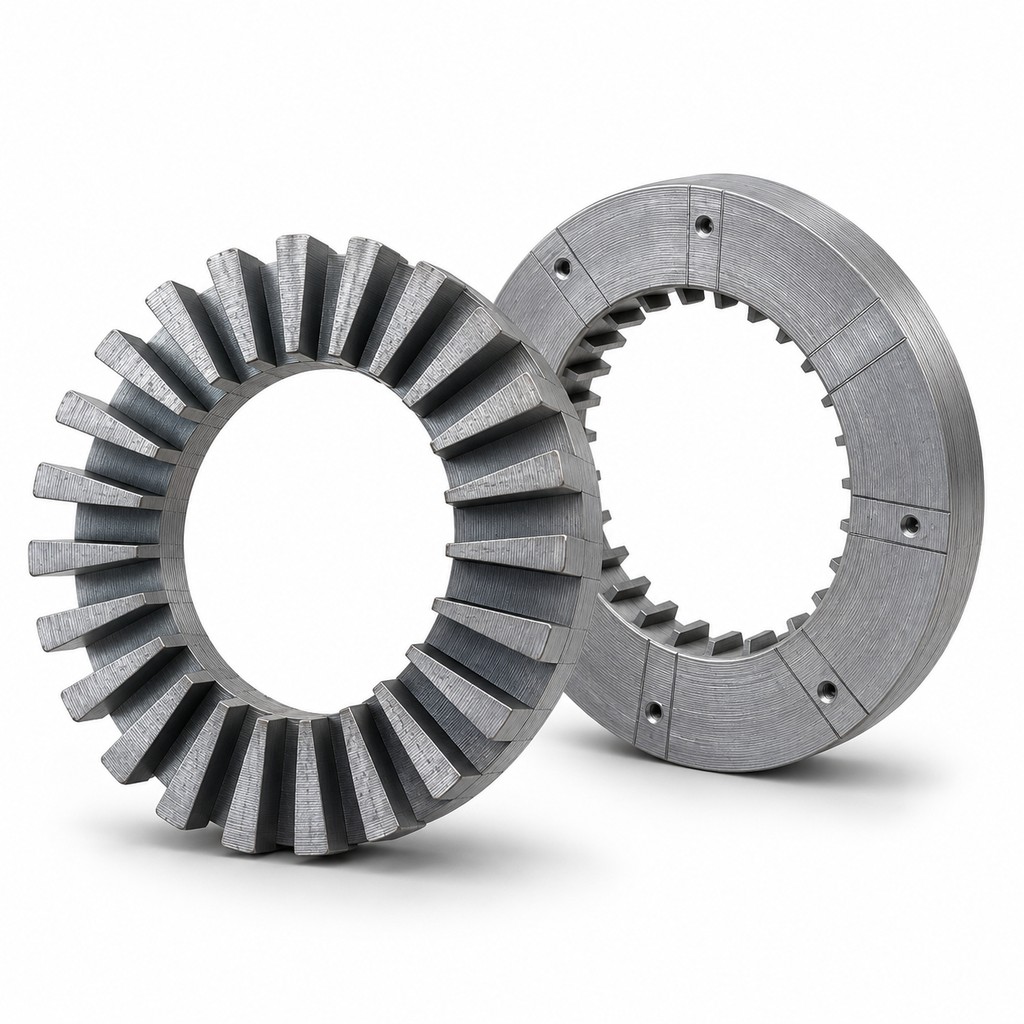
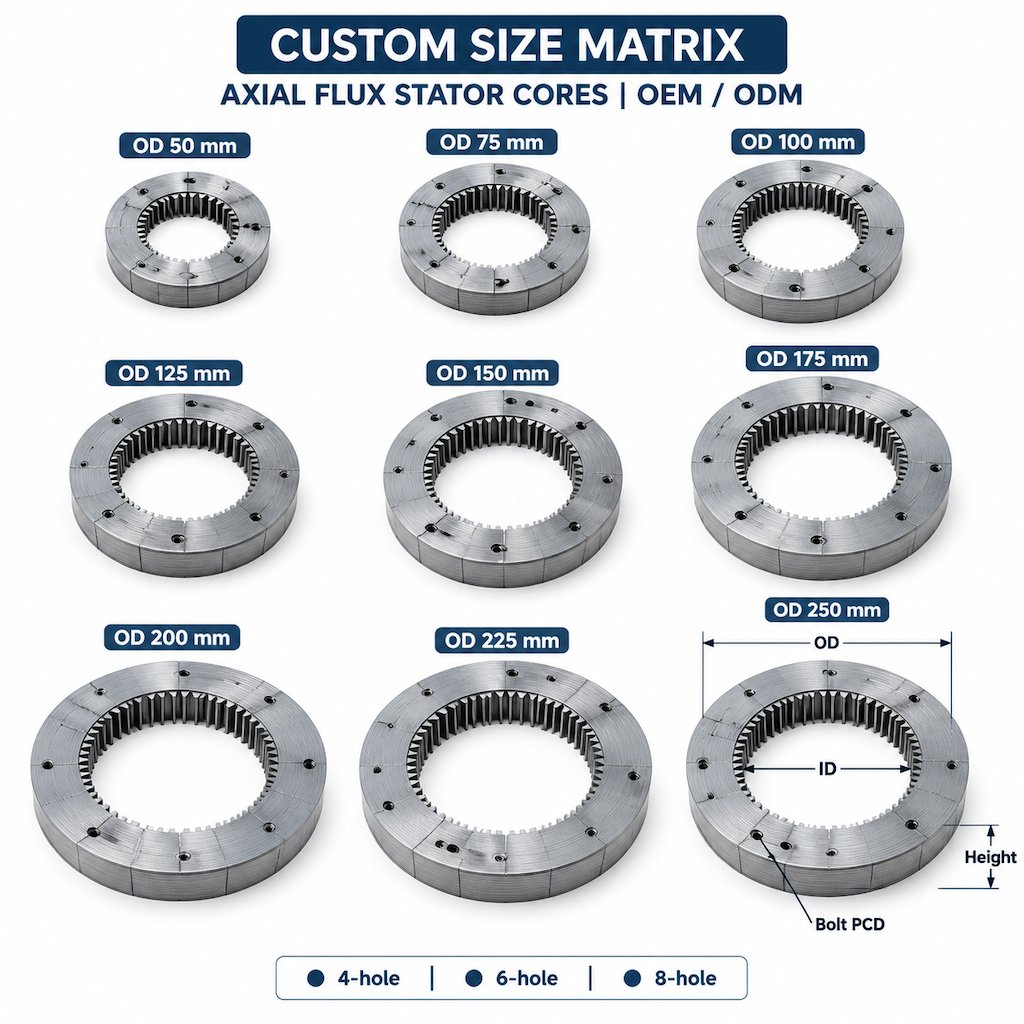
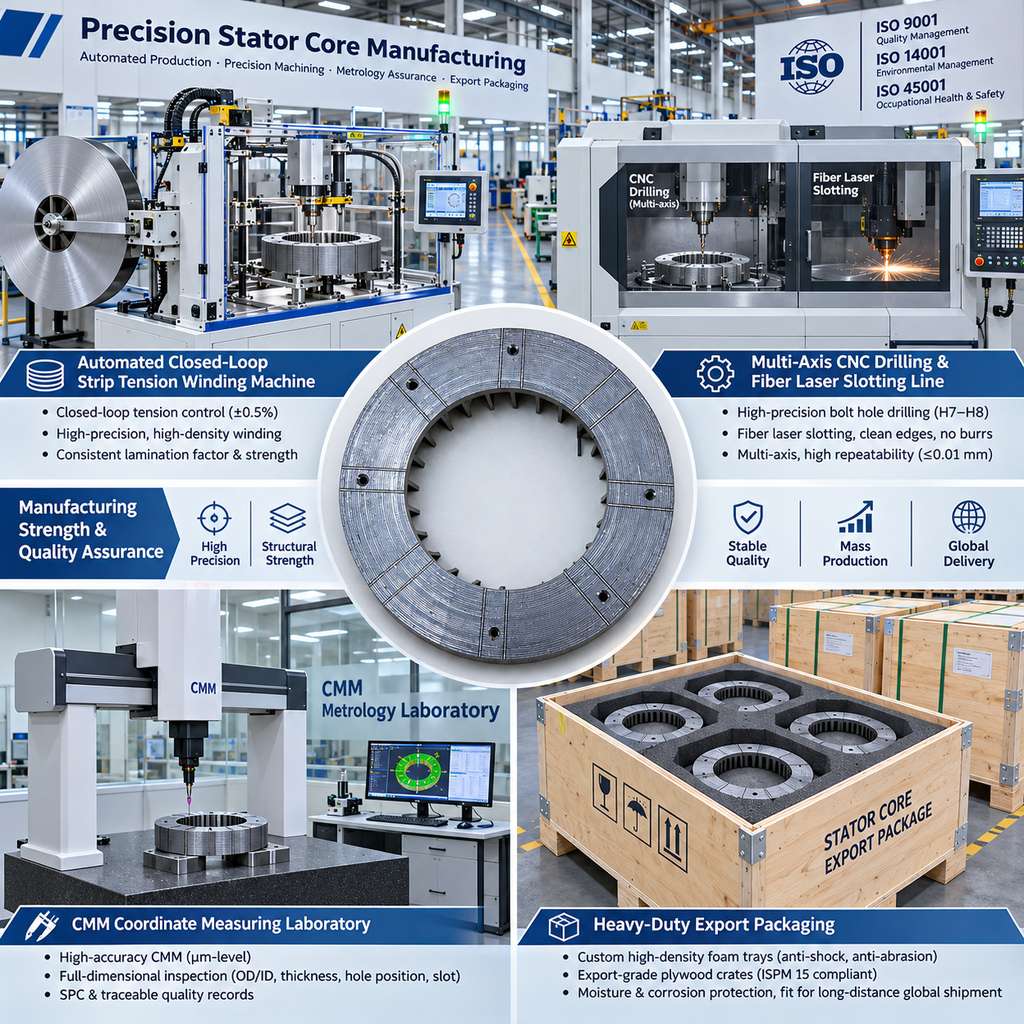
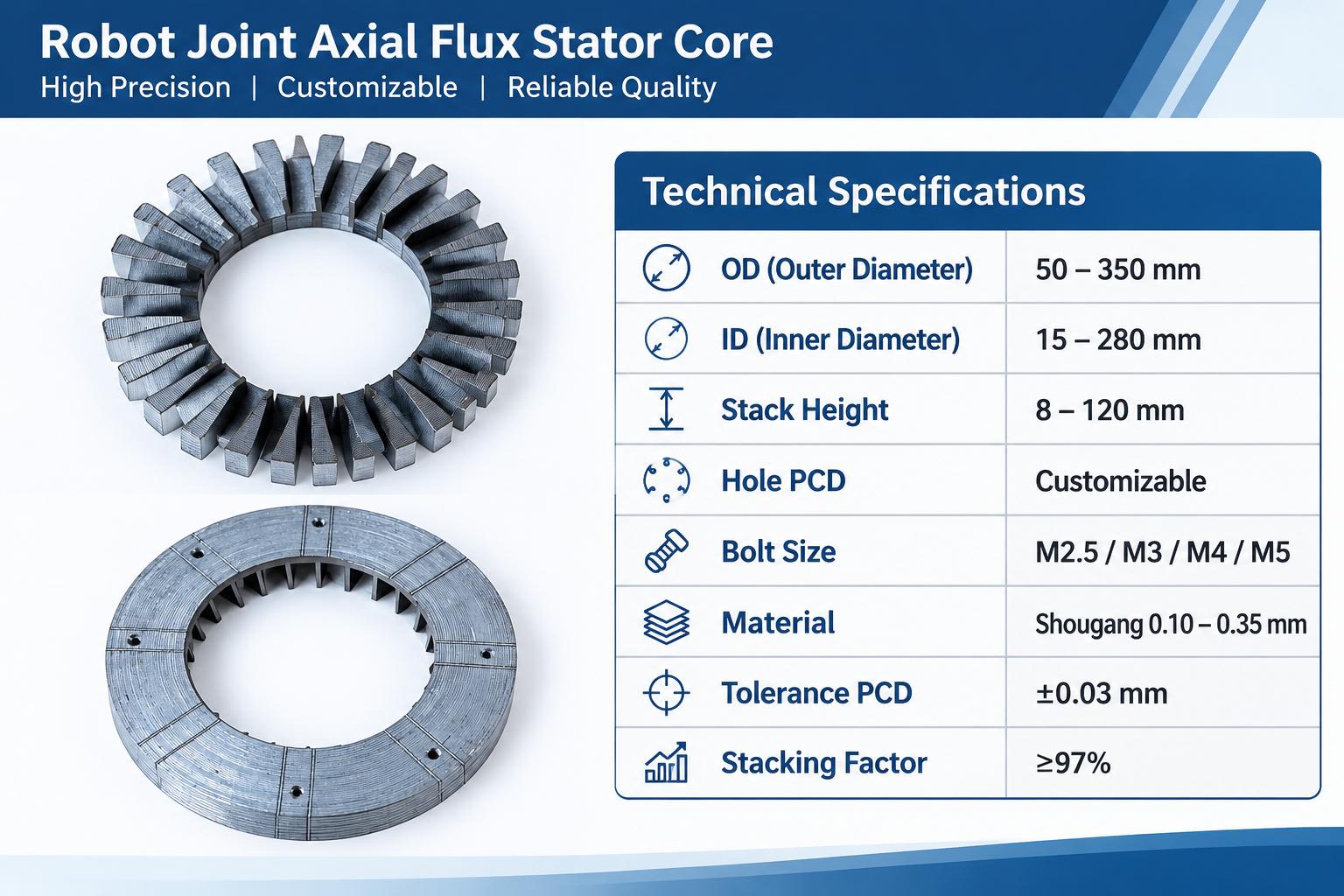
Custom tape-wound axial flux motor stator cores featuring precision pre-drilled symmetrical back-yoke mounting holes, specifically engineered for humanoid robot joint actuators, frameless hollow torque motors, and exoskeleton rotary drives. Manufactured from genuine Shougang electrical silicon steel (0.10mm to 0.35mm), this direct bolt-on design reduces motor axial length by up to 30%, eliminates external clamping rings, ensures zero-backlash torque transmission, and offers PCD tolerance +/-0.03mm with 3-5 day rapid prototype dispatch.
Product Origin :
CHINAShipping Port :
NANSHA/SHEKOU/SHANGHAI/NINGBOPayment :
TT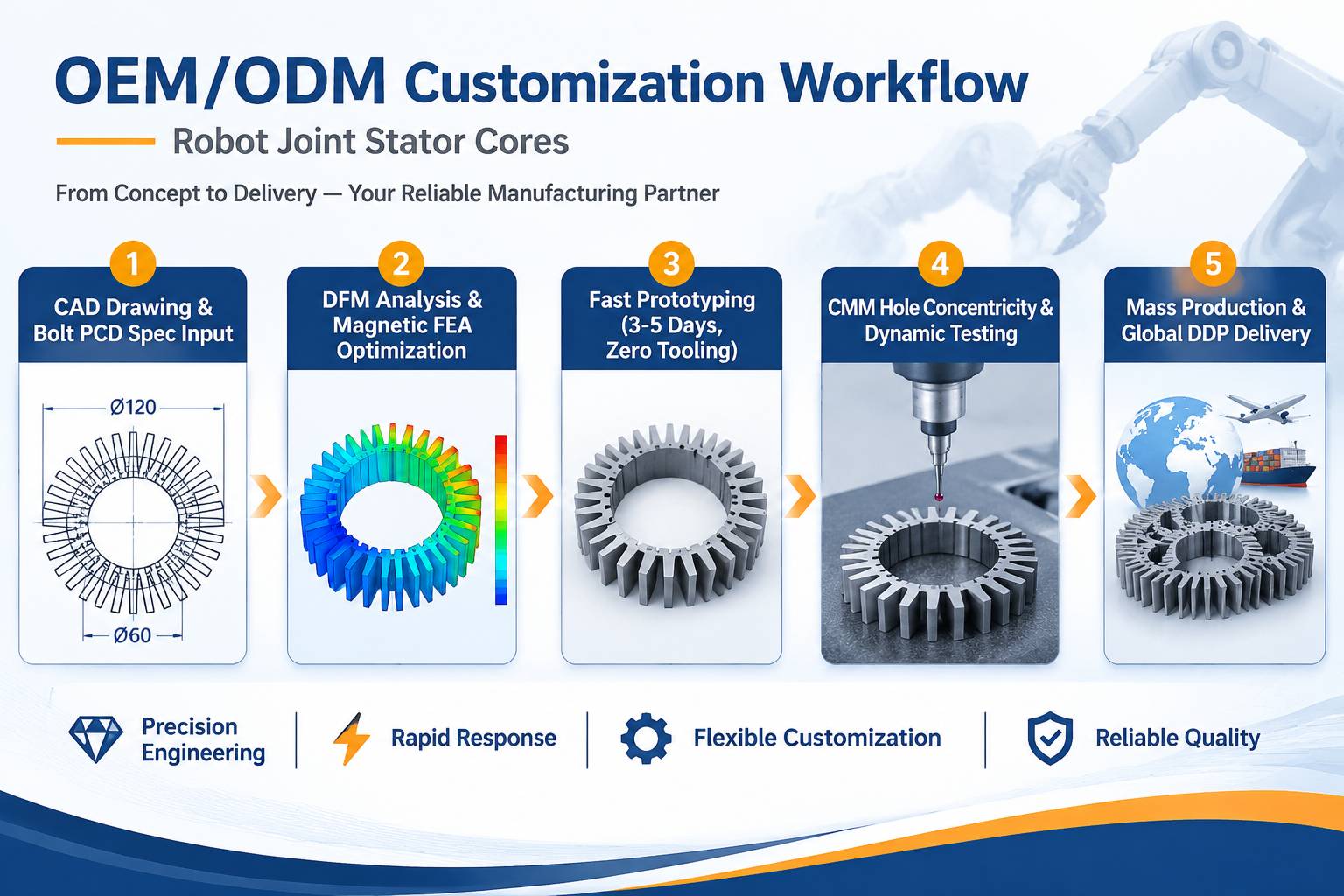
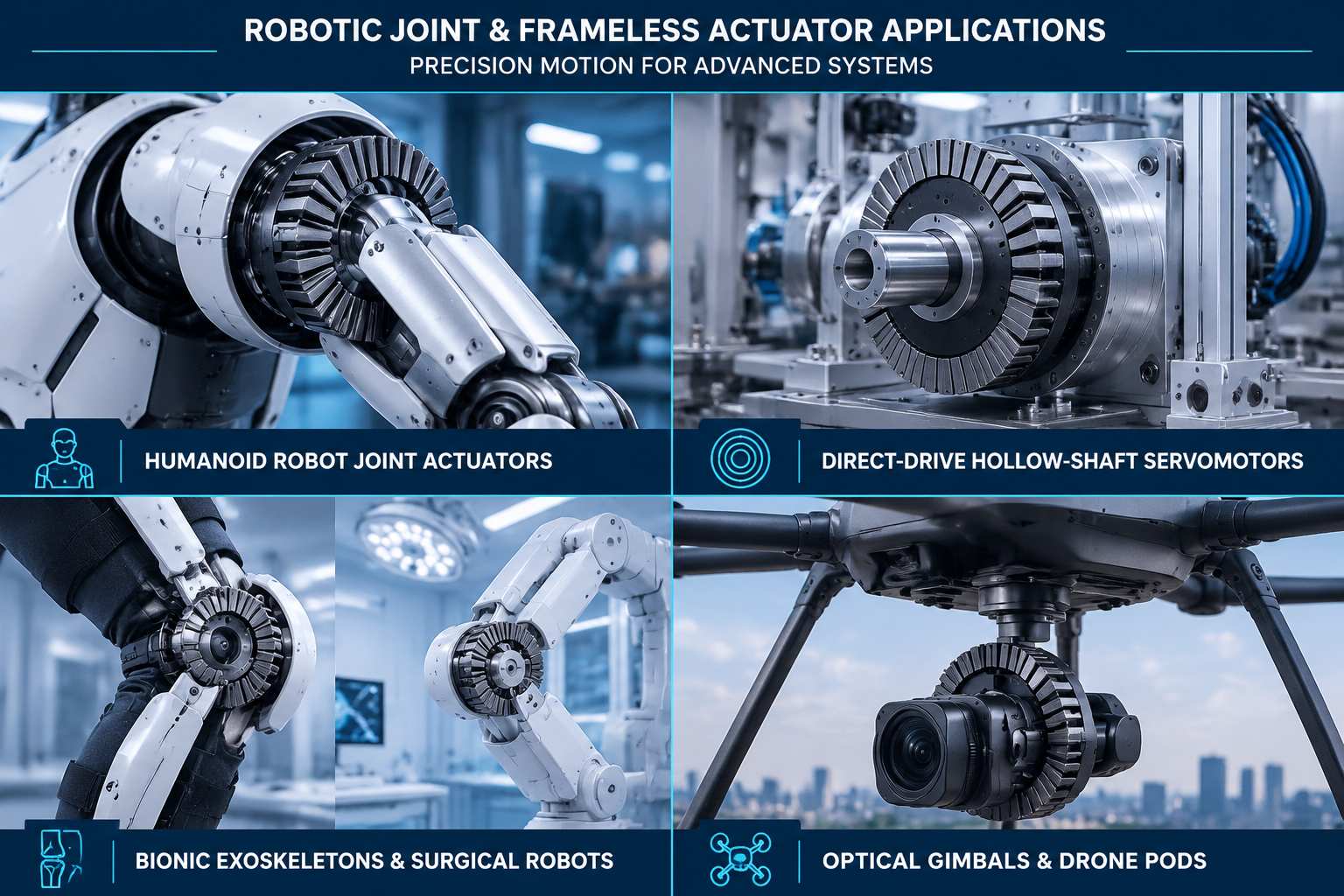
Next-generation robotics—including humanoid robot joint actuators, high-torque collaborative robot (cobot) wrists, powered exoskeletons, and medical surgical arms—require extreme torque density, lightweight hollow-shaft packaging, and zero mechanical backlash. Conventional axial flux motor stator cores lack integrated mounting features, requiring heavy external aluminum clamping rings or press-fit housings that increase motor diameter, add axial thickness, and risk thermal expansion slippage under high dynamic reversals.
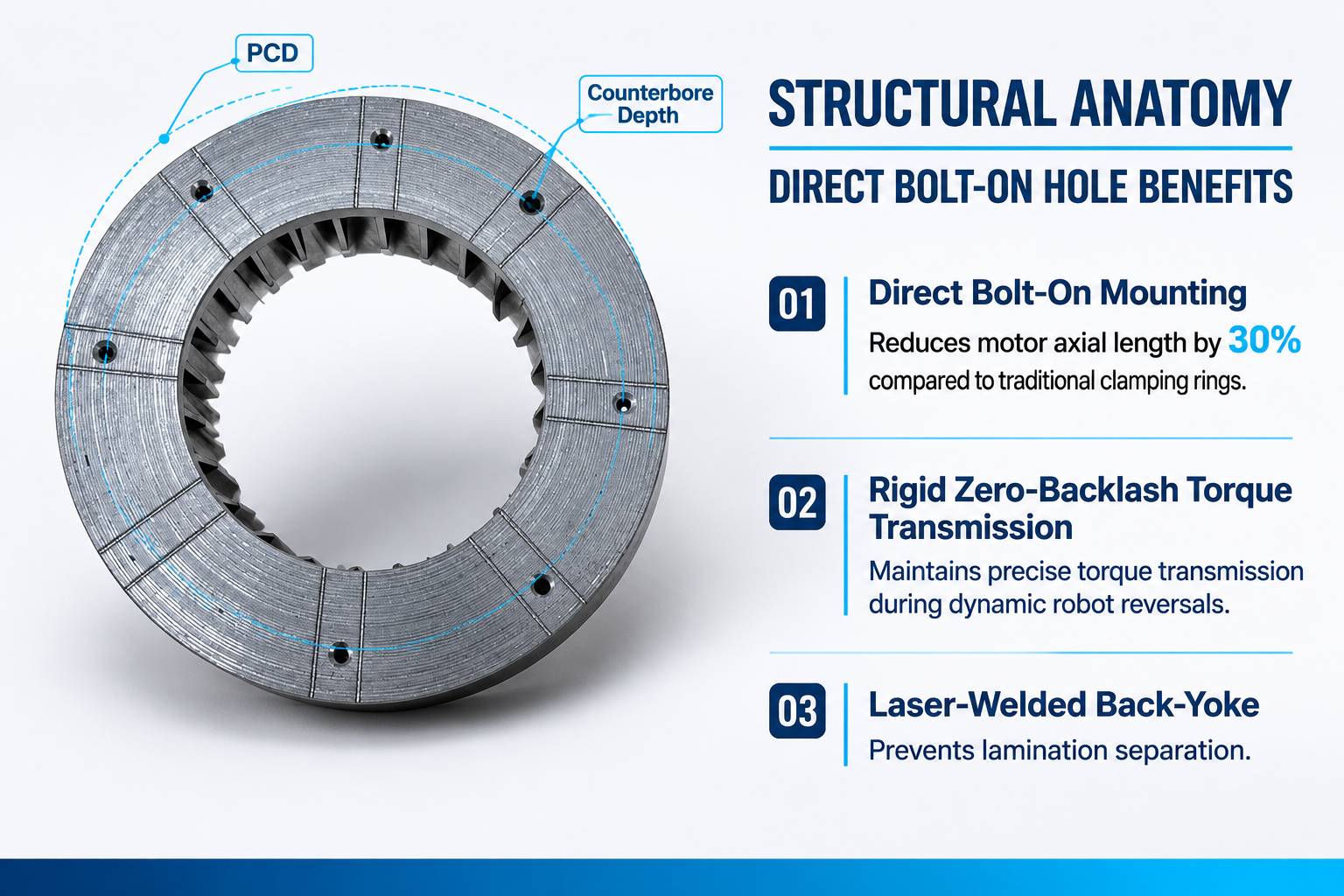
Shunge Steel solves these engineering bottlenecks with our Custom Axial Flux Stator Cores featuring Pre-Drilled Back-Yoke Mounting Holes. Wound from prime ultra-thin electrical silicon steel strips (0.10 mm to 0.35 mm) and CNC-drilled with high-precision symmetrical fastener holes directly on the solid back yoke, our stator cores allow direct rigid bolted assembly into actuator housings. This structural innovation slashes motor axial length by over 30%, eliminates external mounting brackets, and delivers rock-solid zero-backlash torque transmission.
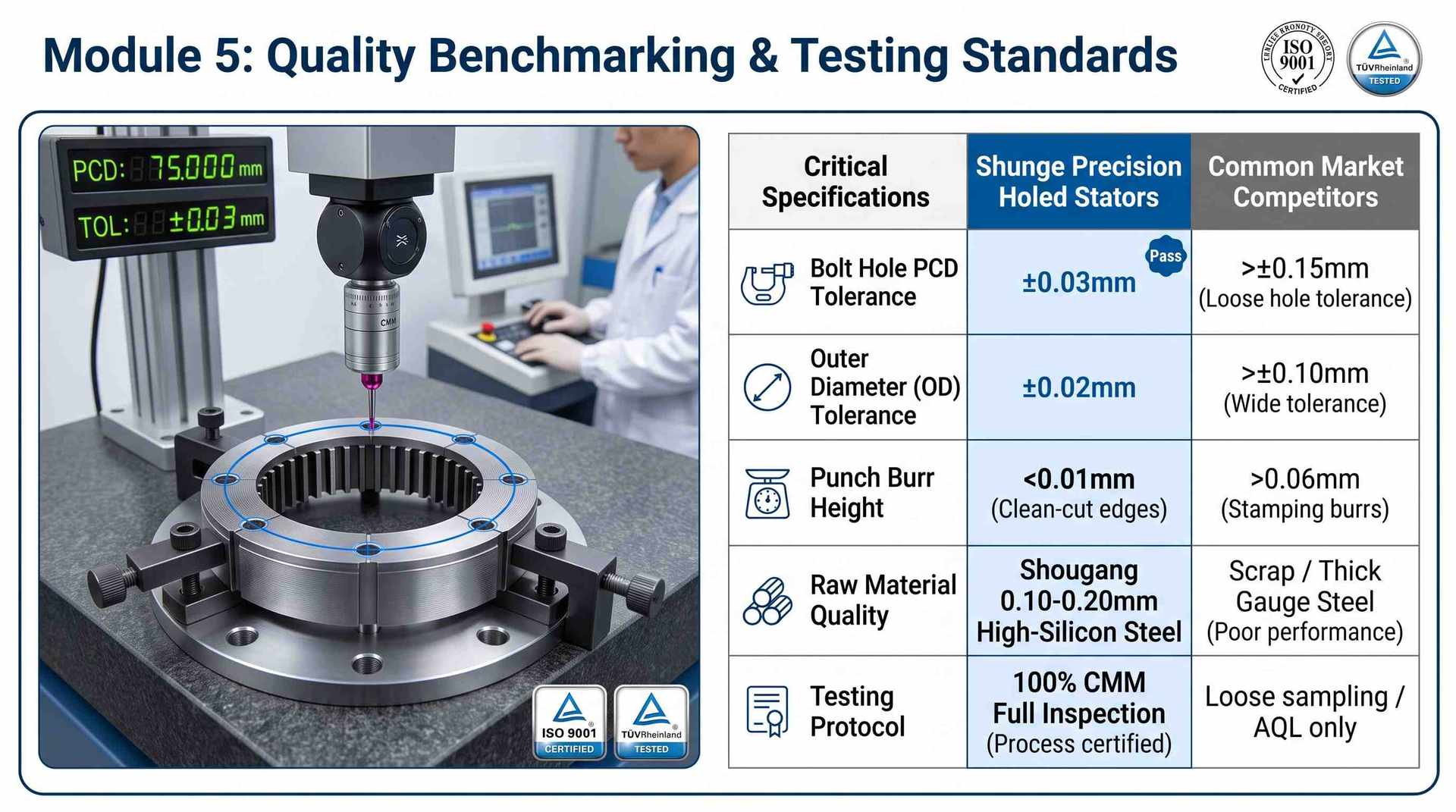
Q1: Can you customize the bolt hole pattern, hole count, or add metric tapped threads on the back yoke?
Answer: Yes, absolutely. We utilize multi-axis CNC drilling and tapping centers to machine custom hole configurations directly on the back yoke according to your 2D/3D CAD drawings (e.g., 4, 6, 8, 12, or 16 holes with M2.5, M3, M4, or M5 threads, clearance counterbores, or dowel pin locating holes). Pitch Circle Diameter (PCD) tolerance is strictly maintained within +/-0.03 mm.
Q2: How do you prevent stator delamination or strip cracking during high-speed drilling and dynamic joint reversals?
Answer: Our stator cores undergo a dual structural reinforcement process:
Q3: What silicon steel grades and strip thicknesses are available for this core?
Answer: We offer prime electrical silicon steels tailored to your speed and loss requirements:
Q4: What is your turnaround time for prototype samples and production orders?
Answer: Because our CNC tape winding and fiber laser slotting process requires zero stamping die tooling, custom prototype samples are typically manufactured, CMM inspected, and dispatched within 3 to 5 business days after CAD sign-off. Production batch lead time is 12 to 15 business days for quantities of 100 to 5,000 pcs.
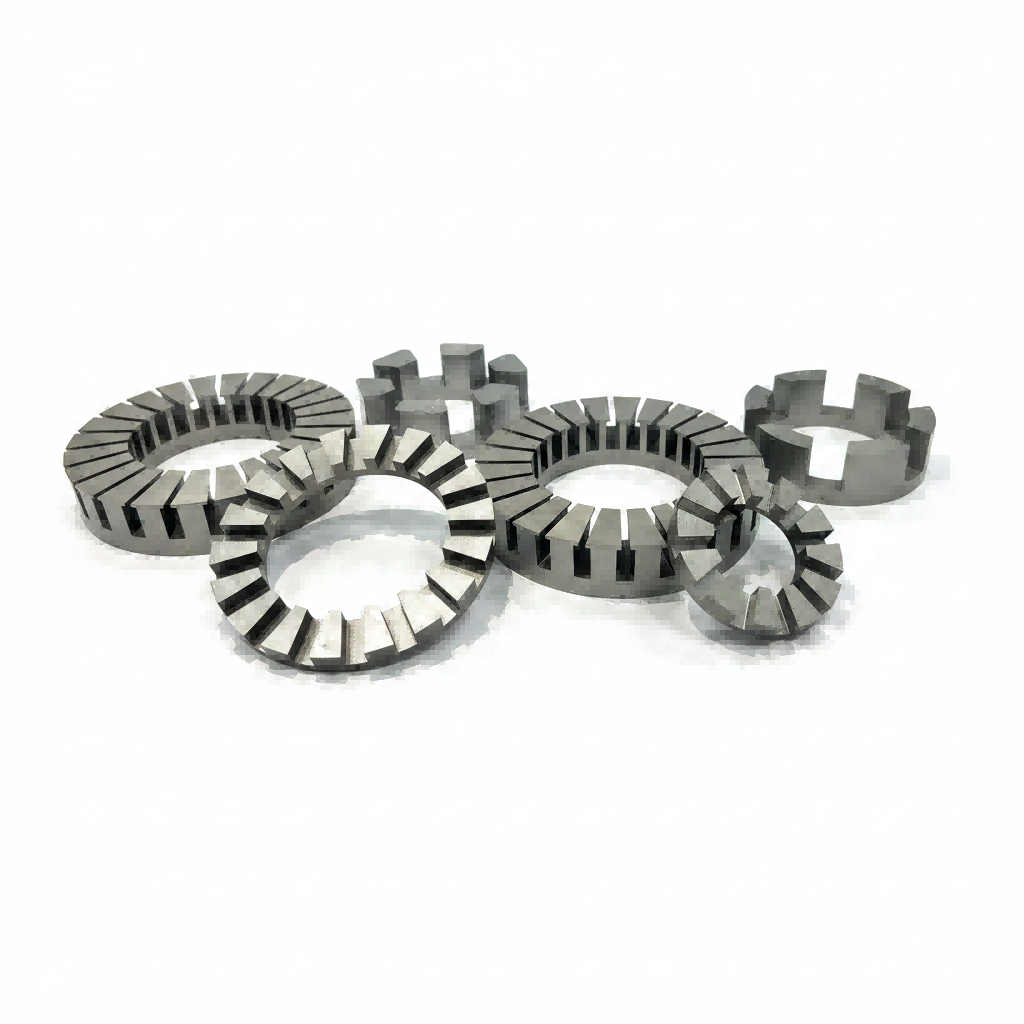
Custom tape-wound axial flux motor stator cores featuring precision pre-drilled symmetrical back-yoke mounting holes, specifically engineered for humanoid robot joint actuators, frameless hollow torque motors, and exoskeleton rotary drives. Manufactured from genuine Shougang electrical silicon steel (0.10mm to 0.35mm), this direct bolt-on design reduces motor axial length by up to 30%, eliminates external clamping rings, ensures zero-backlash torque transmission, and offers PCD tolerance +/-0.03mm with 3-5 day rapid prototype dispatch.
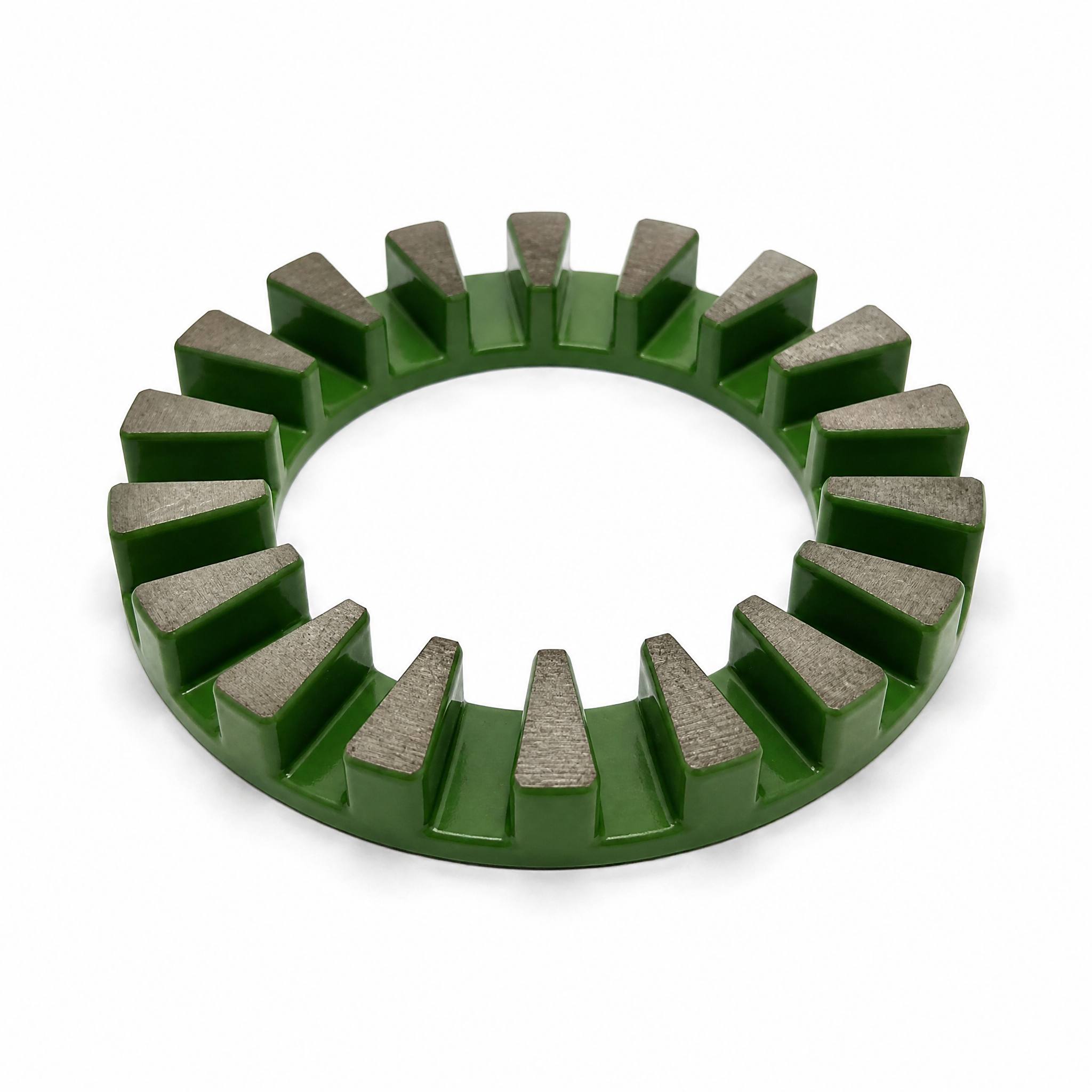
Custom tape-wound axial flux motor stator cores featuring precision pre-drilled symmetrical back-yoke mounting holes, specifically engineered for humanoid robot joint actuators, frameless hollow torque motors, and exoskeleton rotary drives. Manufactured from genuine Shougang electrical silicon steel (0.10mm to 0.35mm), this direct bolt-on design reduces motor axial length by up to 30%, eliminates external clamping rings, ensures zero-backlash torque transmission, and offers PCD tolerance +/-0.03mm with 3-5 day rapid prototype dispatch.
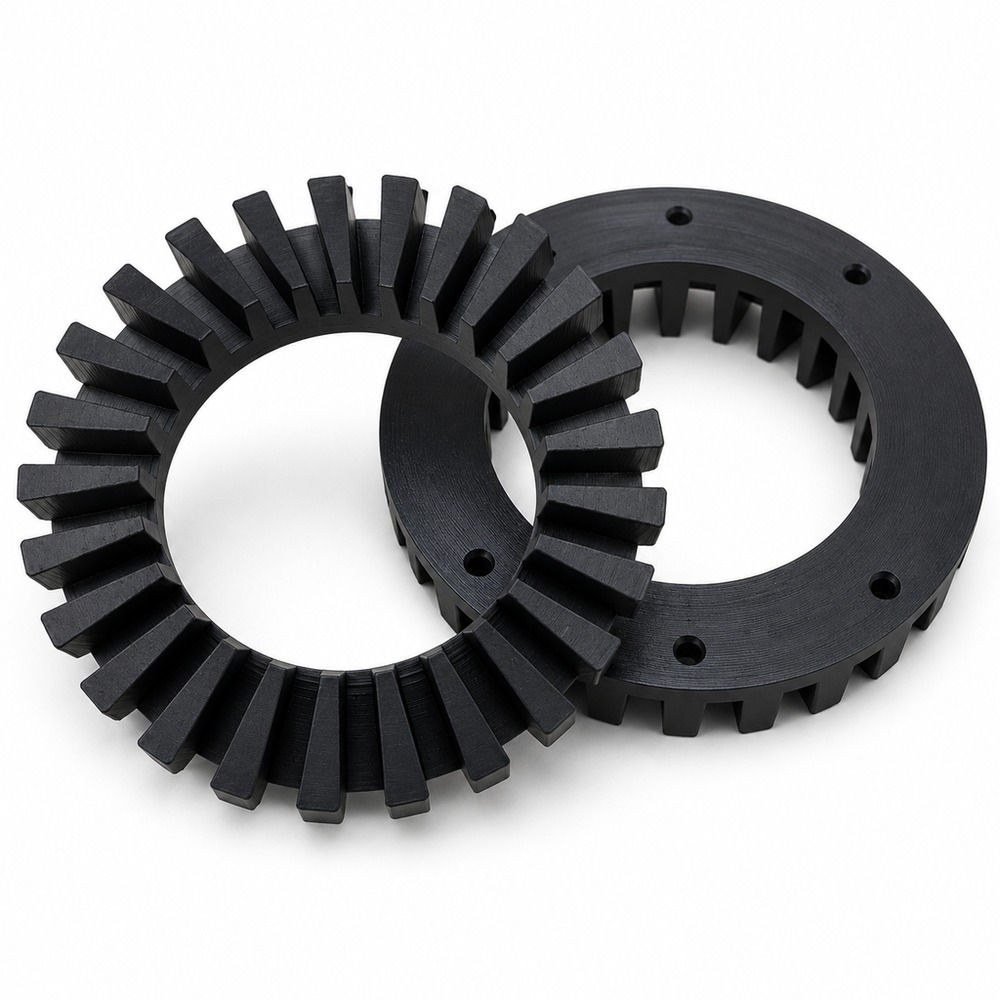
Custom tape-wound axial flux motor stator cores featuring precision pre-drilled symmetrical back-yoke mounting holes, specifically engineered for humanoid robot joint actuators, frameless hollow torque motors, and exoskeleton rotary drives. Manufactured from genuine Shougang electrical silicon steel (0.10mm to 0.35mm), this direct bolt-on design reduces motor axial length by up to 30%, eliminates external clamping rings, ensures zero-backlash torque transmission, and offers PCD tolerance +/-0.03mm with 3-5 day rapid prototype dispatch.
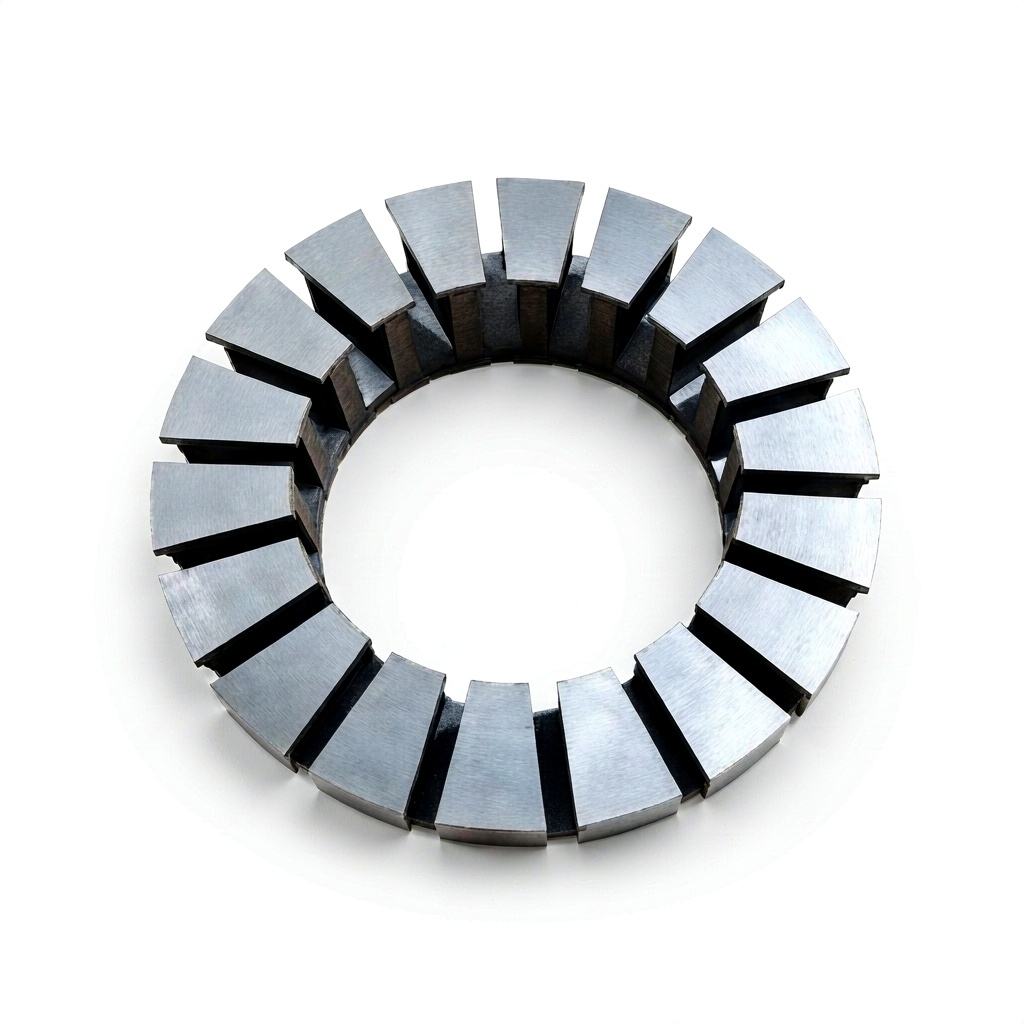
Custom tape-wound axial flux motor stator cores featuring precision pre-drilled symmetrical back-yoke mounting holes, specifically engineered for humanoid robot joint actuators, frameless hollow torque motors, and exoskeleton rotary drives. Manufactured from genuine Shougang electrical silicon steel (0.10mm to 0.35mm), this direct bolt-on design reduces motor axial length by up to 30%, eliminates external clamping rings, ensures zero-backlash torque transmission, and offers PCD tolerance +/-0.03mm with 3-5 day rapid prototype dispatch.
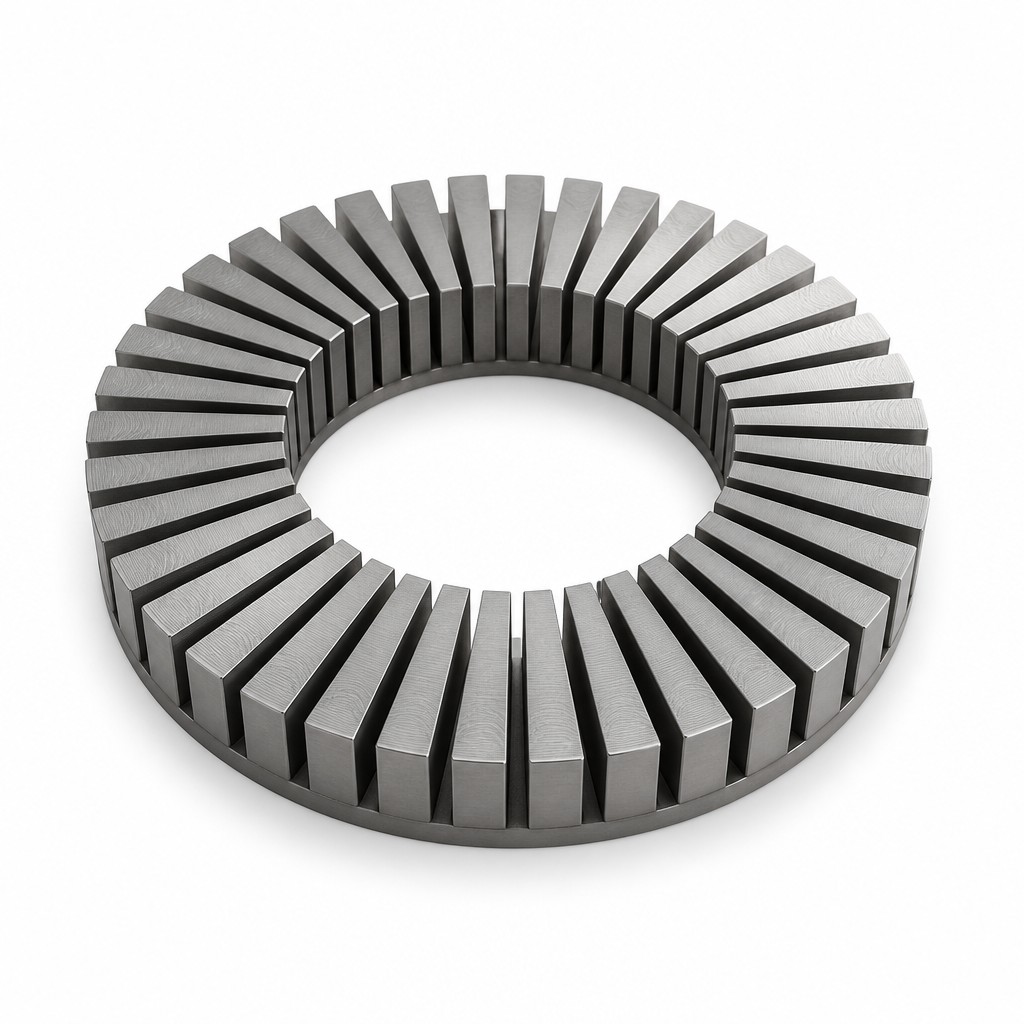
Custom tape-wound axial flux motor stator cores featuring precision pre-drilled symmetrical back-yoke mounting holes, specifically engineered for humanoid robot joint actuators, frameless hollow torque motors, and exoskeleton rotary drives. Manufactured from genuine Shougang electrical silicon steel (0.10mm to 0.35mm), this direct bolt-on design reduces motor axial length by up to 30%, eliminates external clamping rings, ensures zero-backlash torque transmission, and offers PCD tolerance +/-0.03mm with 3-5 day rapid prototype dispatch.
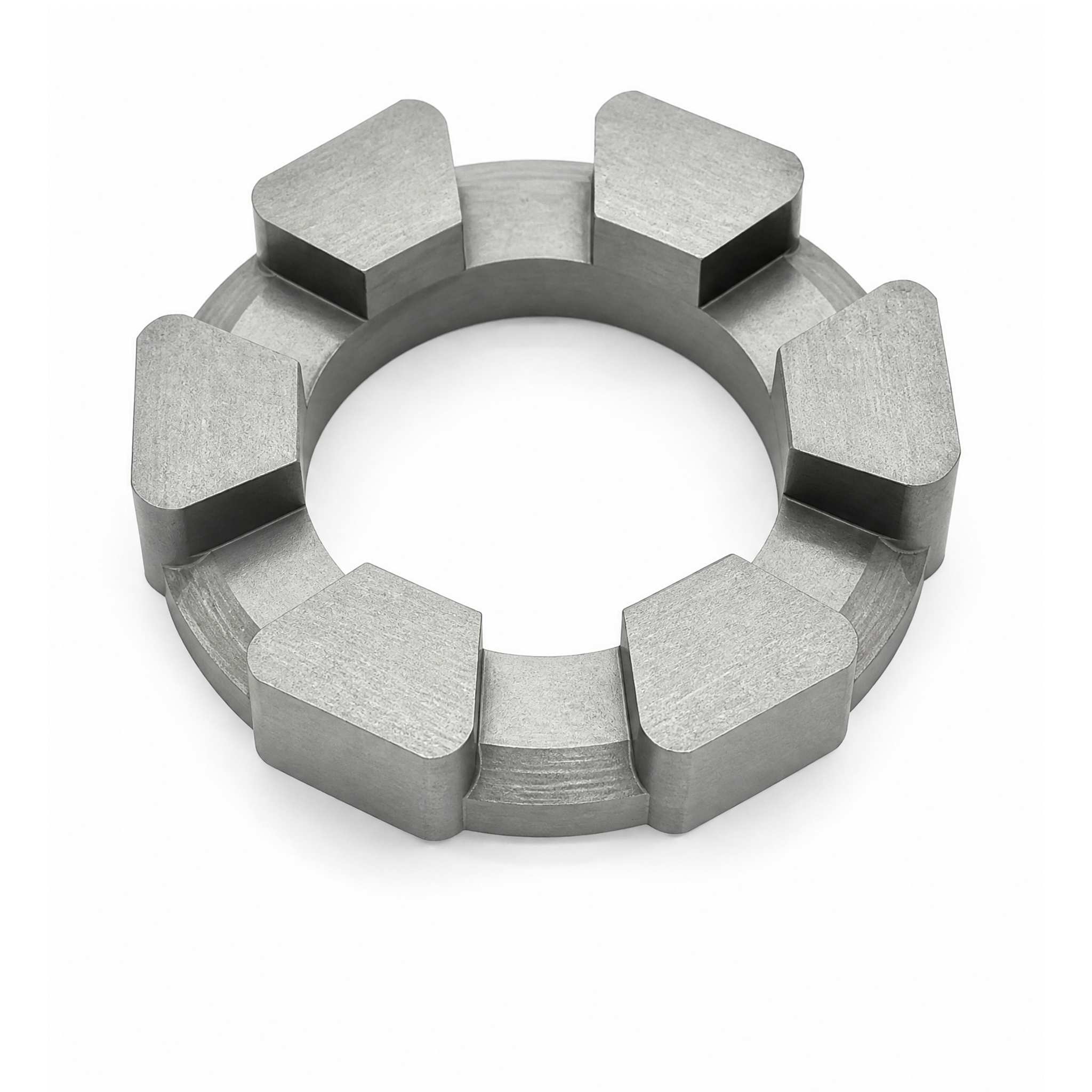
Custom tape-wound axial flux motor stator cores featuring precision pre-drilled symmetrical back-yoke mounting holes, specifically engineered for humanoid robot joint actuators, frameless hollow torque motors, and exoskeleton rotary drives. Manufactured from genuine Shougang electrical silicon steel (0.10mm to 0.35mm), this direct bolt-on design reduces motor axial length by up to 30%, eliminates external clamping rings, ensures zero-backlash torque transmission, and offers PCD tolerance +/-0.03mm with 3-5 day rapid prototype dispatch.
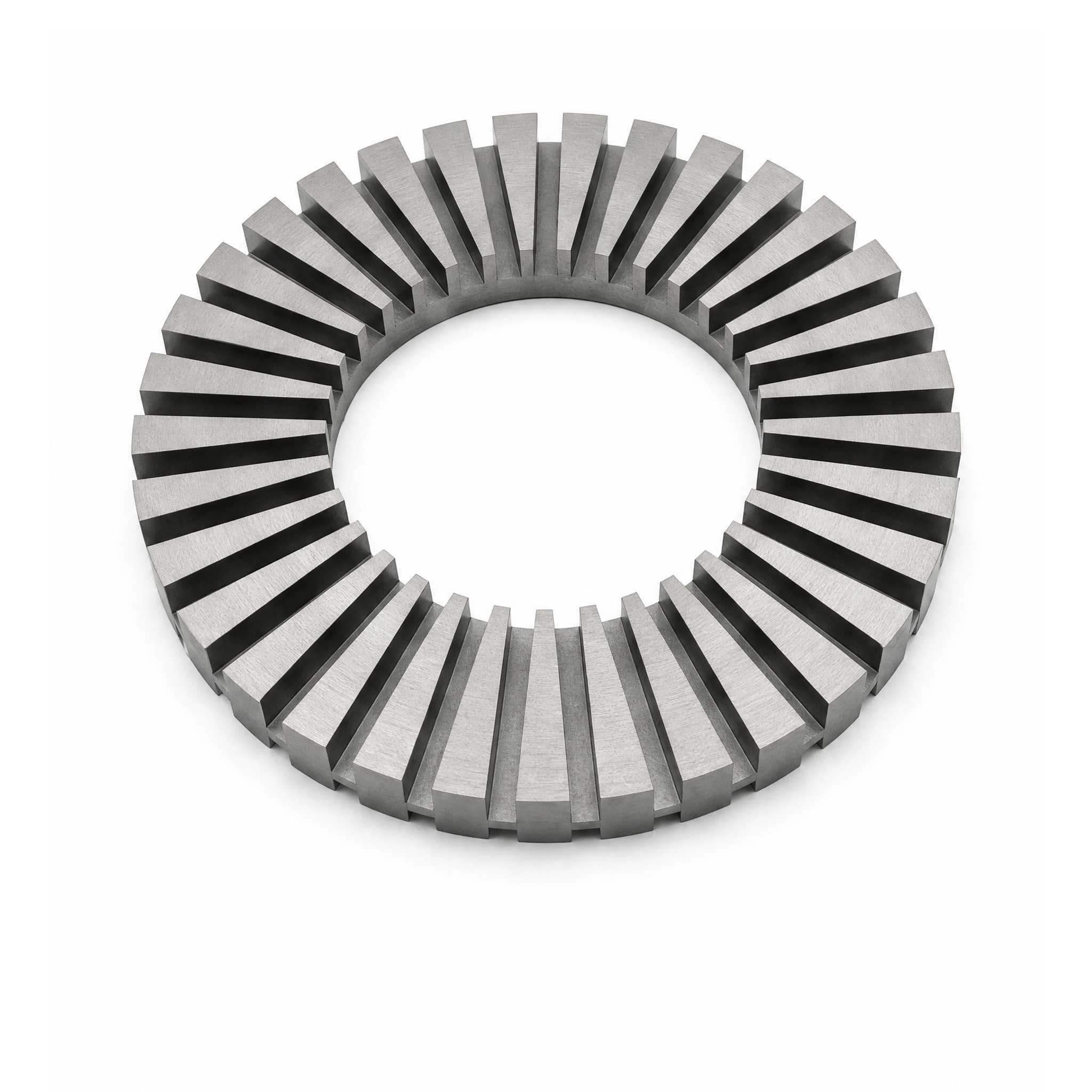
Custom tape-wound axial flux motor stator cores featuring precision pre-drilled symmetrical back-yoke mounting holes, specifically engineered for humanoid robot joint actuators, frameless hollow torque motors, and exoskeleton rotary drives. Manufactured from genuine Shougang electrical silicon steel (0.10mm to 0.35mm), this direct bolt-on design reduces motor axial length by up to 30%, eliminates external clamping rings, ensures zero-backlash torque transmission, and offers PCD tolerance +/-0.03mm with 3-5 day rapid prototype dispatch.
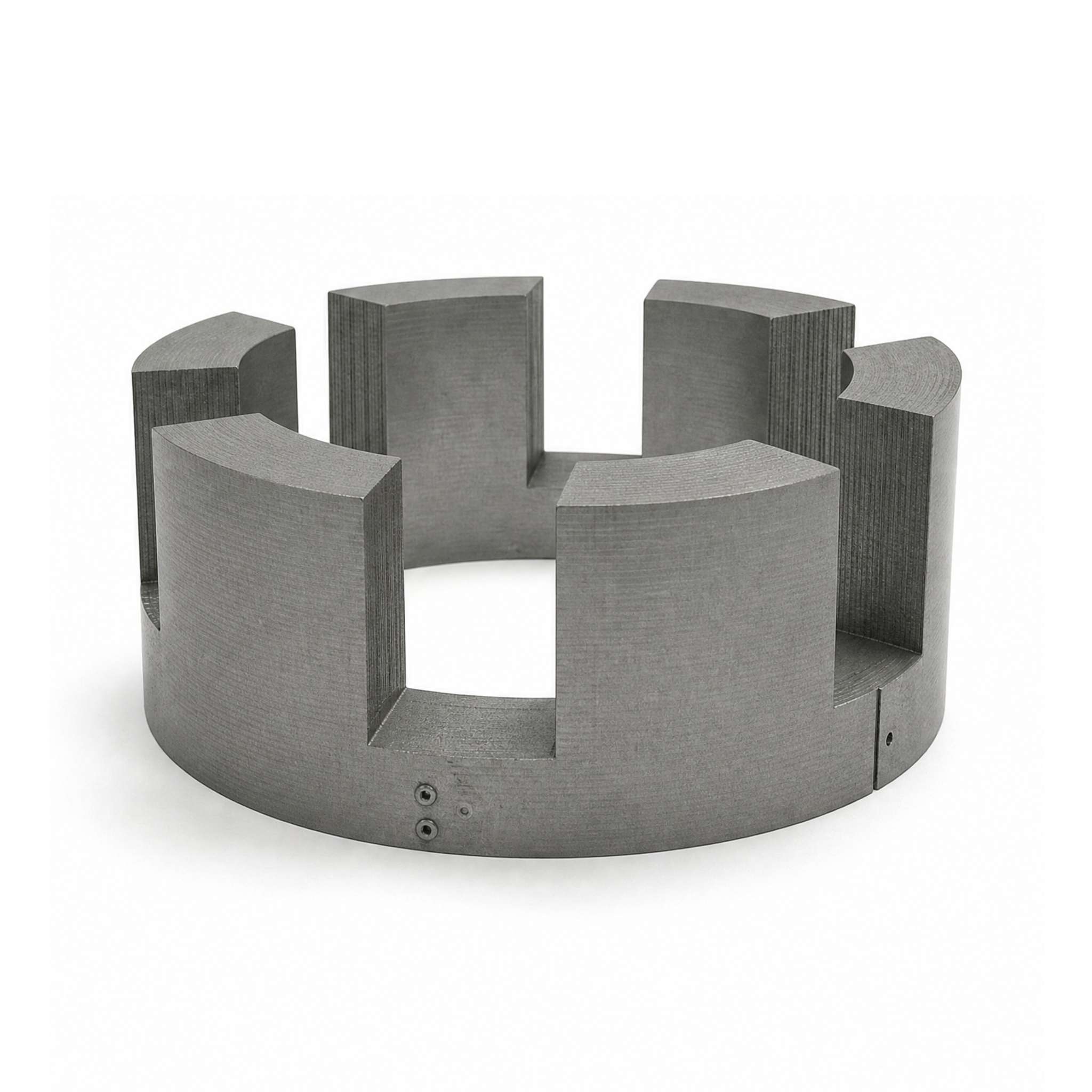
Custom tape-wound axial flux motor stator cores featuring precision pre-drilled symmetrical back-yoke mounting holes, specifically engineered for humanoid robot joint actuators, frameless hollow torque motors, and exoskeleton rotary drives. Manufactured from genuine Shougang electrical silicon steel (0.10mm to 0.35mm), this direct bolt-on design reduces motor axial length by up to 30%, eliminates external clamping rings, ensures zero-backlash torque transmission, and offers PCD tolerance +/-0.03mm with 3-5 day rapid prototype dispatch.
Custom tape-wound axial flux motor stator cores featuring precision pre-drilled symmetrical back-yoke mounting holes, specifically engineered for humanoid robot joint actuators, frameless hollow torque motors, and exoskeleton rotary drives. Manufactured from genuine Shougang electrical silicon steel (0.10mm to 0.35mm), this direct bolt-on design reduces motor axial length by up to 30%, eliminates external clamping rings, ensures zero-backlash torque transmission, and offers PCD tolerance +/-0.03mm with 3-5 day rapid prototype dispatch.
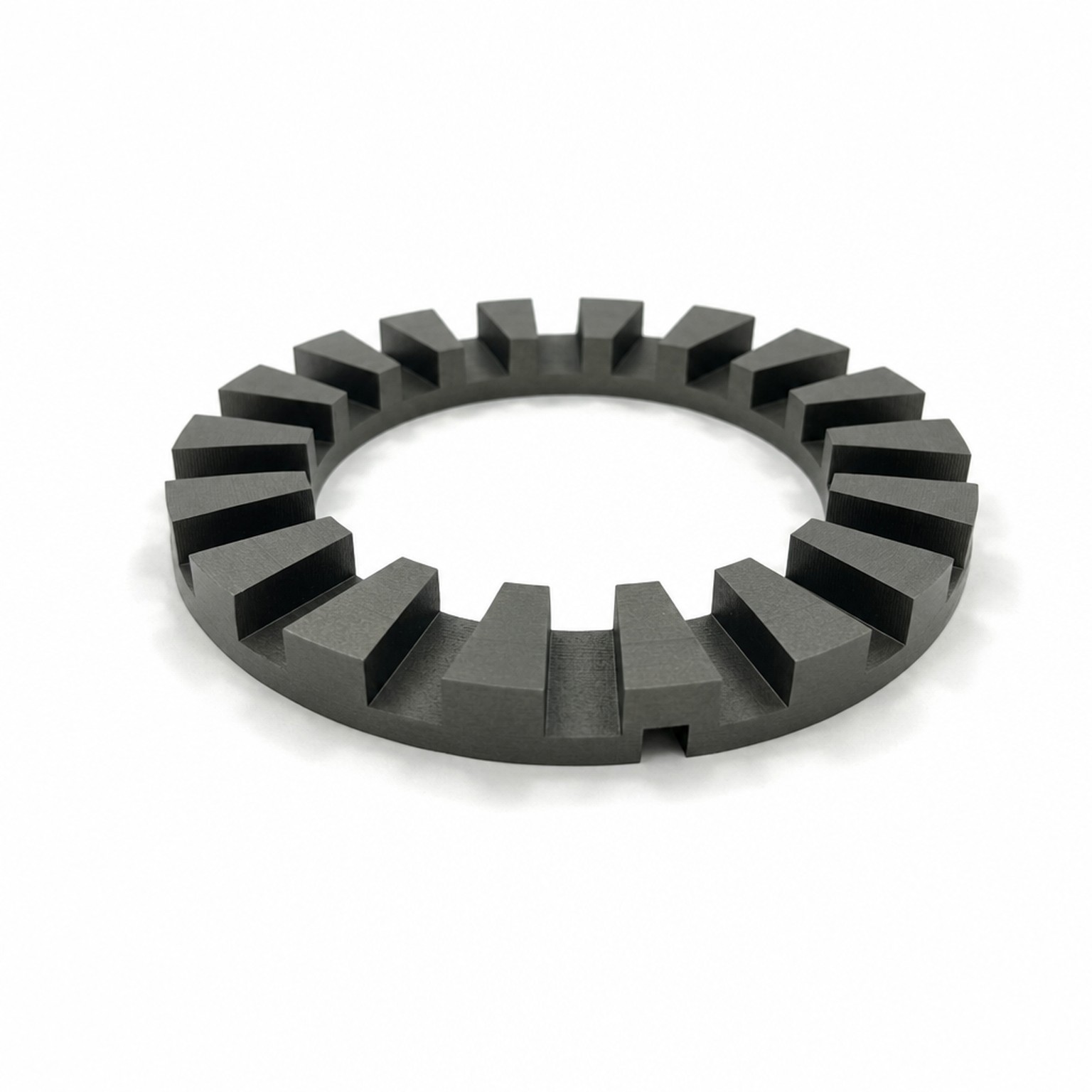
Custom tape-wound axial flux motor stator cores featuring precision pre-drilled symmetrical back-yoke mounting holes, specifically engineered for humanoid robot joint actuators, frameless hollow torque motors, and exoskeleton rotary drives. Manufactured from genuine Shougang electrical silicon steel (0.10mm to 0.35mm), this direct bolt-on design reduces motor axial length by up to 30%, eliminates external clamping rings, ensures zero-backlash torque transmission, and offers PCD tolerance +/-0.03mm with 3-5 day rapid prototype dispatch.
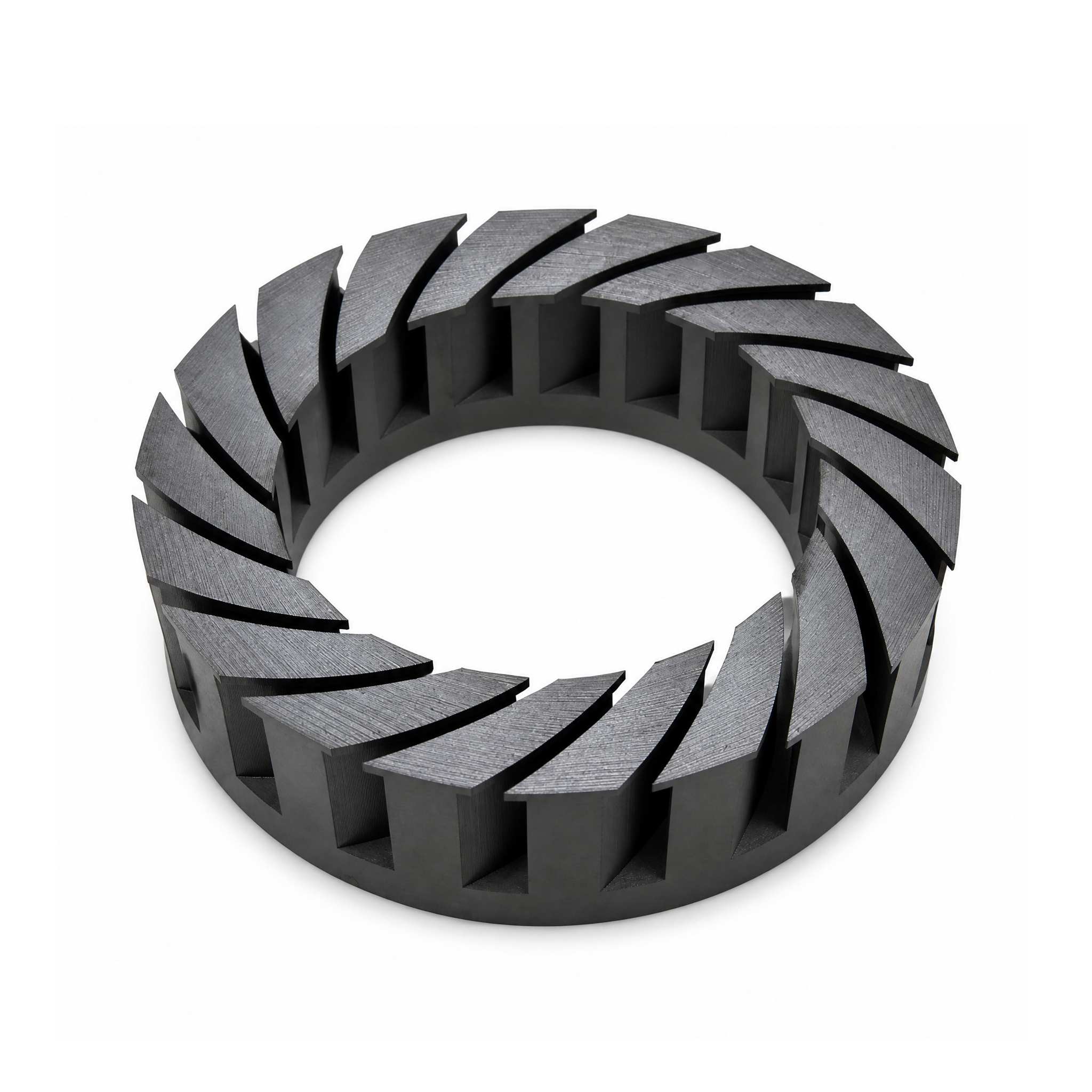
Custom tape-wound axial flux motor stator cores featuring precision pre-drilled symmetrical back-yoke mounting holes, specifically engineered for humanoid robot joint actuators, frameless hollow torque motors, and exoskeleton rotary drives. Manufactured from genuine Shougang electrical silicon steel (0.10mm to 0.35mm), this direct bolt-on design reduces motor axial length by up to 30%, eliminates external clamping rings, ensures zero-backlash torque transmission, and offers PCD tolerance +/-0.03mm with 3-5 day rapid prototype dispatch.
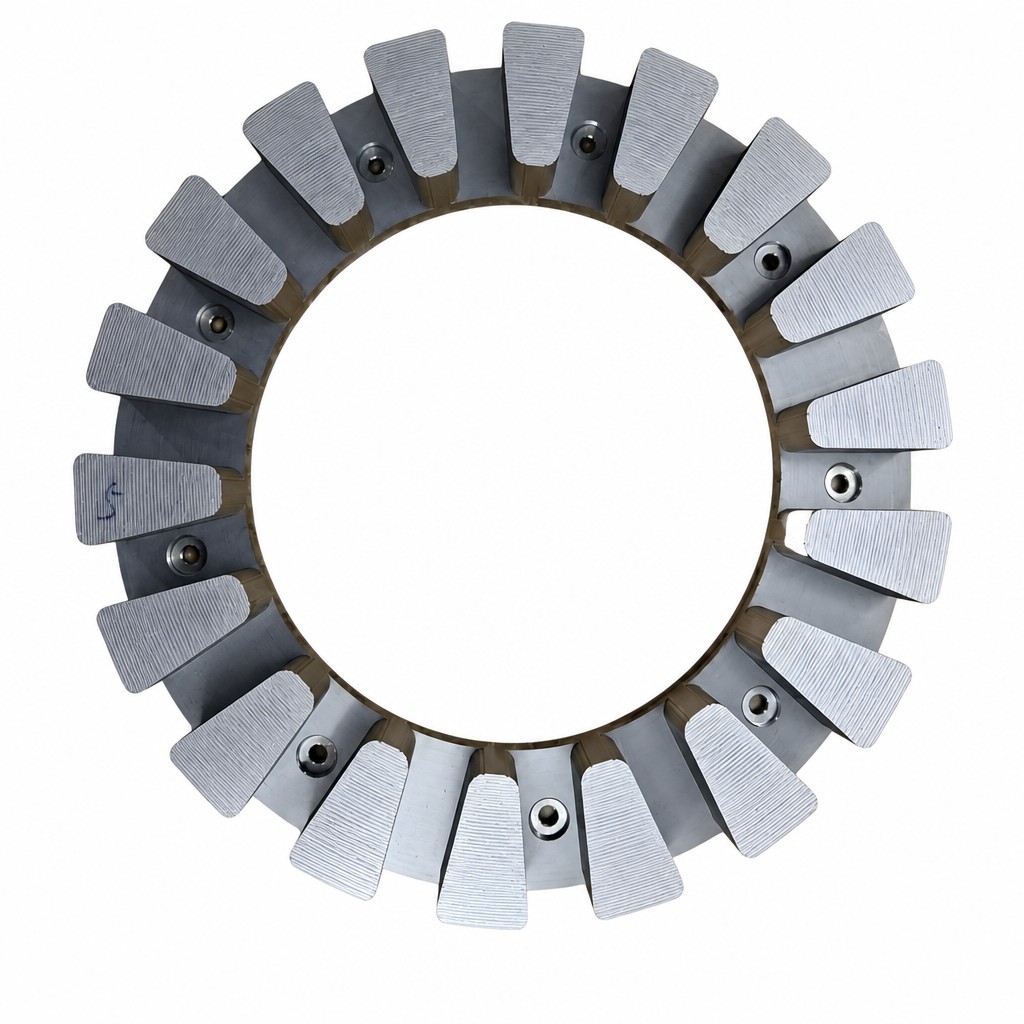
Custom tape-wound axial flux motor stator cores featuring precision pre-drilled symmetrical back-yoke mounting holes, specifically engineered for humanoid robot joint actuators, frameless hollow torque motors, and exoskeleton rotary drives. Manufactured from genuine Shougang electrical silicon steel (0.10mm to 0.35mm), this direct bolt-on design reduces motor axial length by up to 30%, eliminates external clamping rings, ensures zero-backlash torque transmission, and offers PCD tolerance +/-0.03mm with 3-5 day rapid prototype dispatch.
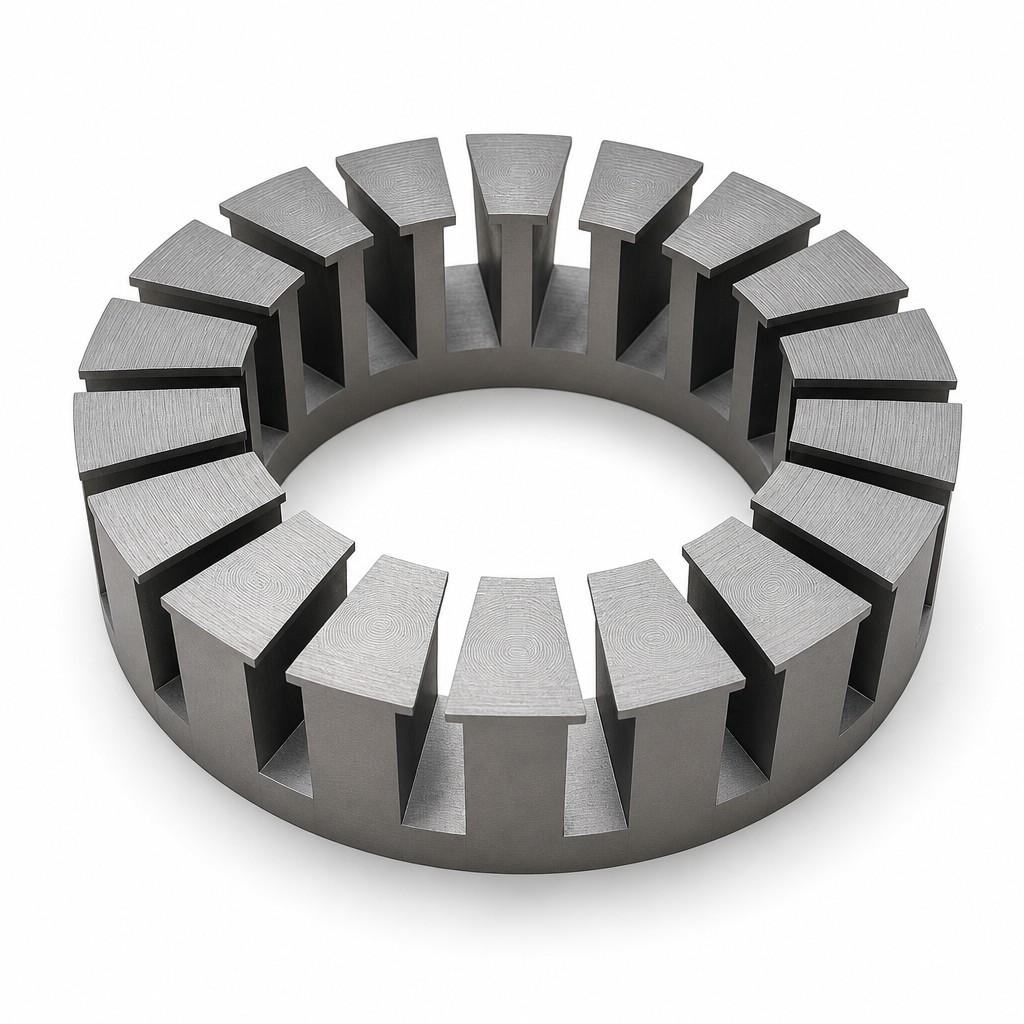
Custom tape-wound axial flux motor stator cores featuring precision pre-drilled symmetrical back-yoke mounting holes, specifically engineered for humanoid robot joint actuators, frameless hollow torque motors, and exoskeleton rotary drives. Manufactured from genuine Shougang electrical silicon steel (0.10mm to 0.35mm), this direct bolt-on design reduces motor axial length by up to 30%, eliminates external clamping rings, ensures zero-backlash torque transmission, and offers PCD tolerance +/-0.03mm with 3-5 day rapid prototype dispatch.
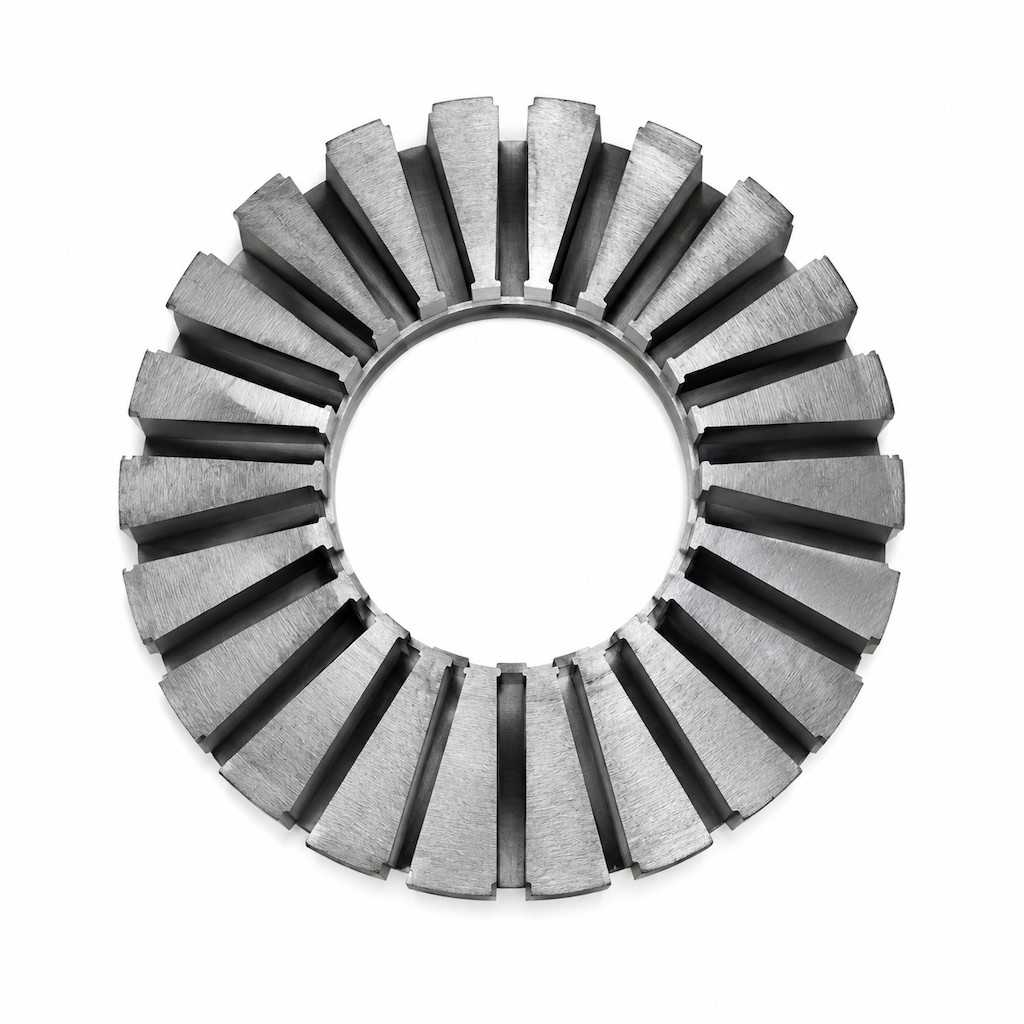
Custom tape-wound axial flux motor stator cores featuring precision pre-drilled symmetrical back-yoke mounting holes, specifically engineered for humanoid robot joint actuators, frameless hollow torque motors, and exoskeleton rotary drives. Manufactured from genuine Shougang electrical silicon steel (0.10mm to 0.35mm), this direct bolt-on design reduces motor axial length by up to 30%, eliminates external clamping rings, ensures zero-backlash torque transmission, and offers PCD tolerance +/-0.03mm with 3-5 day rapid prototype dispatch.

Address : Room 201, West Building A, Dawei Logistics, Xihai Industrial Zone, Lecong Town, Shunde District, Foshan City
You may unsubscribe at any moment. For that purpose, please find our contact info in the legal notice.


We will contact you as soon as possible
Hi! Click one of our members below to chat on








 IPv6 network supported