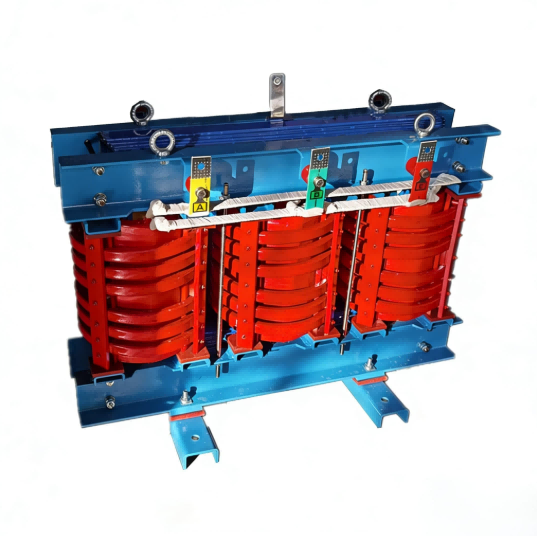
 What are the significant advantages of Oil-immersed transformers compared to Dry-type transformers?
Jul 02, 2026
Compared to Dry-type transformers, Oil-immersed transformers offer significant advantages primarily in capacity and voltage rating, heat dissipation and overload protection, operating efficiency, procurement costs, and environmental adaptability.
Larger capacities and voltage levels are possible.
Oil-immersed transformers rely on oil circulation for insulation and heat dissipation, eliminating the resin/air bottleneck of dry-type transformers. Therefore:
Single unit capacity: Dry-type transformers typically reach 2500-3150 kVA as the mainstream upper limit, while Oil-immersed transformers can easily reach tens or even hundreds of MVA.
Voltage levels: Dry-type transformers commonly reach 35 kV, while Oil-immersed transformers can reach 110 kV, 220 kV, and even higher, making them the mainstay of power transmission and distribution networks.
In short: For large-capacity, high-voltage applications, Oil-immersed transformers are almost the only option.
Strong heat dissipation and overload capacity
Transformer oil has a much higher specific heat capacity and thermal conductivity than air. Combined with oil convection/forced oil circulation, it can quickly dissipate heat from the windings.
Short-term overload capacity is significantly stronger than dry-type transformers (higher thermal inertia, more easily withstands impact loads).
During long-term high load rate operation (≥75%), winding temperature rise control is more stable, and it is less likely to be forced to shut down or derating by temperature management strategies.
Superior operating efficiency (especially under high load conditions)
Lower Pk (load loss) at actual operating temperatures: oil cooling ensures uniform temperature distribution, and winding resistance doesn't spike with localized hot spots like in dry-type systems.
In scenarios with prolonged high loads and long operating times, oil-cooled transformers typically offer lower overall losses (electricity costs) than dry-type systems.
Furthermore, the amorphous alloy oil-cooled transformer route allows for extremely low Po (no-load loss), making it a crucial option for achieving "ultimate efficiency," while dry-type amorphous transformers are limited by heat dissipation constraints, resulting in a much narrower application range.
Lower Procurement Costs for the Same Capacity
For the same capacity, the price of hydraulic substations is generally significantly lower than that of dry-type substations. The larger the capacity, the more substantial the absolute price difference.
For large-capacity substations (e.g., ≥1600 kVA), there are fewer dry-type models to choose from, while hydraulic substations offer a wider selection, mature competition, and superior cost-effectiveness.
Lower operating noise
Oil dampens vibrations in the core and windings, and combined with the inherent buffering effect of outdoor/panel-mounted substations, oil-cooled substations typically operate 5-10 dB quieter than dry-type substations.
In noise-sensitive environments, oil-cooled substations are actually more suitable.
Enhanced environmental adaptability (outdoor-oriented)
Good weather resistance: Unaffected by low temperatures (oil won't freeze and crack), and can withstand high temperatures thanks to its heat dissipation design; wider temperature range than dry-type systems.
For outdoor platforms, transformer substations, mountainous areas, and rural power grids—scenarios where there is "no one to manage the environment and the conditions are harsh"—oil-type systems are more robust.
Read More

 en
en fr
fr es
es
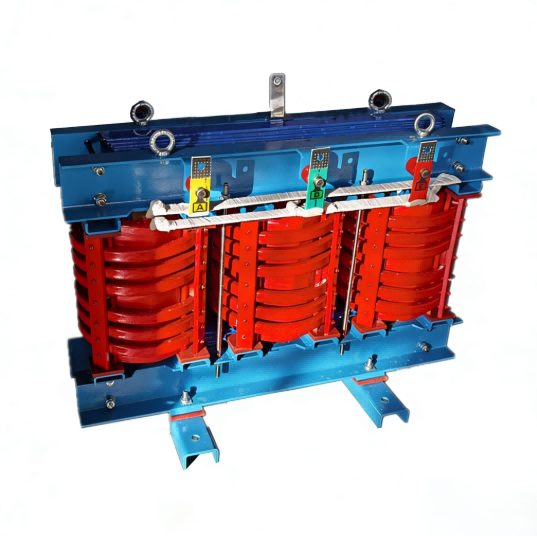 How to select a Dry-type Transformer based on the application scenario?



 IPv6 network supported