
 en
en fr
fr es
es
The selection of Dry-type Transformers based on application scenarios revolves around their "oil-free and fireproof" safety characteristics, while also comprehensively considering factors such as heat dissipation methods, protection levels, and insulation materials.
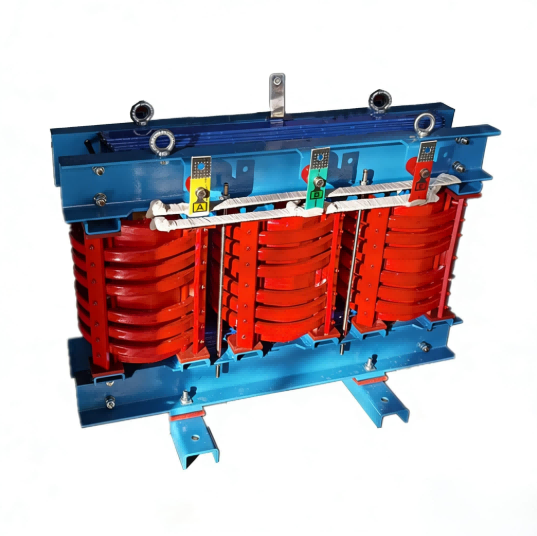
1.Insulation Types: Epoxy Resin Cast Type: The windings are completely encapsulated in epoxy resin, providing excellent moisture, dust, and corrosion resistance. It is maintenance-free, has low noise, and is the mainstream choice.
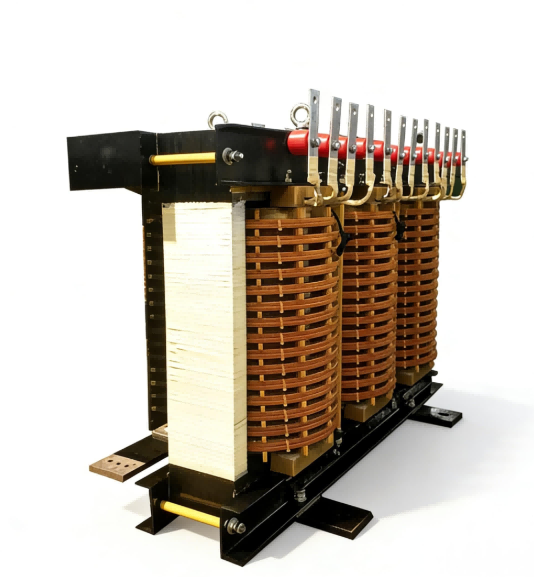
Unencapsulated/Winding Type: The windings are impregnated with insulating varnish, resulting in better heat dissipation and slightly stronger overload capacity. However, its moisture and dust resistance is weaker, and it is often used in specific industrial environments.
2.Protection Rating (IP Code):
IP20: Standard protection, prevents finger contact with live parts, suitable for clean, dry dedicated electrical rooms.
IP23: Protects against water droplets within a 60° vertical angle, suitable for general factory buildings, semi-outdoor environments, etc.
3.Cooling Methods:
Natural Air Cooling (AN): Relies on air convection, suitable for applications with smaller capacity or lower load rates.
Forced Air Cooling (AF): Utilizes a fan, increasing the transformer's short-term overload capacity by 40-50%, suitable for applications with large load fluctuations and periodic overload requirements.
1. Determine safety and location: Confirm whether dry systems are necessary (e.g., indoors, in densely populated areas). This is a prerequisite.
2. Insulation type: For most scenarios (buildings, public facilities), epoxy resin casting (SCB) is preferred; non-encapsulated (SGB) can only be considered in industrial workshops with extremely high heat dissipation requirements and clean environments.
3. Protection rating: IP20 for cleanroom electrical distribution rooms; IP23 for factories with slight moisture or dust; IP54 and above for outdoor or extreme environments.
4. Cooling method: Select natural cooling (AN) when the load is stable; if the load fluctuates or requires short-term overload, forced air cooling (AF) must be installed.
5. Specific requirements: Whether on-load tap changer, low noise, high insulation class (H class) or explosion-proof function is required.

Address : Room 201, West Building A, Dawei Logistics, Xihai Industrial Zone, Lecong Town, Shunde District, Foshan City
You may unsubscribe at any moment. For that purpose, please find our contact info in the legal notice.


 IPv6 network supported
We will contact you as soon as possible
Hi! Click one of our members below to chat on