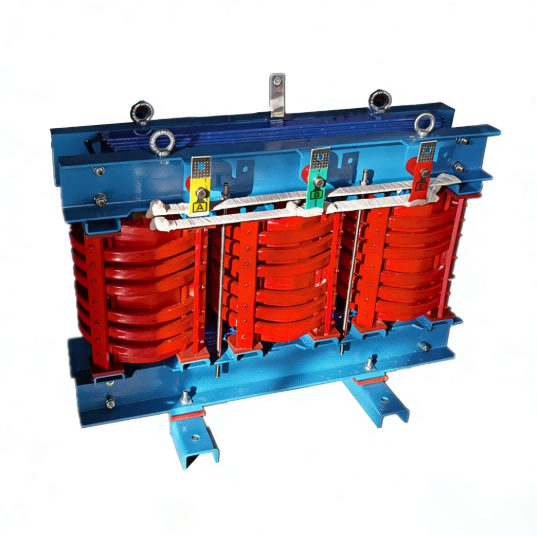
 From a process perspective, what are the differences between Oil-immersed transformers and Dry-type transformers?
Aug 15, 2026
From a process perspective, the core difference between Oil-immersed transformers and Dry-type transformers lies in the construction method of the insulation system and the winding encapsulation process. Simply put: oil-immersed transformers achieve insulation and heat dissipation by being "immersed in oil," while dry-type transformers achieve insulation by being "encapsulated with solid materials."
1.Insulation system construction process (the most crucial difference)Oil-immersed transformersThe windings are "barely wound": copper wire is wrapped with cable paper or corrugated paper, and is not fully encapsulated after winding.
Insulation is filled with oil: all gaps between the windings and the core, between the windings, and between the windings and the tank are filled with insulating oil.
Key process: Vacuum oil injection—After the transformer body is dried, filtered and degassed insulating oil is injected under vacuum to ensure that the oil completely wets all insulation gaps and removes air bubbles.
Dry-type transformers (taking the mainstream epoxy resin casting type as an example)
The windings are "solidified": after the copper wire is wound, it is placed in a mold, and epoxy resin is poured under vacuum. After curing, it forms a hard insulating entity.
Insulation relies on epoxy resin: the resin itself is both an insulating material and a structural support.
Key process: Vacuum casting—the epoxy resin is mixed with curing agent and filler under vacuum and then injected into the mold to eliminate air bubbles and ensure that the insulation layer is dense and defect-free.
2.Winding Manufacturing Process:
Oil-Immersed Transformer
No overall encapsulation after winding
Interlayer insulation is done with cable paper, and the ends are insulated with insulating cardboard or laminated wood.
The wound coil is directly fitted onto the iron core, and then the entire coil is immersed in oil.
Dry-Type Transformer
Vacuum casting or vacuum pressure impregnation (VPI) is mandatory after winding.
Low-voltage coils are mostly wound with copper or aluminum foil to reduce eddy current losses.
High-voltage coils use enameled round or flat wire, and are then cast with epoxy resin.
After casting, curing treatment (temperature curing) is required to allow the resin to reach its final strength.
3.Assembly and Sealing Process:
Oil-Immersed Transformer
After the transformer body (core + windings) is assembled, it must be installed in a sealed oil tank.
The oil tank welding requirements are strict, and leak testing (air pressure or water pressure test) is required.
Installation accessories: oil conservator, radiator, gas relay, dehumidifier, etc.
Finally, vacuum oil filling is performed.
Dry-Type Transformer
After the transformer body is assembled, an oil tank is not required.
The protective outer shell (metal plate or mesh cover) is installed directly, mainly for protection rather than sealing.
Temperature control probe and cooling fan (optional) are installed.
No oil conservator, no radiator, no gas relay
4.Testing Procedures:
Oil-Immersed Transformers
In addition to routine electrical tests, oil hydration tests are required (breakdown voltage, water content, acid value, chromatographic analysis, etc.).
A sealing test is required (to check for tank leakage).
Partial discharge measurements are usually performed after oil filling.
Dry-Type Transformers
No oil hydration test required.
Focus on partial discharge levels (typically ≤10pC, advanced European level ≤5pC).
Insulation resistance and absorption ratio tests are required to check for moisture.
Read More

 en
en fr
fr es
es



 IPv6 network supported