
 en
 fr
 es
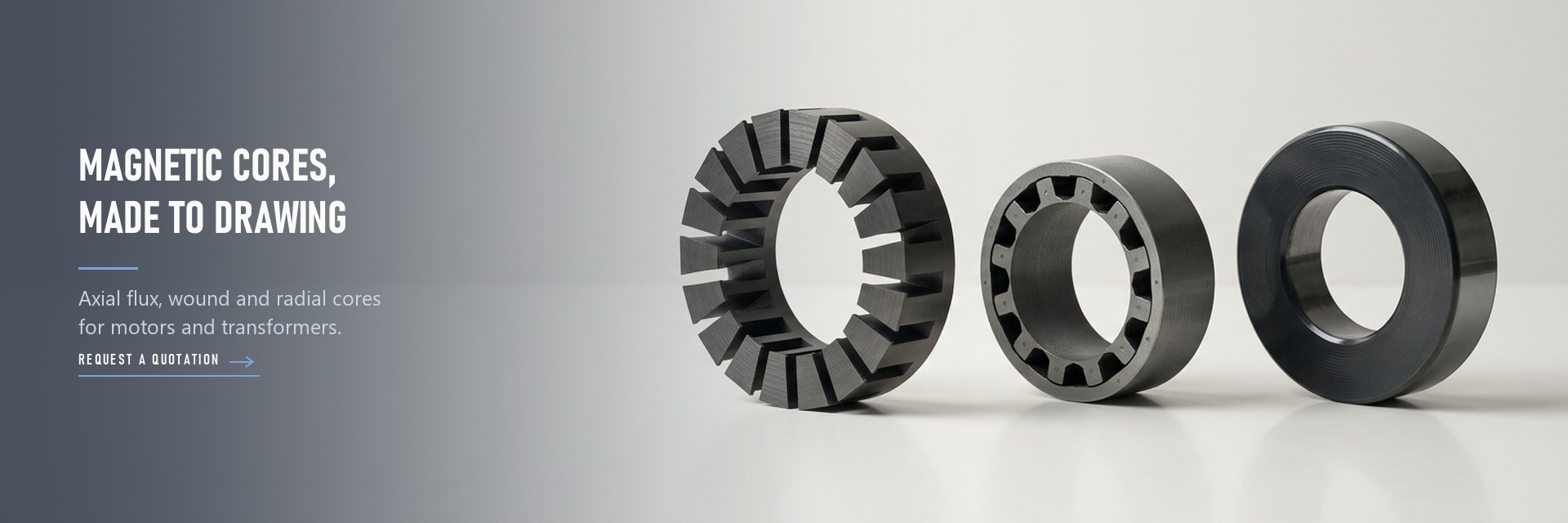
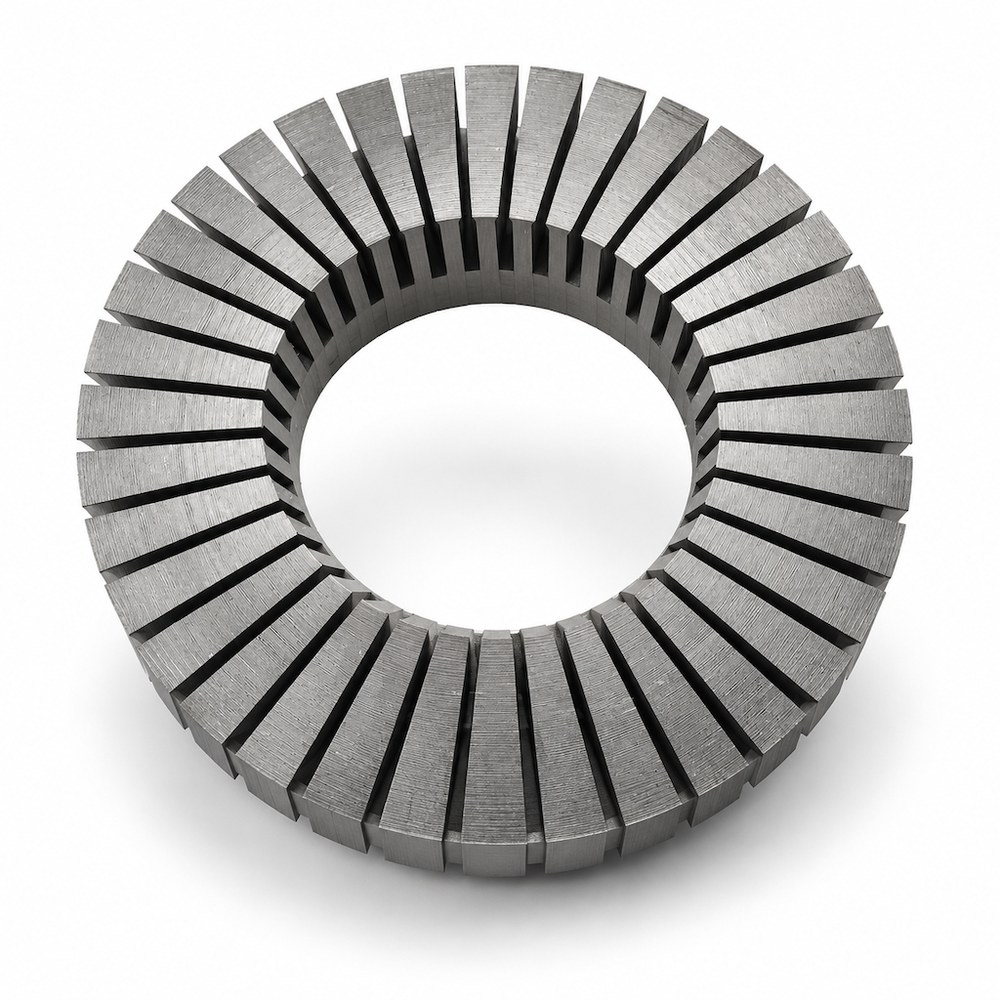
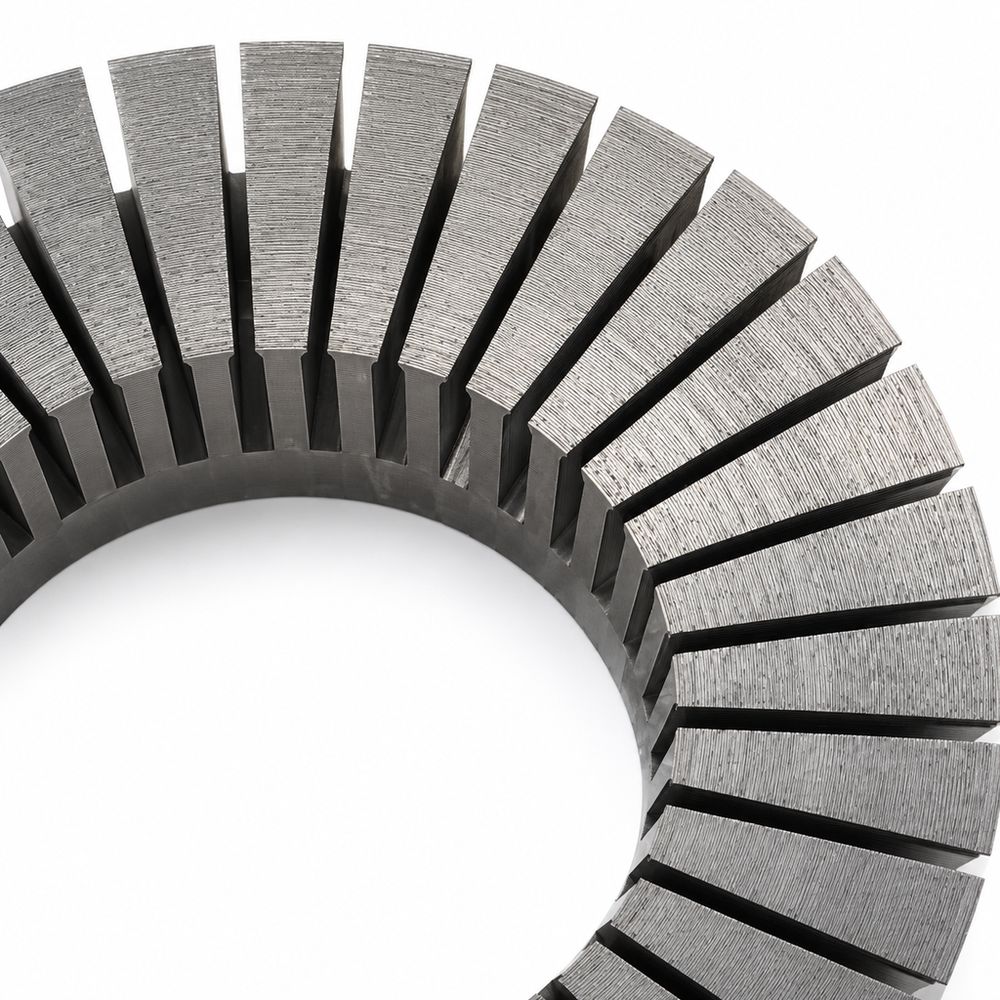
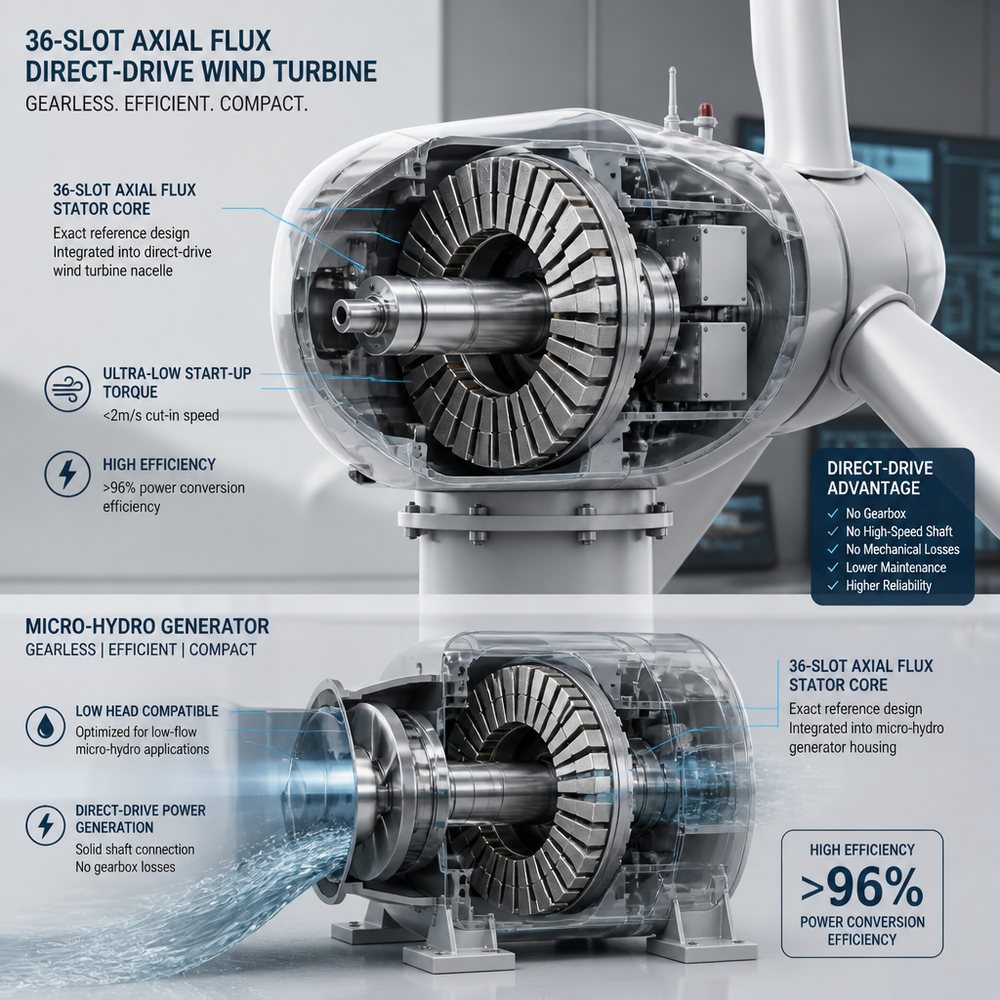
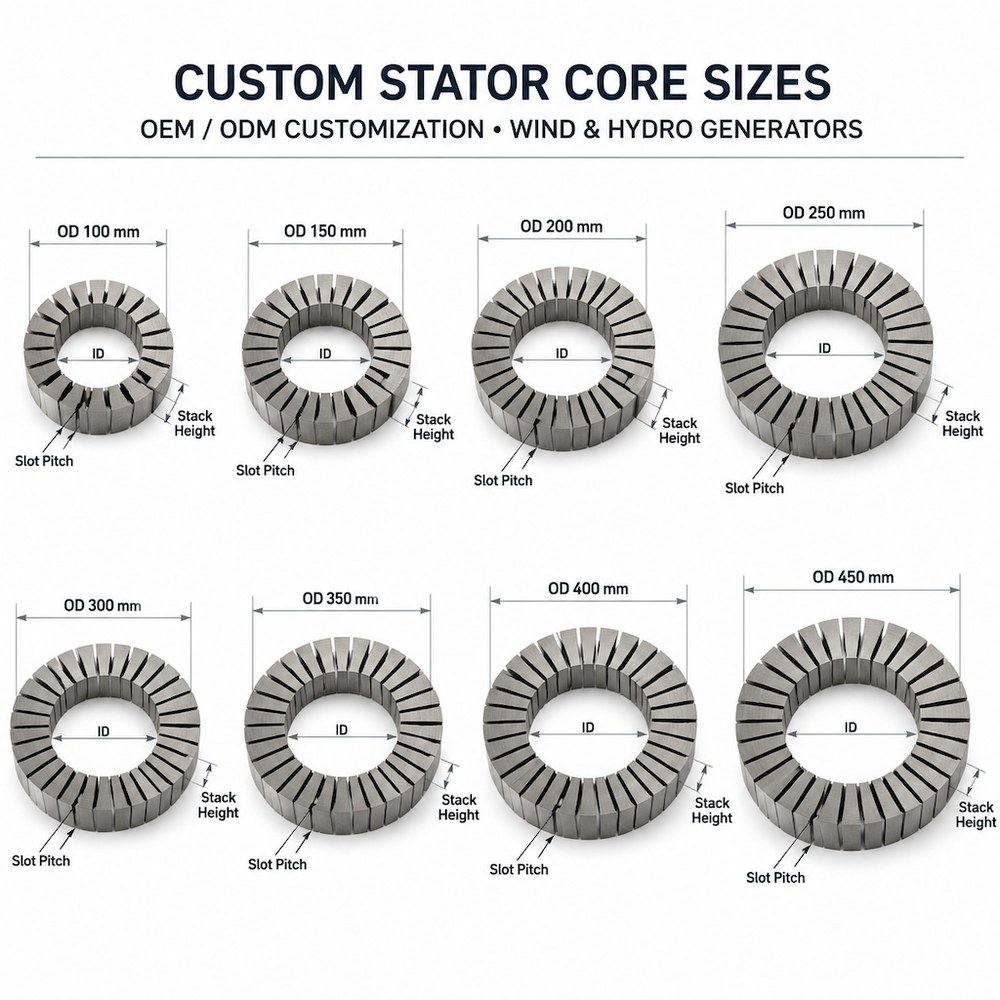
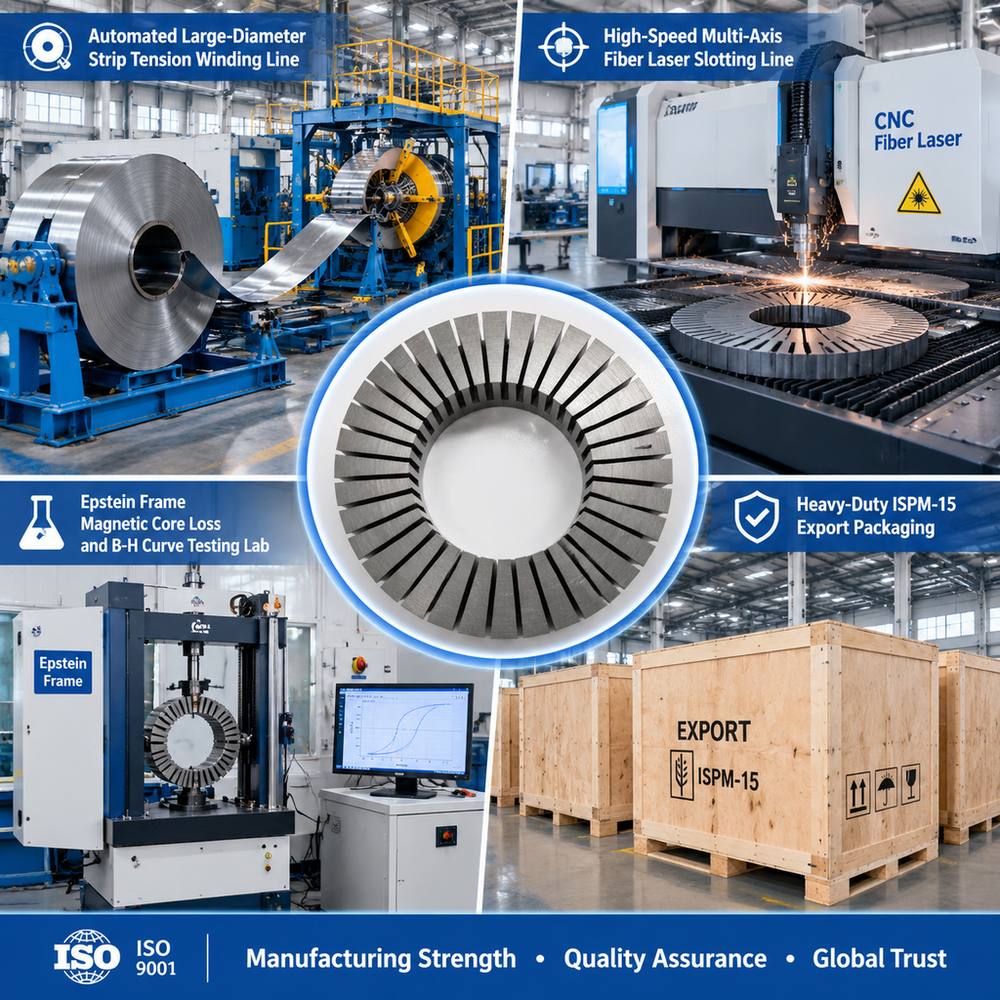
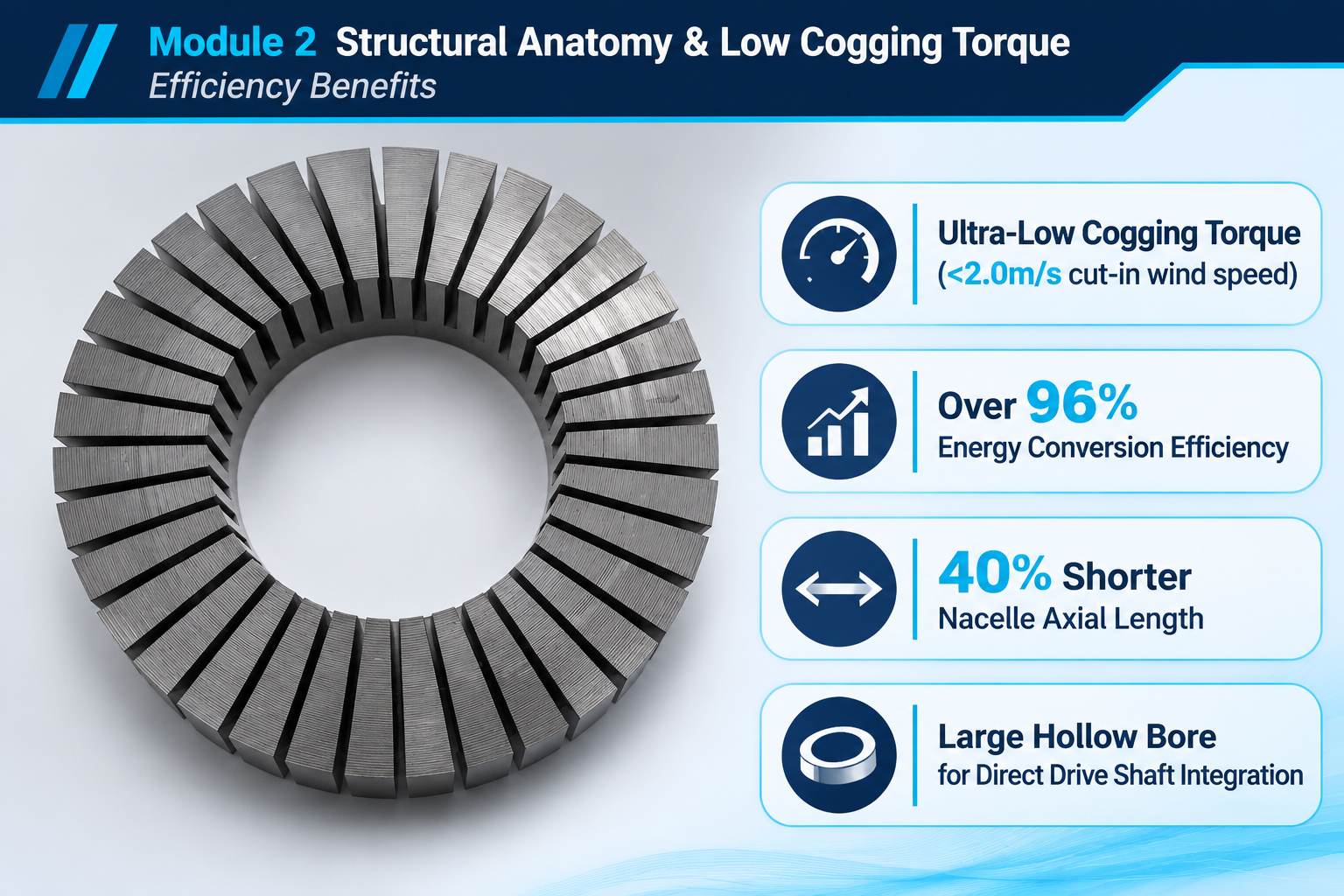
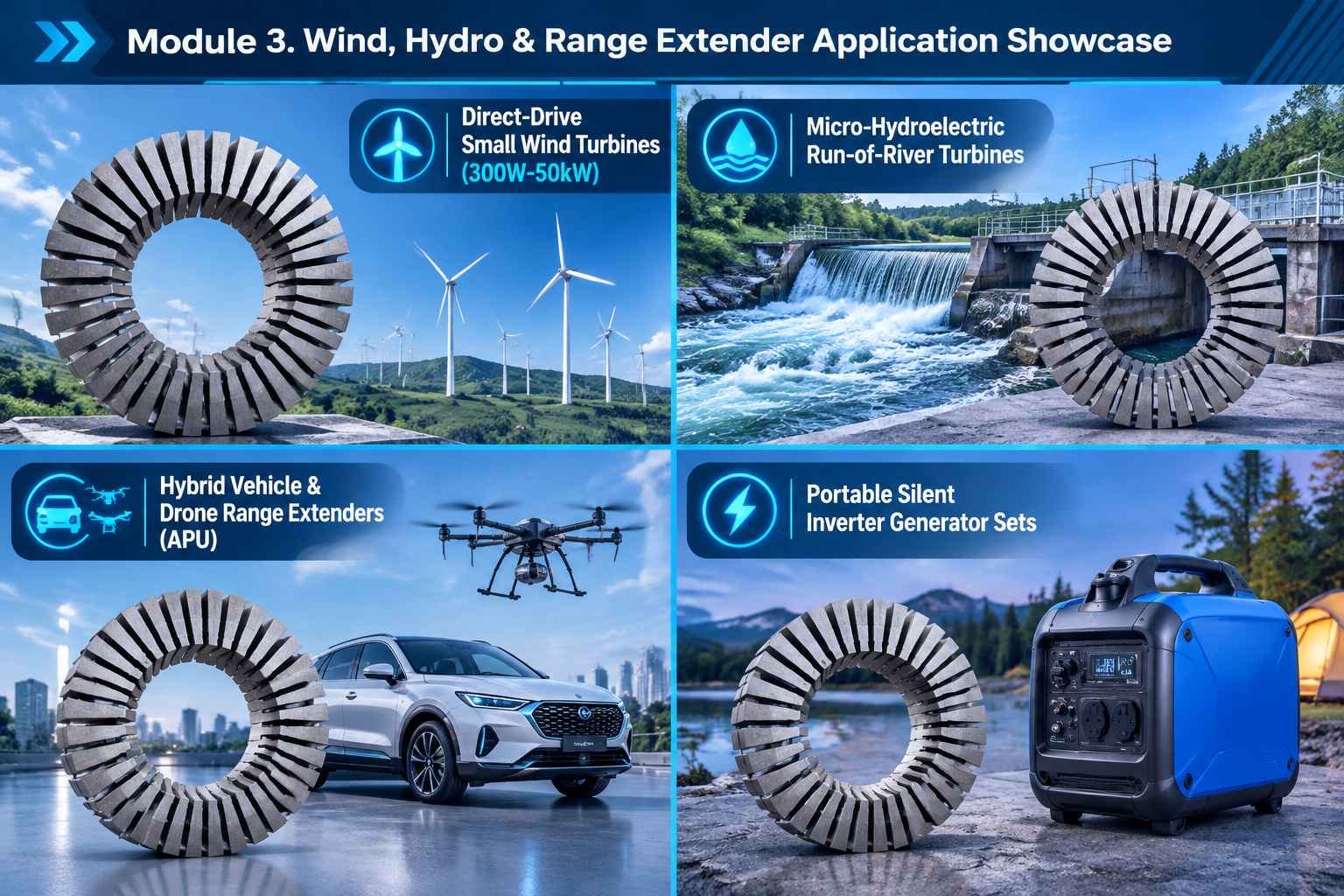
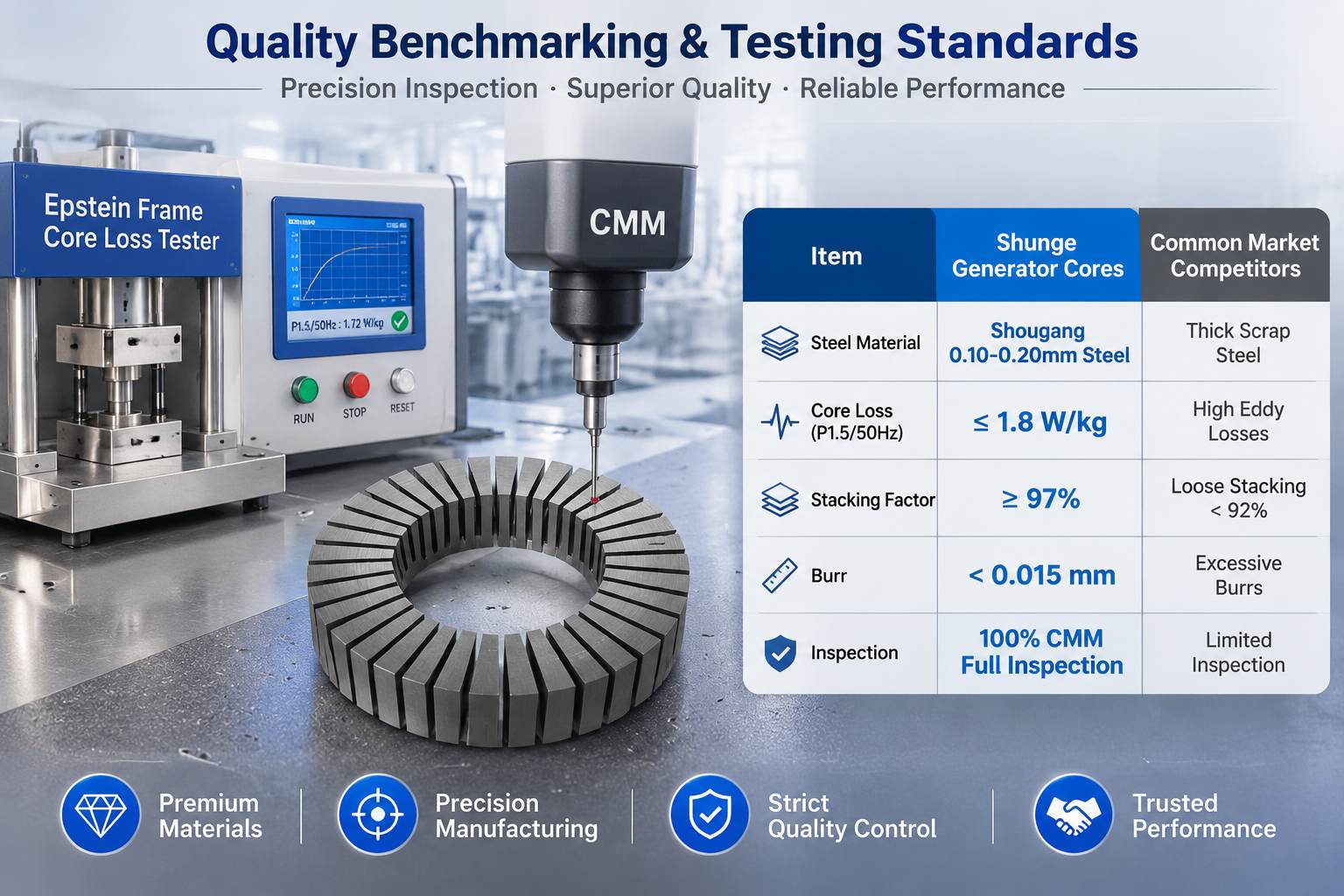
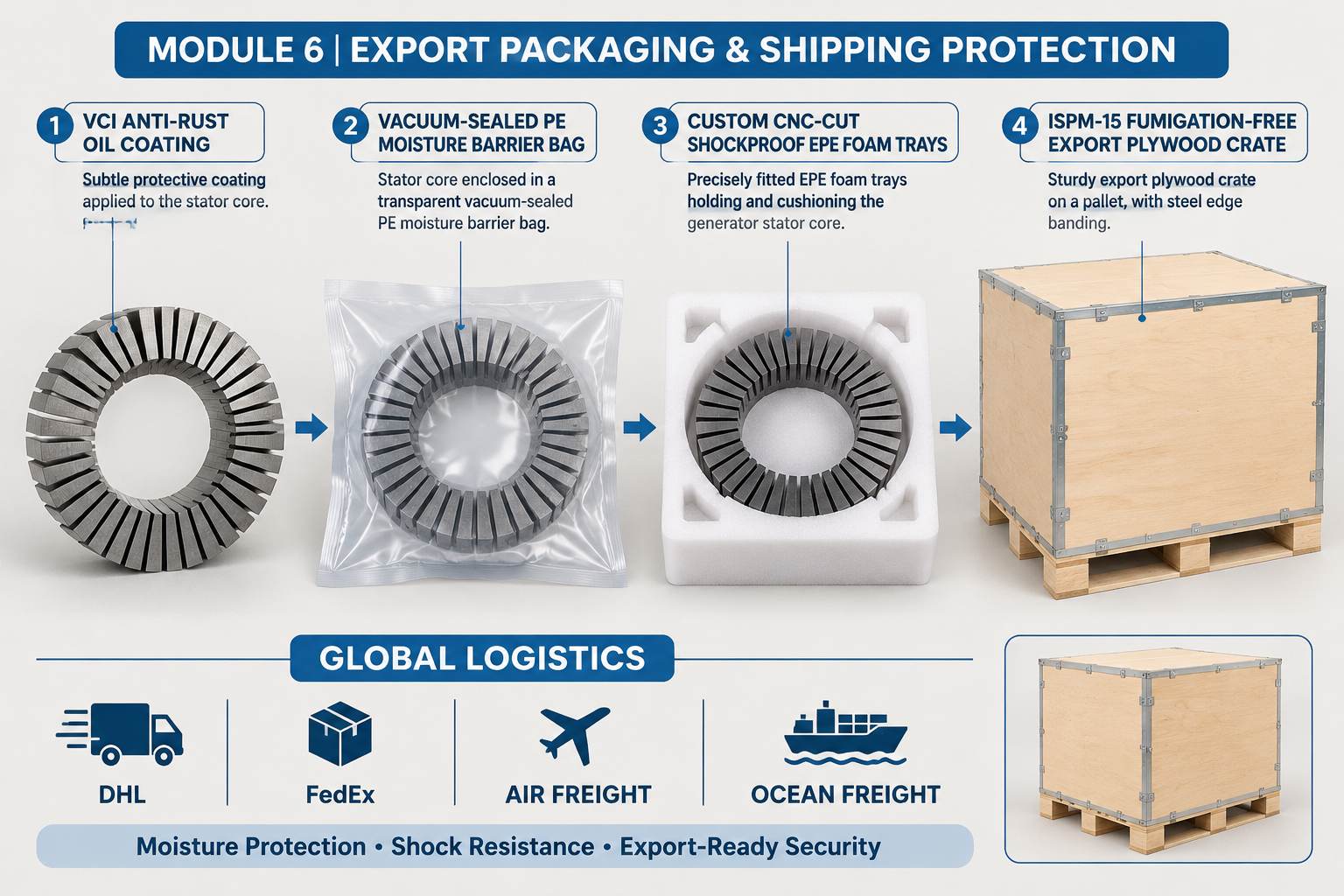
Custom tape-wound axial flux motor/generator stator cores engineered specifically for direct-drive permanent magnet generators (AFPMG), small wind turbines, micro-hydro power generators, and hybrid range extenders. Continuously wound from genuine Shougang/Baosteel electrical silicon steel strip (0.10mm to 0.35mm) with 36 precision laser-slotted radial teeth, delivering ultra-low cogging torque for low start-up cut-in speeds, over 96% energy conversion efficiency, high packing stacking factor (>=97%), and tooling-free rapid prototyping in 3-5 days.
Product Origin :
CHINAShipping Port :
NANSHA/SHENZHEN/SHANGHAI/NINGBOPayment :
TT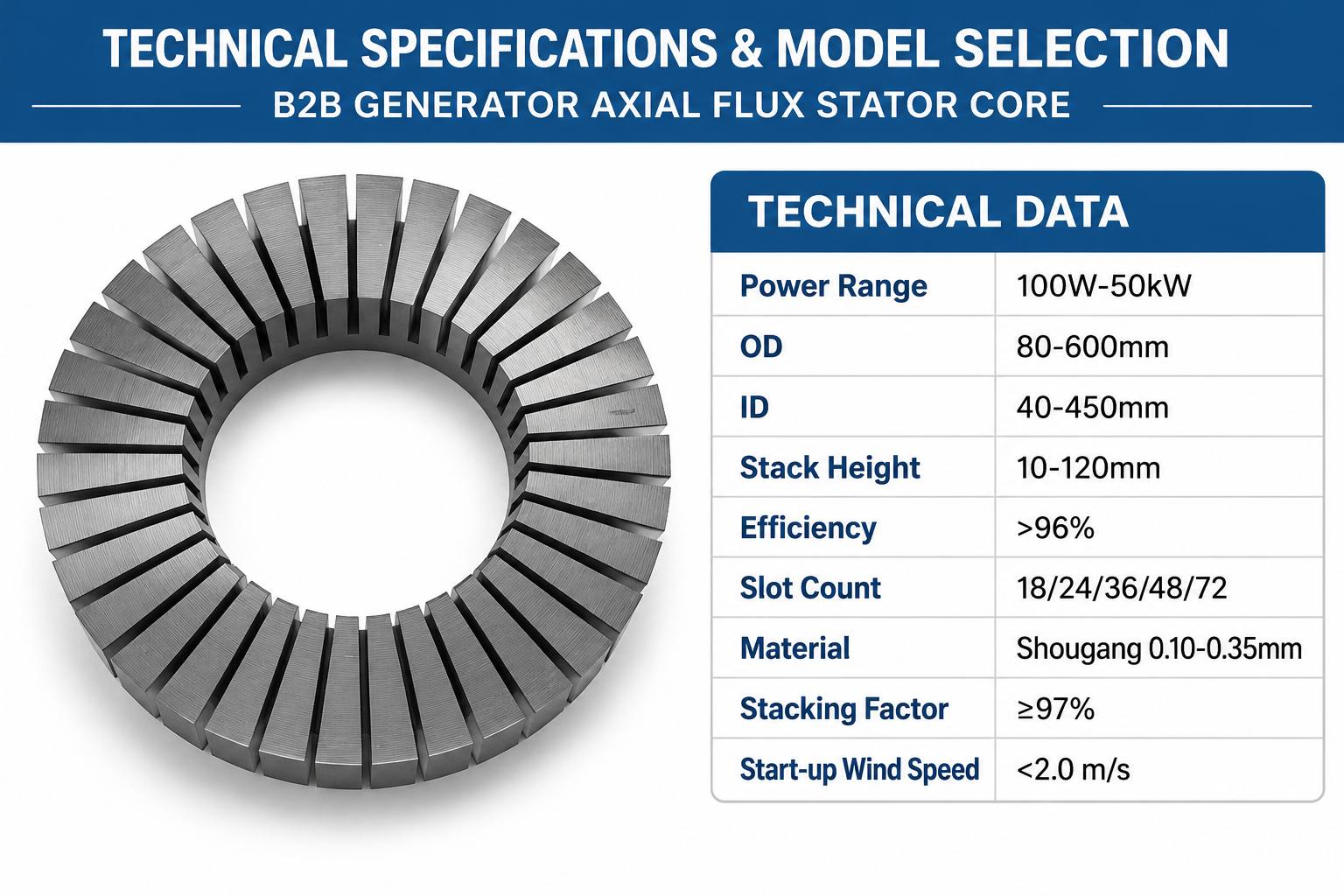
As renewable energy systems evolve toward direct-drive, gearless architectures, conventional radial-flux generators encounter severe challenges: excessive axial length, heavy nacelle overhang weight, and high cogging torque that hinders low-speed startup. Shunge Steel's Custom Axial Flux Permanent Magnet Generator (AFPMG) Stator Cores are purpose-built to overcome these limitations in wind, hydro, and hybrid power generation.
Utilizing continuous closed-loop tape winding from prime non-oriented and grain-oriented electrical silicon steel strips (0.10 mm to 0.35 mm), our stator cores feature a flat disc structure with high-density radial slotted teeth and large hollow center bores. This pancake geometry eliminates bulky generator housing dimensions, drastically reduces cogging torque for seamless low-speed startup, and delivers power conversion efficiencies exceeding 96% across wide operational speed ranges.
Q1: Why is an axial flux stator core preferred over a radial core for direct-drive wind and hydro generators?
Answer: Axial flux stator cores offer a significantly larger rotor-stator air gap diameter relative to total generator volume. This larger radius generates substantially higher electromagnetic torque at low rotational speeds, eliminating the need for expensive, heavy, and failure-prone mechanical gearboxes. Furthermore, the pancake disc form factor reduces generator axial length by 40% to 50%, simplifying turbine mast mounting and minimizing nacelle weight.
Q2: How does Shunge Steel achieve such low cogging torque for low wind speed startup?
Answer: We optimize low cogging torque through three synchronized engineering methods:
Q3: What silicon steel grades and strip thicknesses are recommended for power generation?
Answer:
Q4: Can you customize large outer diameters (e.g., Ø 300 mm to Ø 600 mm) for multi-kilowatt generators?
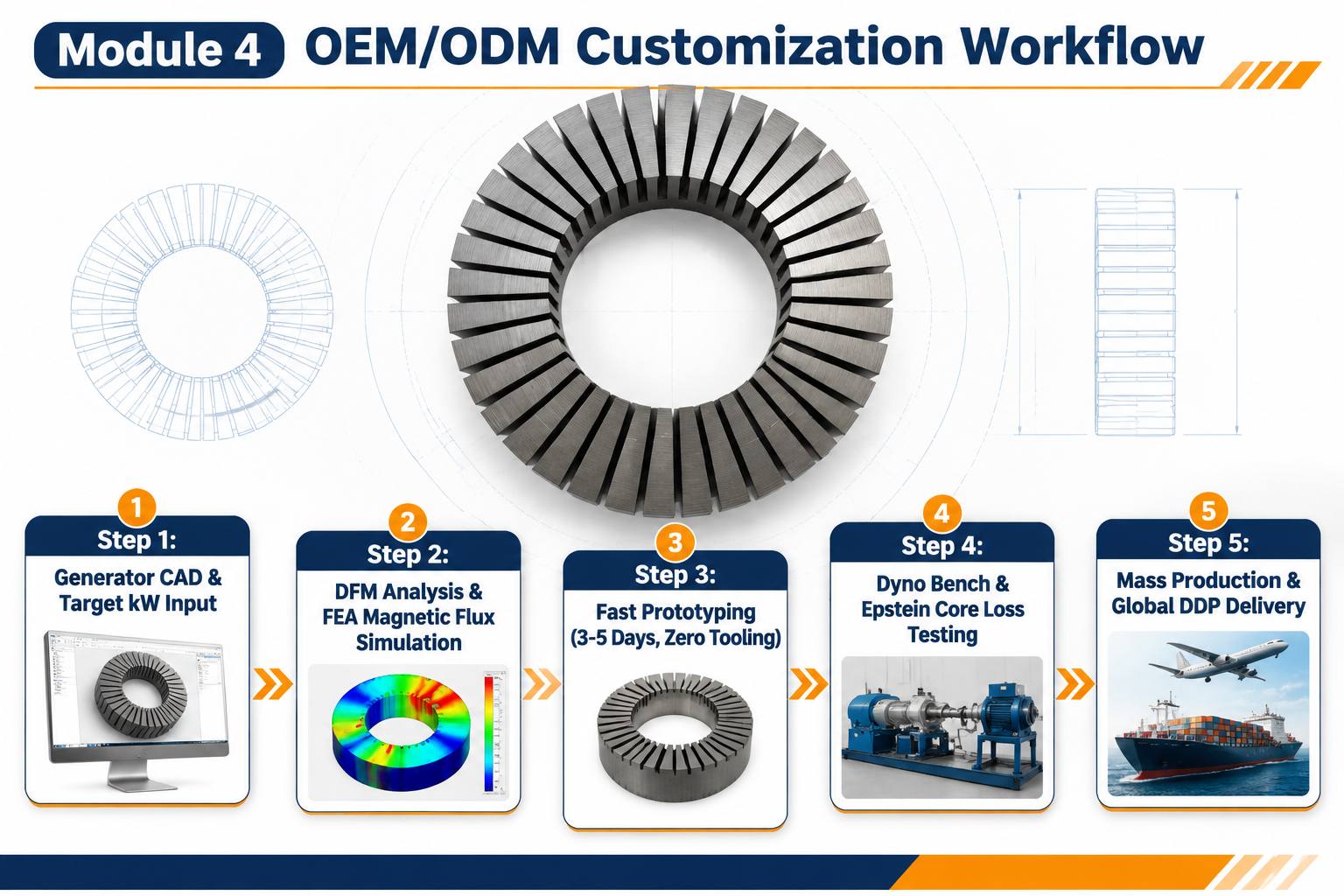
Answer: Yes. Our automated winding and multi-axis laser cutting equipment supports outer diameters from Ø 80 mm up to Ø 600 mm, inner diameters from Ø 40 mm to Ø 450 mm, and stack heights from 10 mm to 120 mm. Custom slot counts (18, 24, 36, 48, 72 slots) and bolt mounting arrays are fully supported without tooling charges.
Q5: What is your standard turnaround time for custom prototype samples?
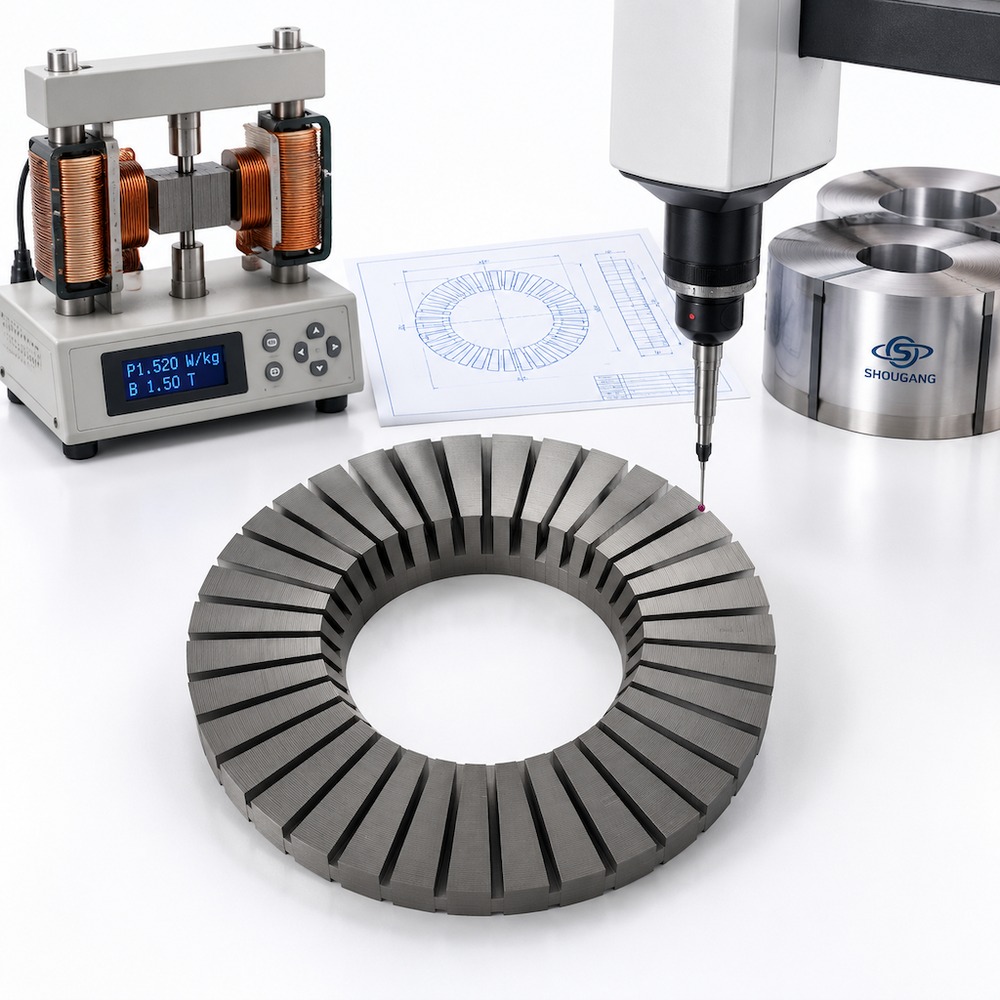
Answer: Because our CNC tape winding and laser cutting process requires zero dedicated stamping mold tooling, custom prototype generator stator cores are typically manufactured, CMM inspected, and dispatched within 3 to 5 business days after CAD sign-off. Production batch lead time is 12 to 15 business days for quantities of 100 to 2,000 pcs.
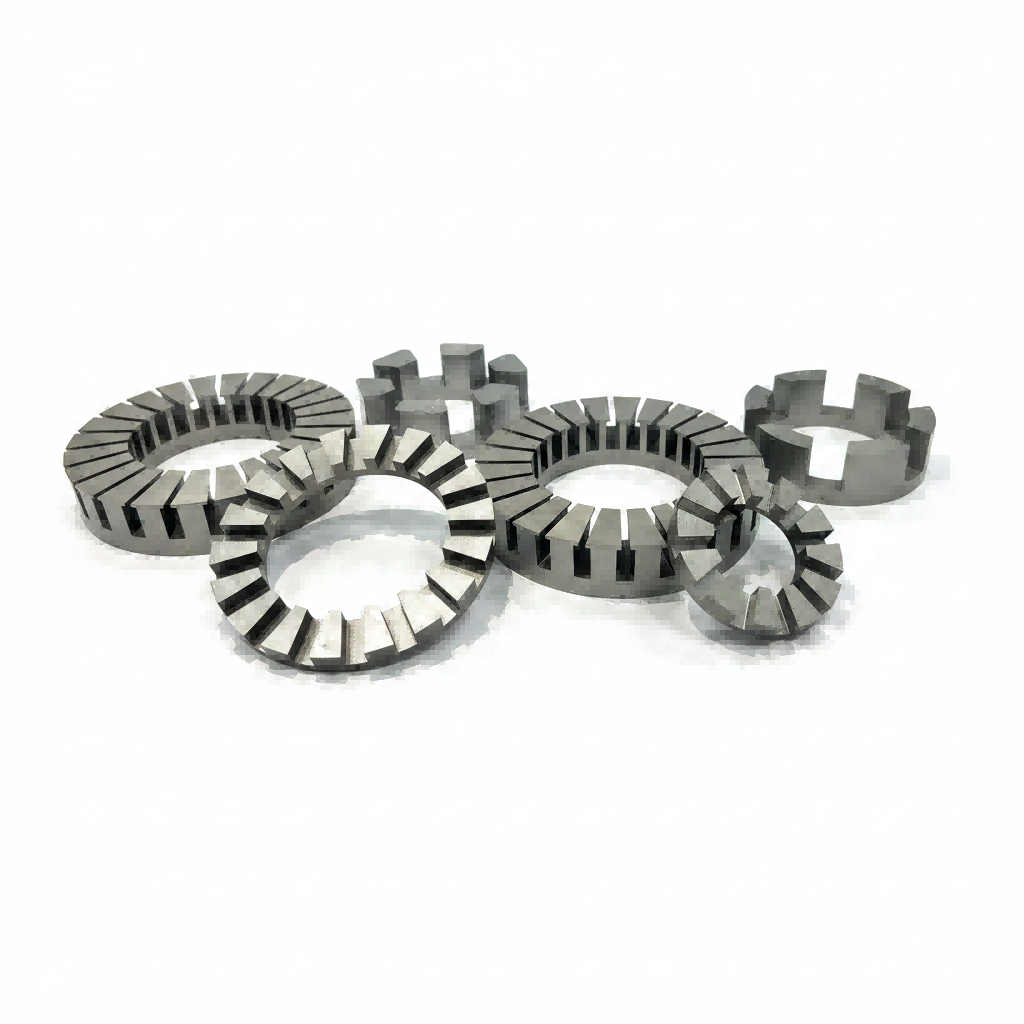
Custom tape-wound axial flux motor/generator stator cores engineered specifically for direct-drive permanent magnet generators (AFPMG), small wind turbines, micro-hydro power generators, and hybrid range extenders. Continuously wound from genuine Shougang/Baosteel electrical silicon steel strip (0.10mm to 0.35mm) with 36 precision laser-slotted radial teeth, delivering ultra-low cogging torque for low start-up cut-in speeds, over 96% energy conversion efficiency, high packing stacking factor (>=97%), and tooling-free rapid prototyping in 3-5 days.
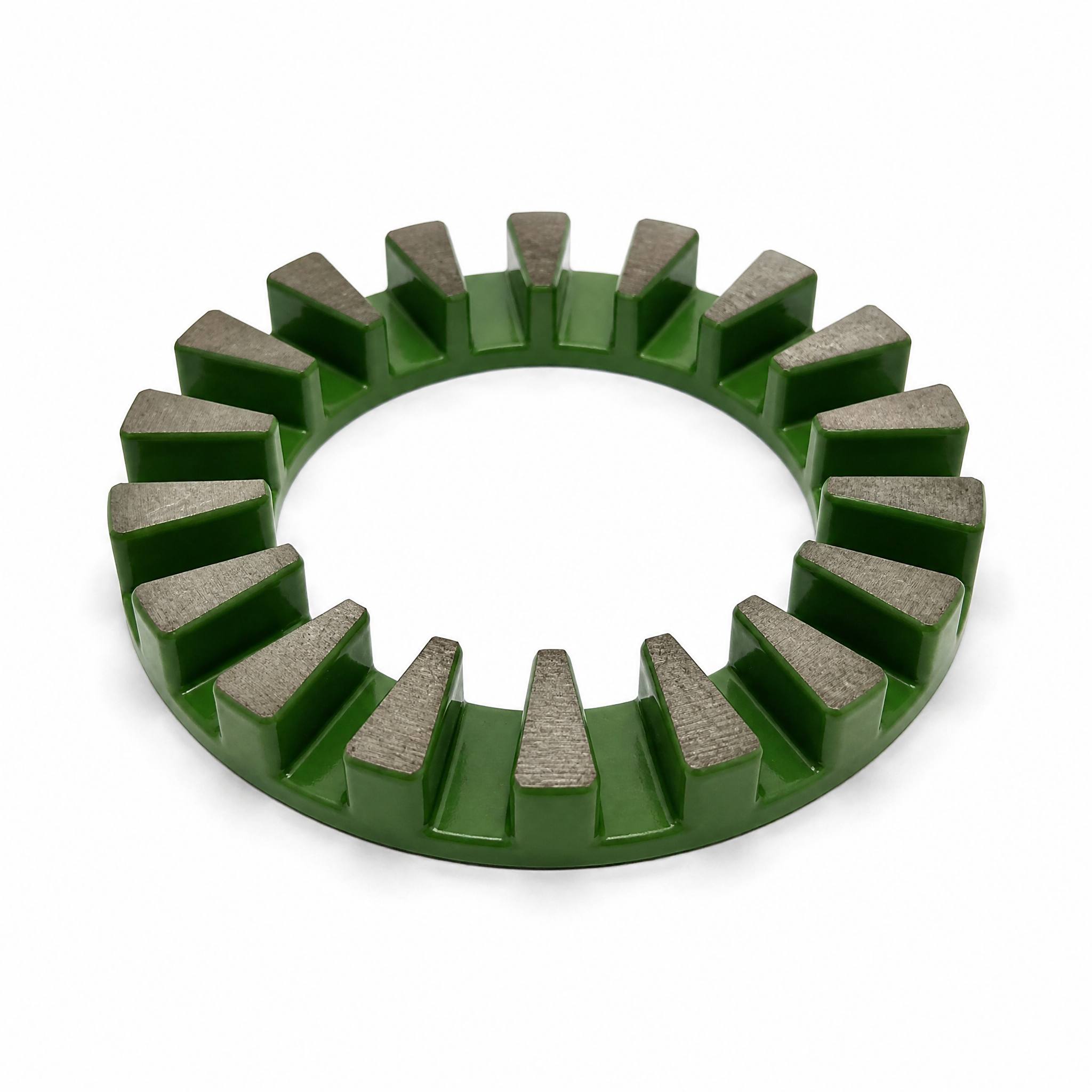
Custom tape-wound axial flux motor/generator stator cores engineered specifically for direct-drive permanent magnet generators (AFPMG), small wind turbines, micro-hydro power generators, and hybrid range extenders. Continuously wound from genuine Shougang/Baosteel electrical silicon steel strip (0.10mm to 0.35mm) with 36 precision laser-slotted radial teeth, delivering ultra-low cogging torque for low start-up cut-in speeds, over 96% energy conversion efficiency, high packing stacking factor (>=97%), and tooling-free rapid prototyping in 3-5 days.
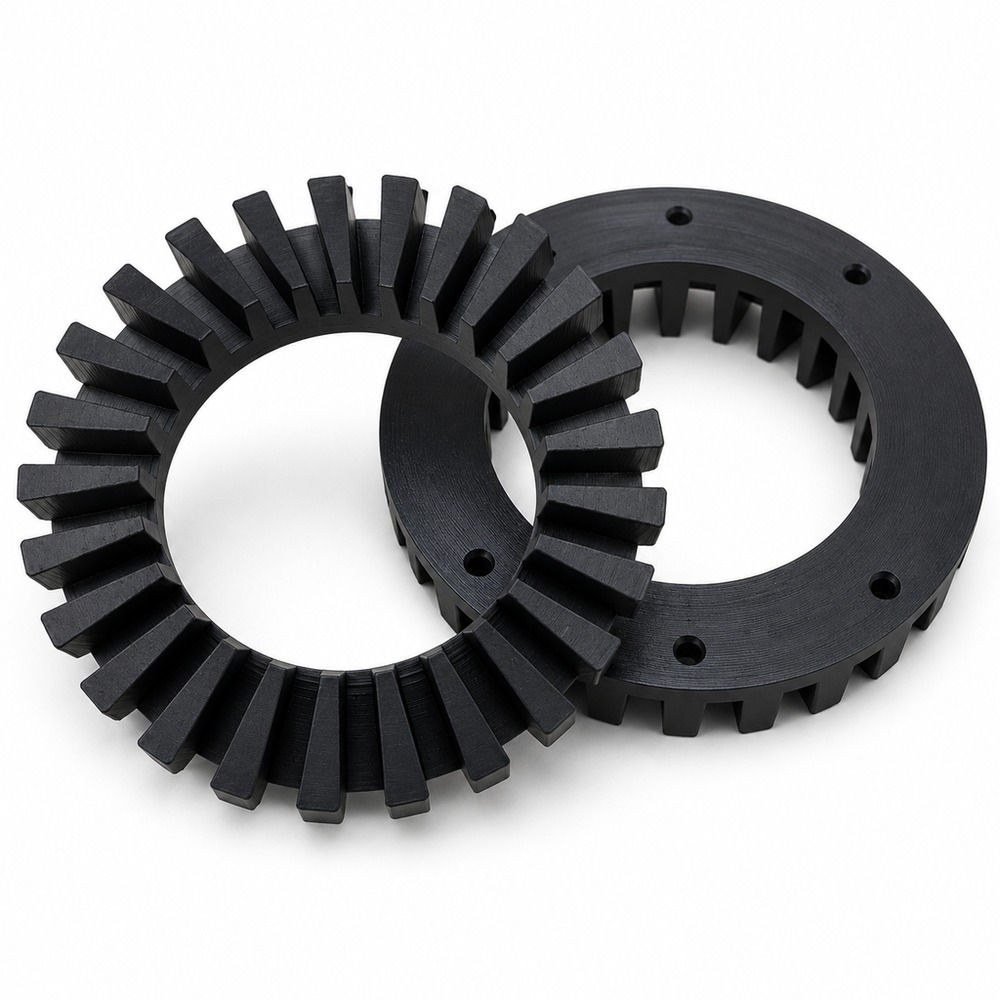
Custom tape-wound axial flux motor/generator stator cores engineered specifically for direct-drive permanent magnet generators (AFPMG), small wind turbines, micro-hydro power generators, and hybrid range extenders. Continuously wound from genuine Shougang/Baosteel electrical silicon steel strip (0.10mm to 0.35mm) with 36 precision laser-slotted radial teeth, delivering ultra-low cogging torque for low start-up cut-in speeds, over 96% energy conversion efficiency, high packing stacking factor (>=97%), and tooling-free rapid prototyping in 3-5 days.
Custom tape-wound axial flux motor/generator stator cores engineered specifically for direct-drive permanent magnet generators (AFPMG), small wind turbines, micro-hydro power generators, and hybrid range extenders. Continuously wound from genuine Shougang/Baosteel electrical silicon steel strip (0.10mm to 0.35mm) with 36 precision laser-slotted radial teeth, delivering ultra-low cogging torque for low start-up cut-in speeds, over 96% energy conversion efficiency, high packing stacking factor (>=97%), and tooling-free rapid prototyping in 3-5 days.
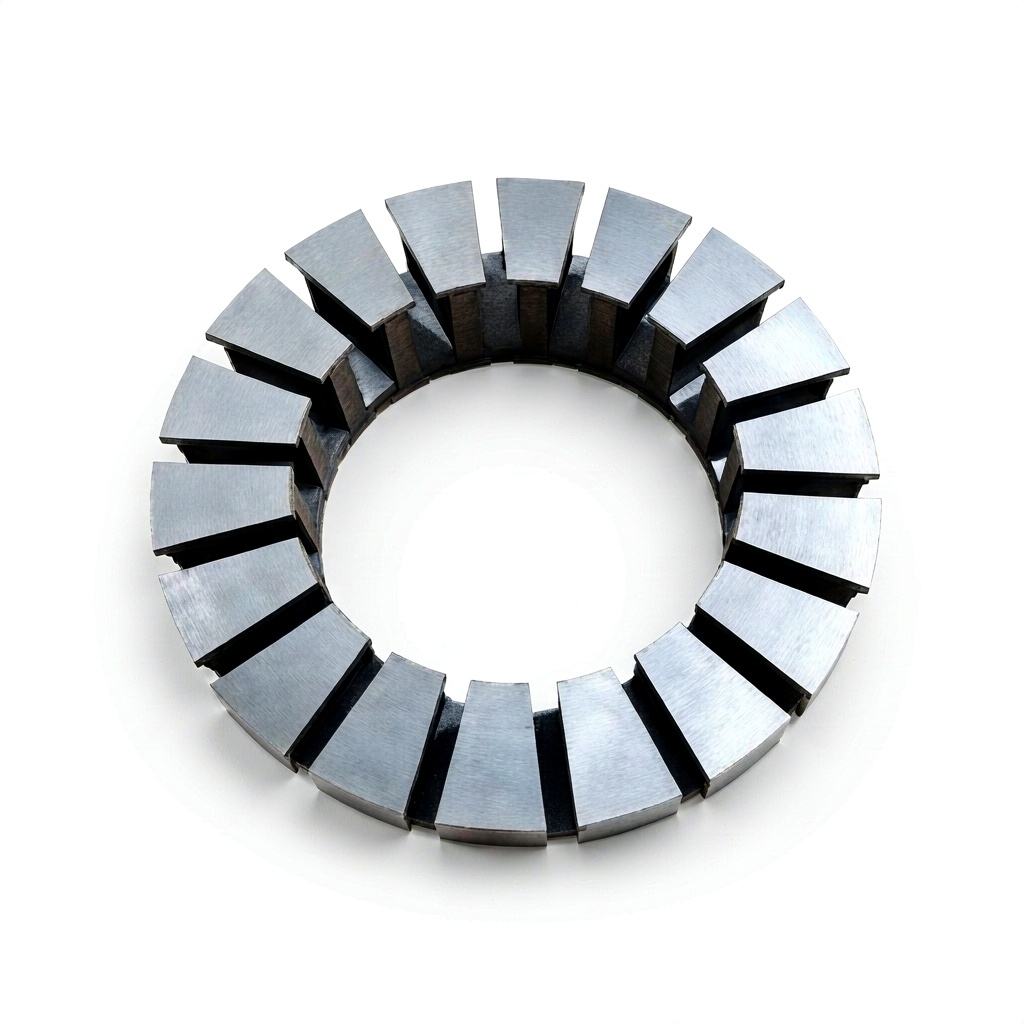
Custom tape-wound axial flux motor/generator stator cores engineered specifically for direct-drive permanent magnet generators (AFPMG), small wind turbines, micro-hydro power generators, and hybrid range extenders. Continuously wound from genuine Shougang/Baosteel electrical silicon steel strip (0.10mm to 0.35mm) with 36 precision laser-slotted radial teeth, delivering ultra-low cogging torque for low start-up cut-in speeds, over 96% energy conversion efficiency, high packing stacking factor (>=97%), and tooling-free rapid prototyping in 3-5 days.
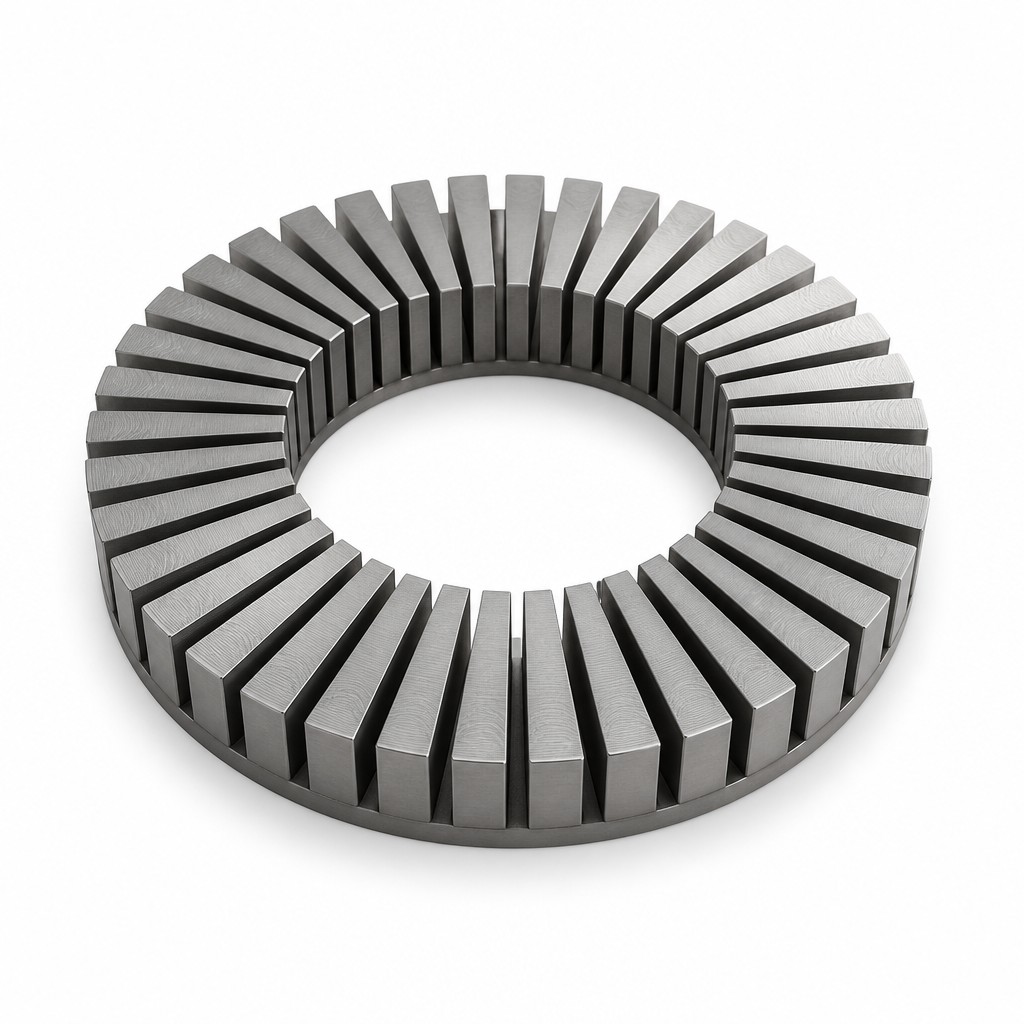
Custom tape-wound axial flux motor/generator stator cores engineered specifically for direct-drive permanent magnet generators (AFPMG), small wind turbines, micro-hydro power generators, and hybrid range extenders. Continuously wound from genuine Shougang/Baosteel electrical silicon steel strip (0.10mm to 0.35mm) with 36 precision laser-slotted radial teeth, delivering ultra-low cogging torque for low start-up cut-in speeds, over 96% energy conversion efficiency, high packing stacking factor (>=97%), and tooling-free rapid prototyping in 3-5 days.
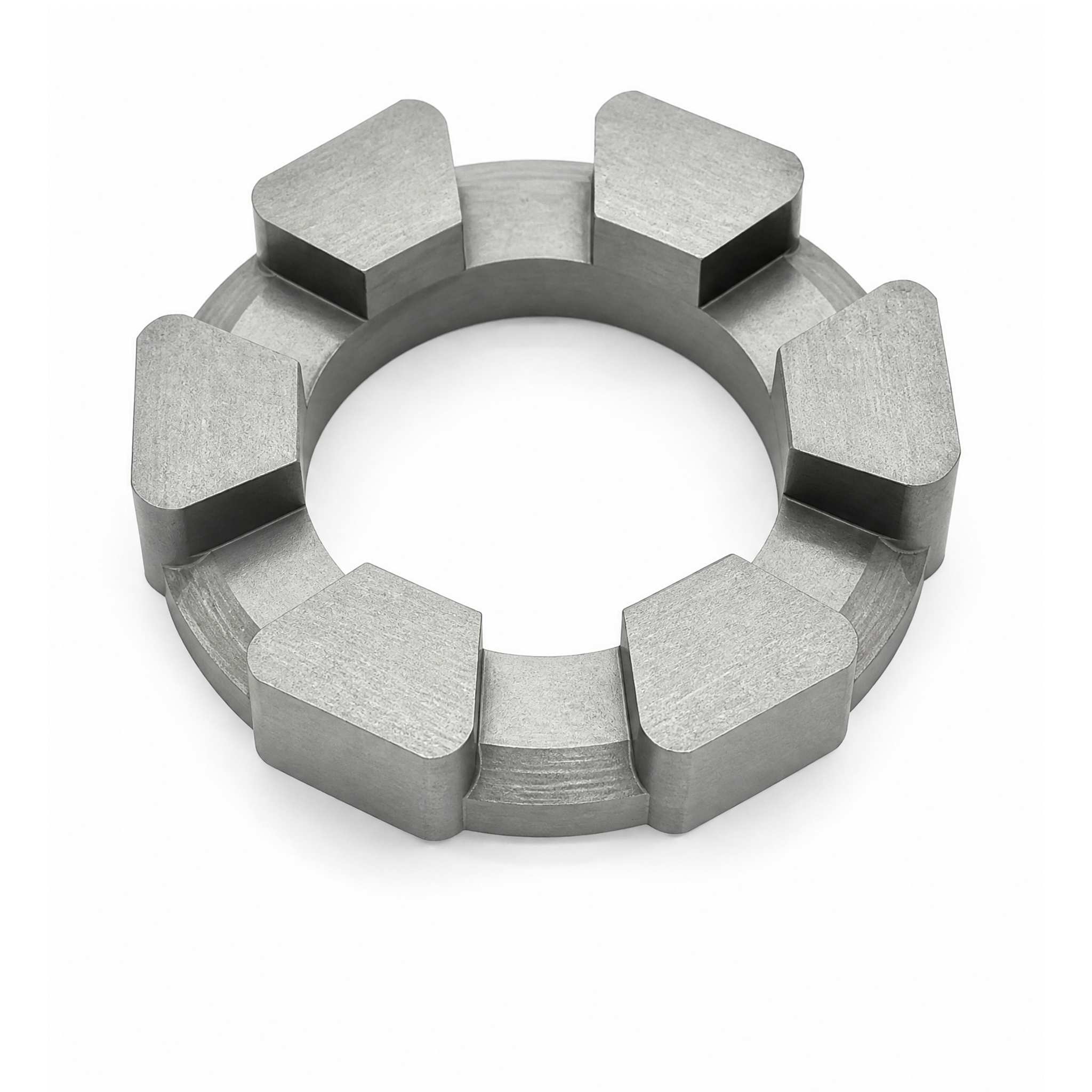
Custom tape-wound axial flux motor/generator stator cores engineered specifically for direct-drive permanent magnet generators (AFPMG), small wind turbines, micro-hydro power generators, and hybrid range extenders. Continuously wound from genuine Shougang/Baosteel electrical silicon steel strip (0.10mm to 0.35mm) with 36 precision laser-slotted radial teeth, delivering ultra-low cogging torque for low start-up cut-in speeds, over 96% energy conversion efficiency, high packing stacking factor (>=97%), and tooling-free rapid prototyping in 3-5 days.
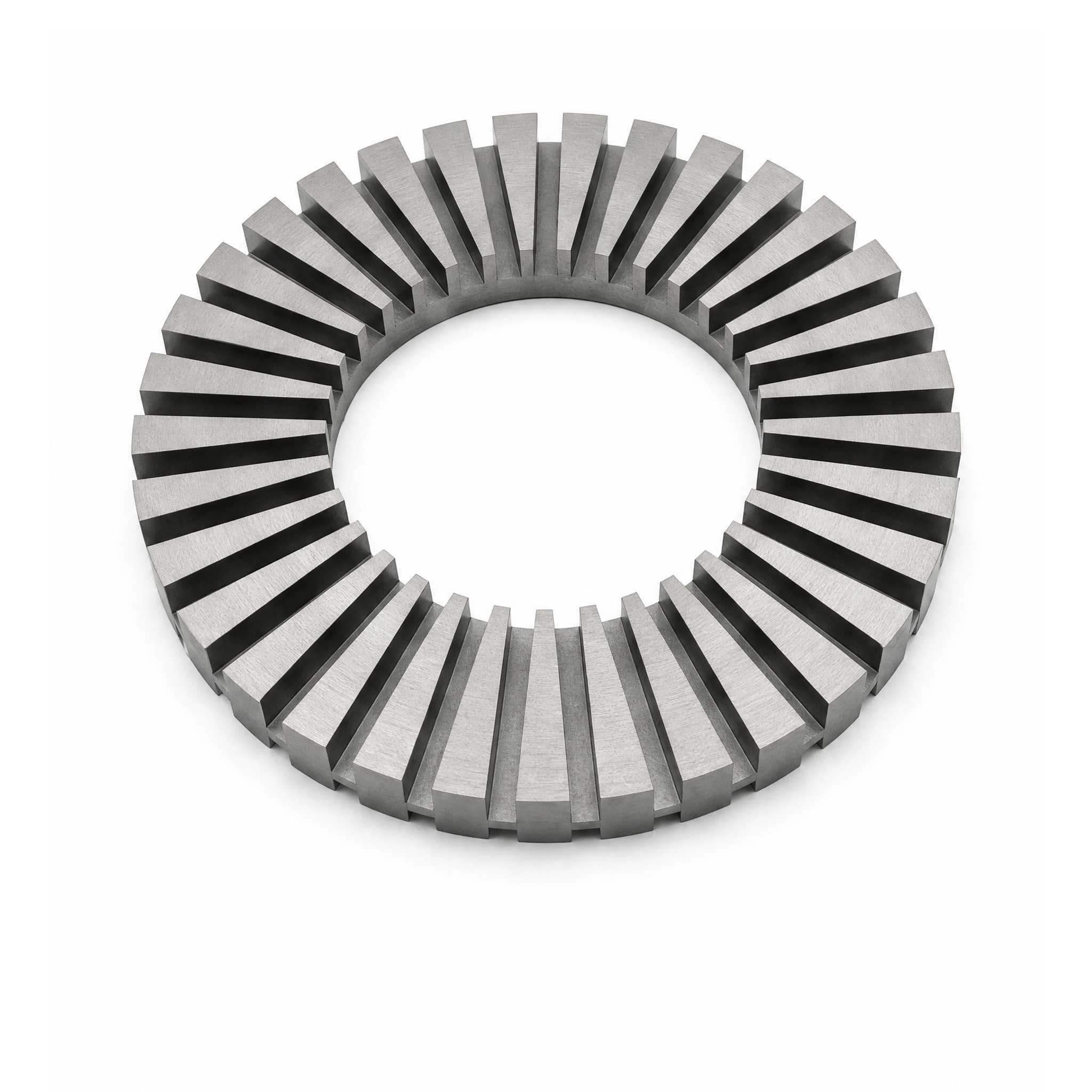
Custom tape-wound axial flux motor/generator stator cores engineered specifically for direct-drive permanent magnet generators (AFPMG), small wind turbines, micro-hydro power generators, and hybrid range extenders. Continuously wound from genuine Shougang/Baosteel electrical silicon steel strip (0.10mm to 0.35mm) with 36 precision laser-slotted radial teeth, delivering ultra-low cogging torque for low start-up cut-in speeds, over 96% energy conversion efficiency, high packing stacking factor (>=97%), and tooling-free rapid prototyping in 3-5 days.
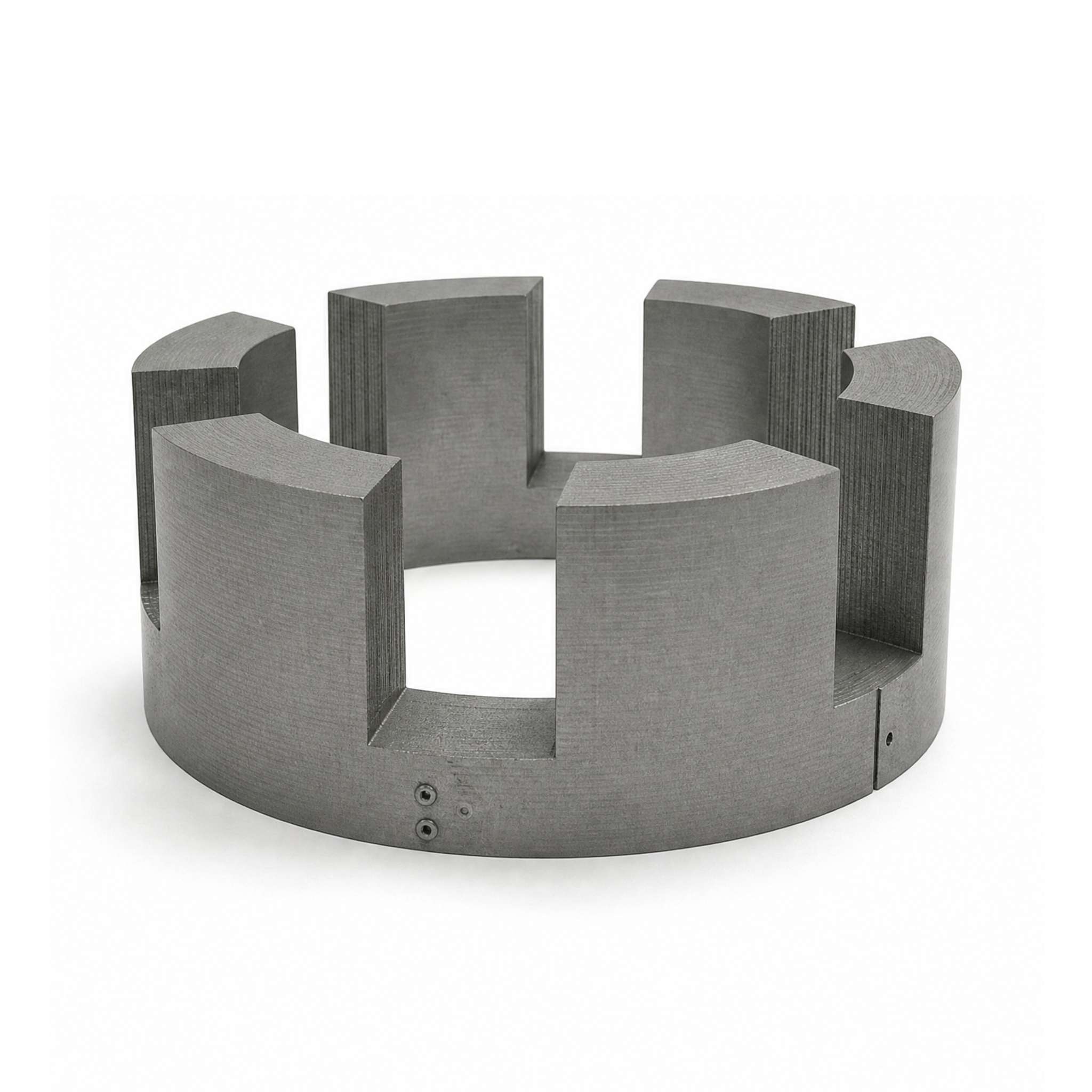
Custom tape-wound axial flux motor/generator stator cores engineered specifically for direct-drive permanent magnet generators (AFPMG), small wind turbines, micro-hydro power generators, and hybrid range extenders. Continuously wound from genuine Shougang/Baosteel electrical silicon steel strip (0.10mm to 0.35mm) with 36 precision laser-slotted radial teeth, delivering ultra-low cogging torque for low start-up cut-in speeds, over 96% energy conversion efficiency, high packing stacking factor (>=97%), and tooling-free rapid prototyping in 3-5 days.
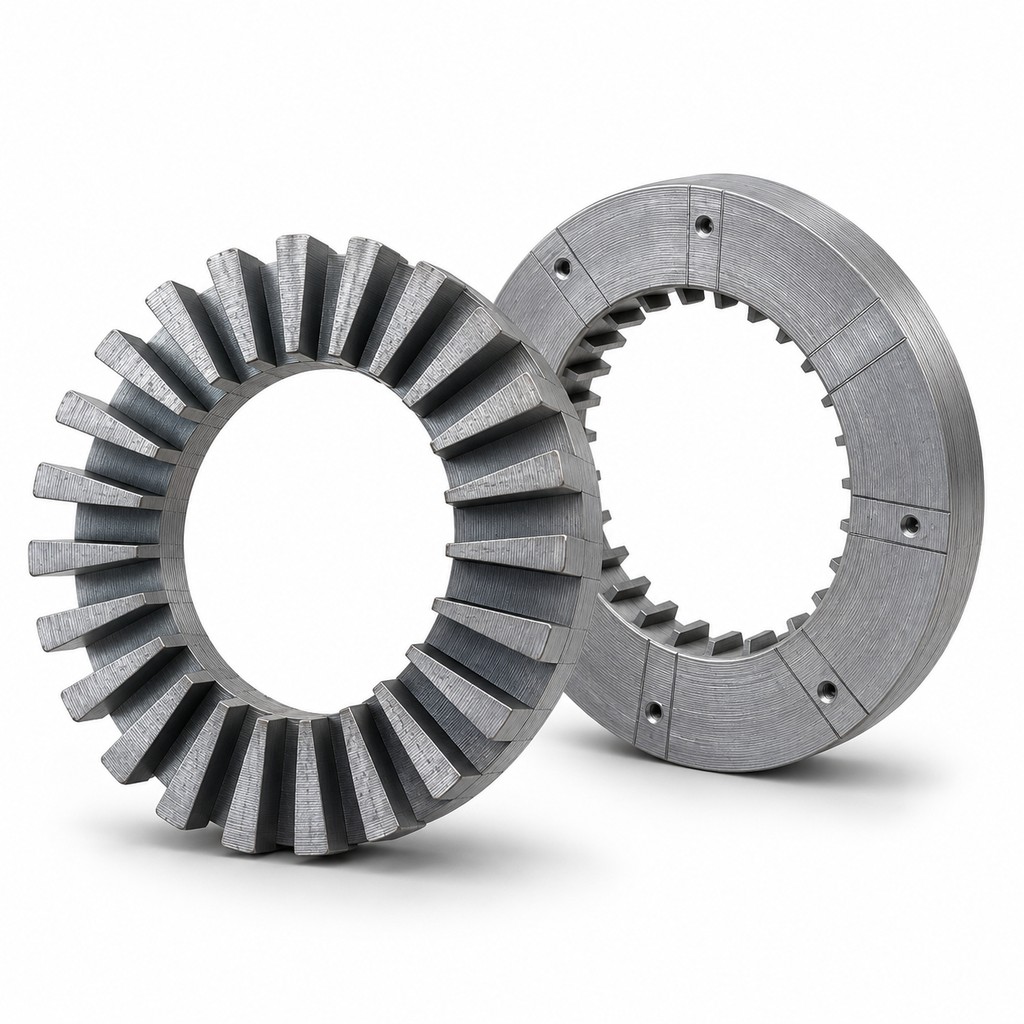
Custom tape-wound axial flux motor/generator stator cores engineered specifically for direct-drive permanent magnet generators (AFPMG), small wind turbines, micro-hydro power generators, and hybrid range extenders. Continuously wound from genuine Shougang/Baosteel electrical silicon steel strip (0.10mm to 0.35mm) with 36 precision laser-slotted radial teeth, delivering ultra-low cogging torque for low start-up cut-in speeds, over 96% energy conversion efficiency, high packing stacking factor (>=97%), and tooling-free rapid prototyping in 3-5 days.
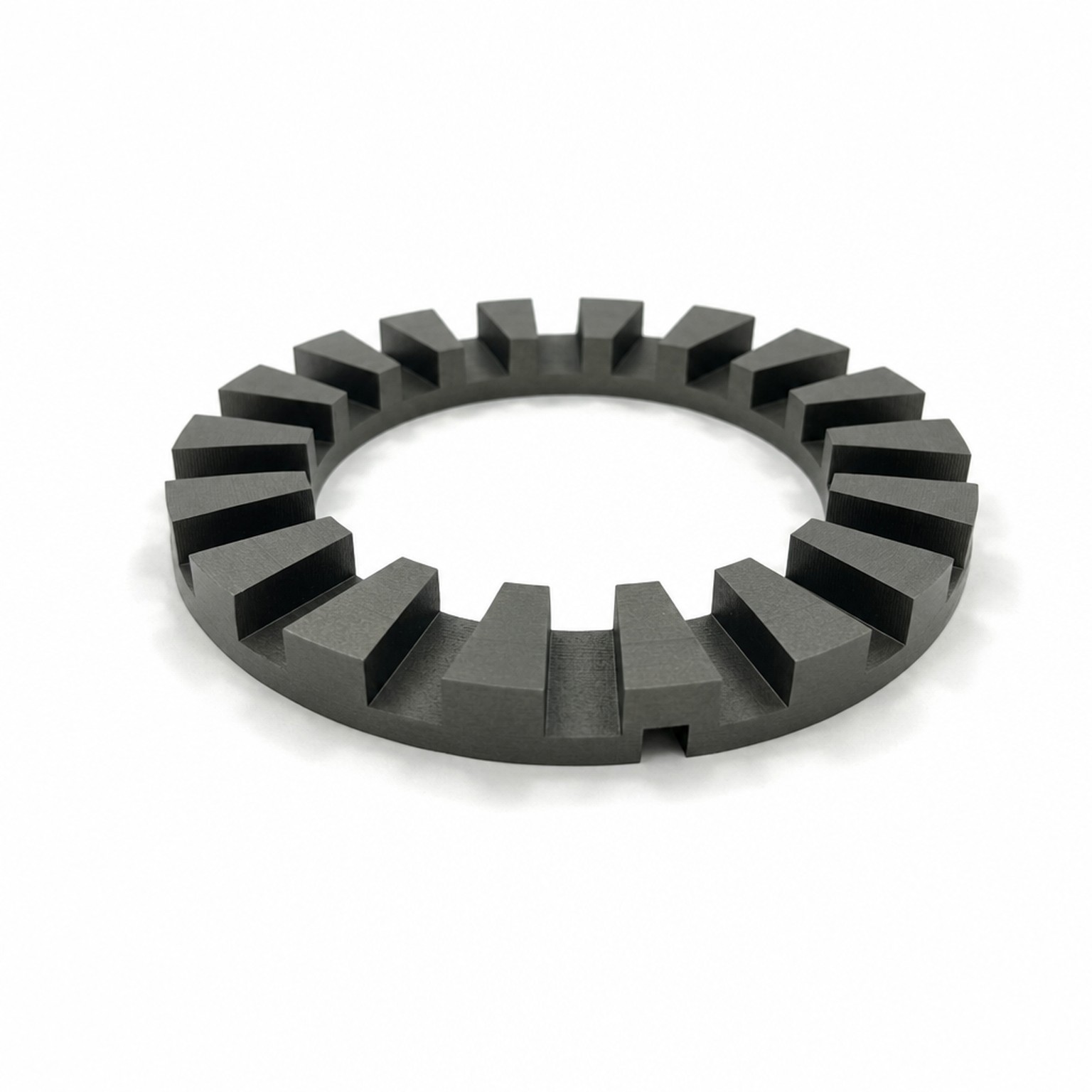
Custom tape-wound axial flux motor/generator stator cores engineered specifically for direct-drive permanent magnet generators (AFPMG), small wind turbines, micro-hydro power generators, and hybrid range extenders. Continuously wound from genuine Shougang/Baosteel electrical silicon steel strip (0.10mm to 0.35mm) with 36 precision laser-slotted radial teeth, delivering ultra-low cogging torque for low start-up cut-in speeds, over 96% energy conversion efficiency, high packing stacking factor (>=97%), and tooling-free rapid prototyping in 3-5 days.
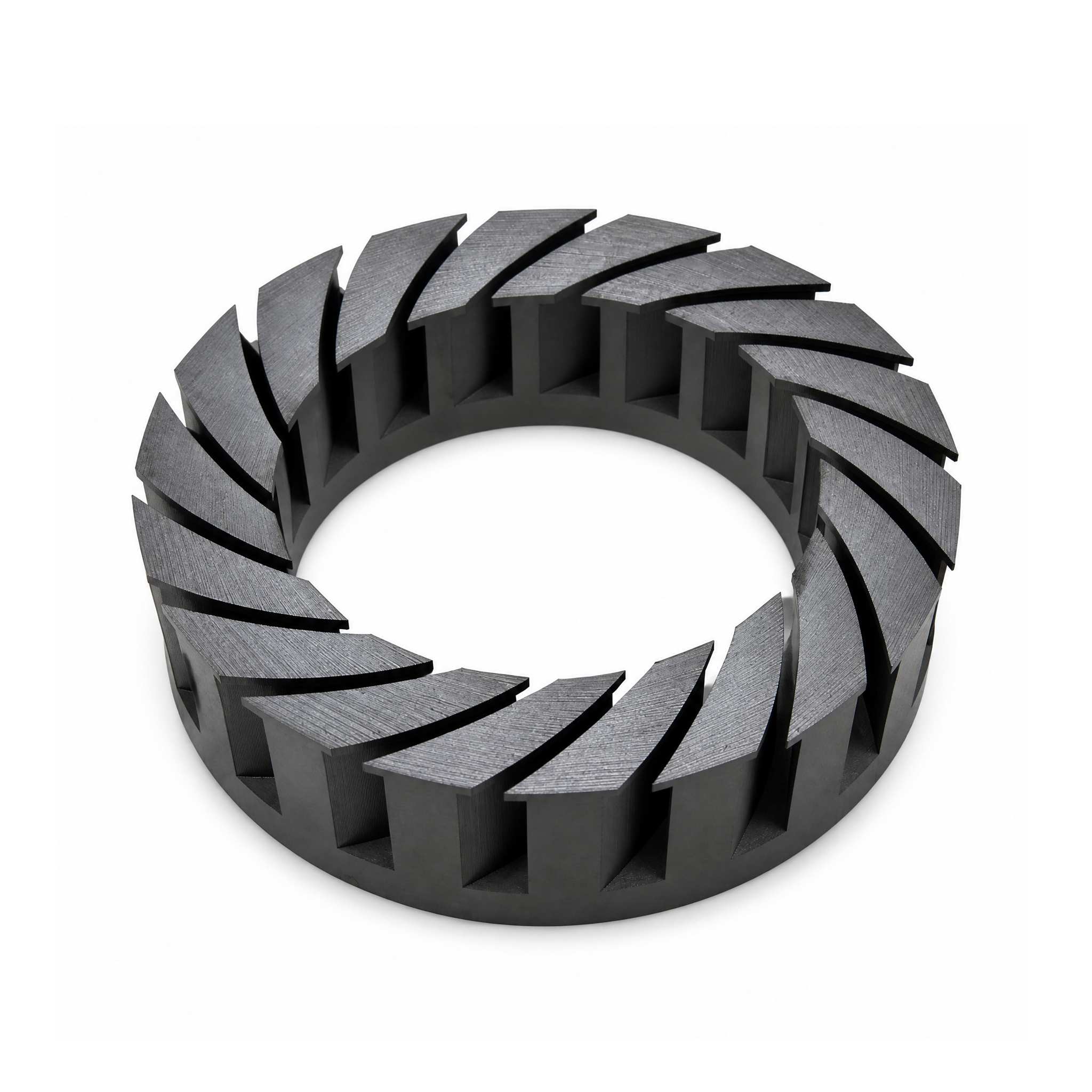
Custom tape-wound axial flux motor/generator stator cores engineered specifically for direct-drive permanent magnet generators (AFPMG), small wind turbines, micro-hydro power generators, and hybrid range extenders. Continuously wound from genuine Shougang/Baosteel electrical silicon steel strip (0.10mm to 0.35mm) with 36 precision laser-slotted radial teeth, delivering ultra-low cogging torque for low start-up cut-in speeds, over 96% energy conversion efficiency, high packing stacking factor (>=97%), and tooling-free rapid prototyping in 3-5 days.
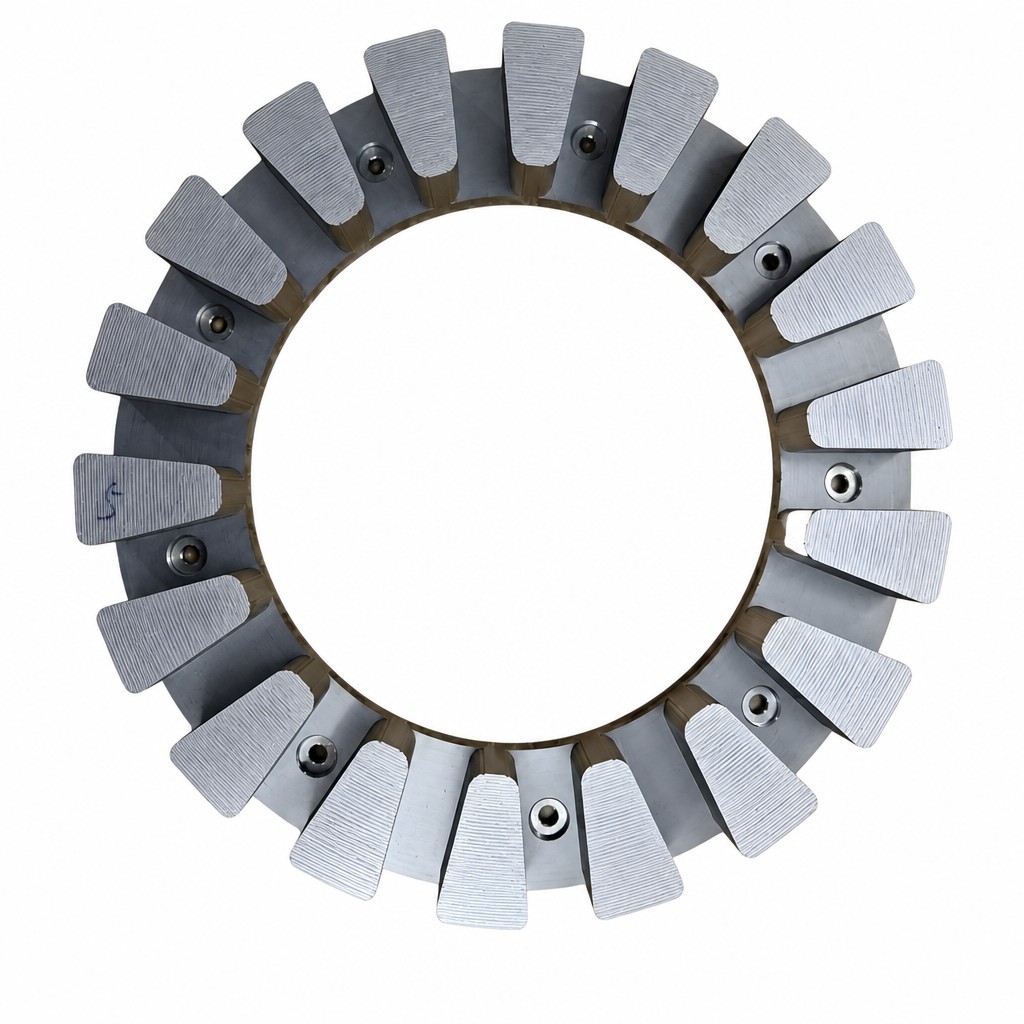
Custom tape-wound axial flux motor/generator stator cores engineered specifically for direct-drive permanent magnet generators (AFPMG), small wind turbines, micro-hydro power generators, and hybrid range extenders. Continuously wound from genuine Shougang/Baosteel electrical silicon steel strip (0.10mm to 0.35mm) with 36 precision laser-slotted radial teeth, delivering ultra-low cogging torque for low start-up cut-in speeds, over 96% energy conversion efficiency, high packing stacking factor (>=97%), and tooling-free rapid prototyping in 3-5 days.
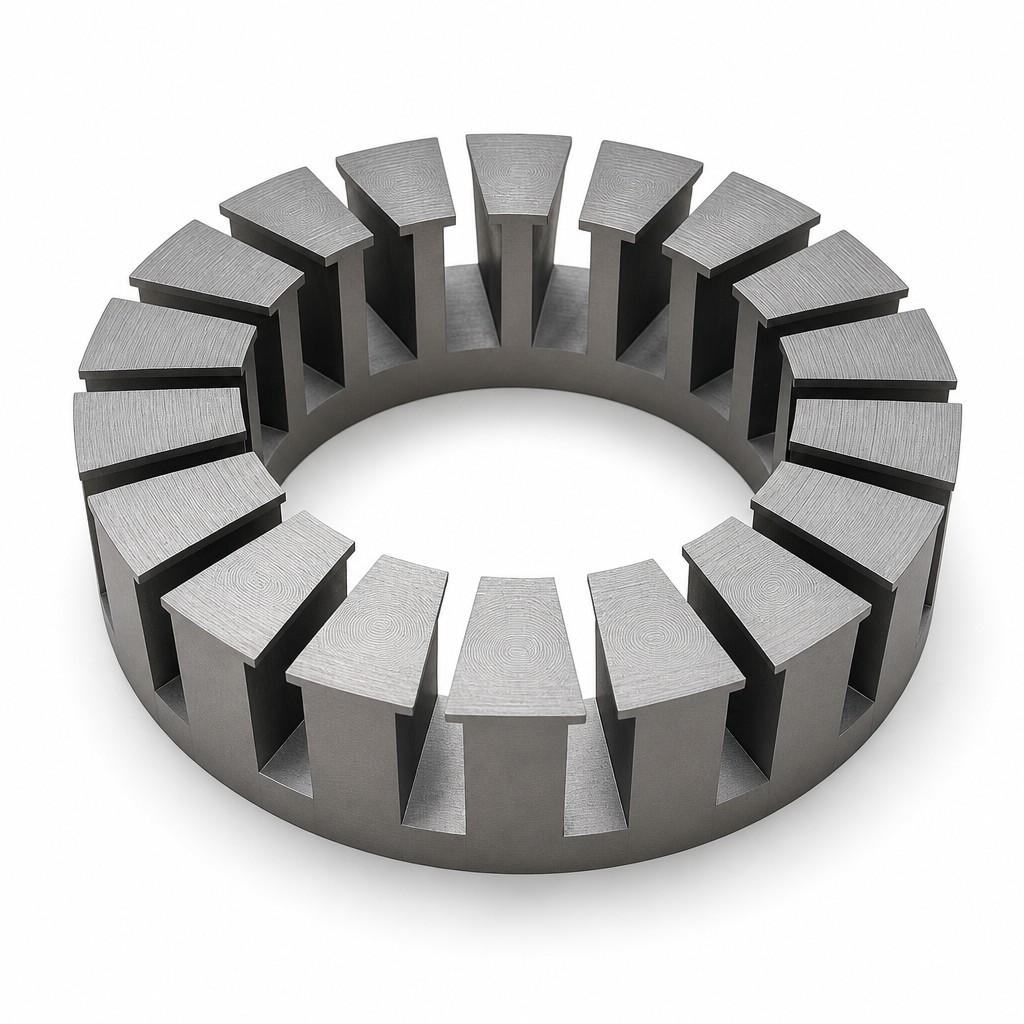
Custom tape-wound axial flux motor/generator stator cores engineered specifically for direct-drive permanent magnet generators (AFPMG), small wind turbines, micro-hydro power generators, and hybrid range extenders. Continuously wound from genuine Shougang/Baosteel electrical silicon steel strip (0.10mm to 0.35mm) with 36 precision laser-slotted radial teeth, delivering ultra-low cogging torque for low start-up cut-in speeds, over 96% energy conversion efficiency, high packing stacking factor (>=97%), and tooling-free rapid prototyping in 3-5 days.
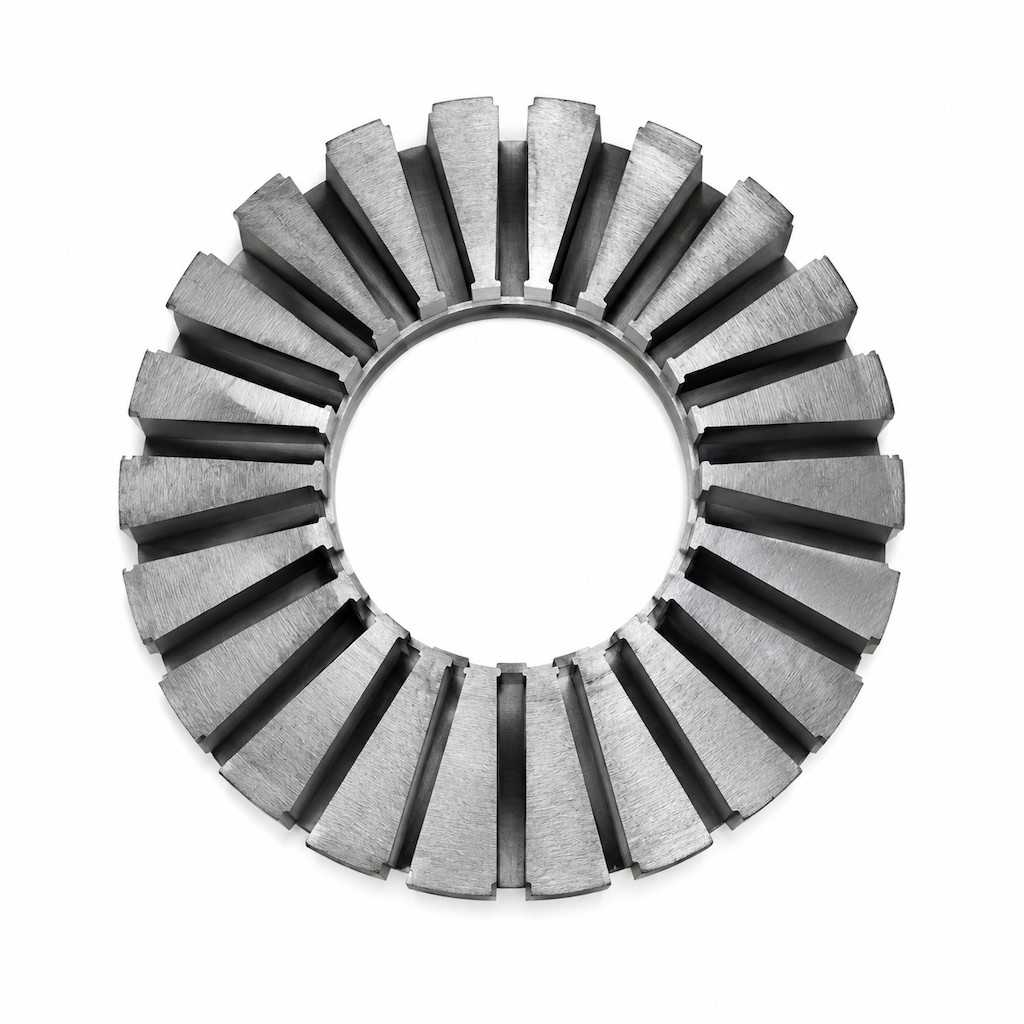
Custom tape-wound axial flux motor/generator stator cores engineered specifically for direct-drive permanent magnet generators (AFPMG), small wind turbines, micro-hydro power generators, and hybrid range extenders. Continuously wound from genuine Shougang/Baosteel electrical silicon steel strip (0.10mm to 0.35mm) with 36 precision laser-slotted radial teeth, delivering ultra-low cogging torque for low start-up cut-in speeds, over 96% energy conversion efficiency, high packing stacking factor (>=97%), and tooling-free rapid prototyping in 3-5 days.

Address : Room 201, West Building A, Dawei Logistics, Xihai Industrial Zone, Lecong Town, Shunde District, Foshan City
You may unsubscribe at any moment. For that purpose, please find our contact info in the legal notice.


We will contact you as soon as possible
Hi! Click one of our members below to chat on








 IPv6 network supported