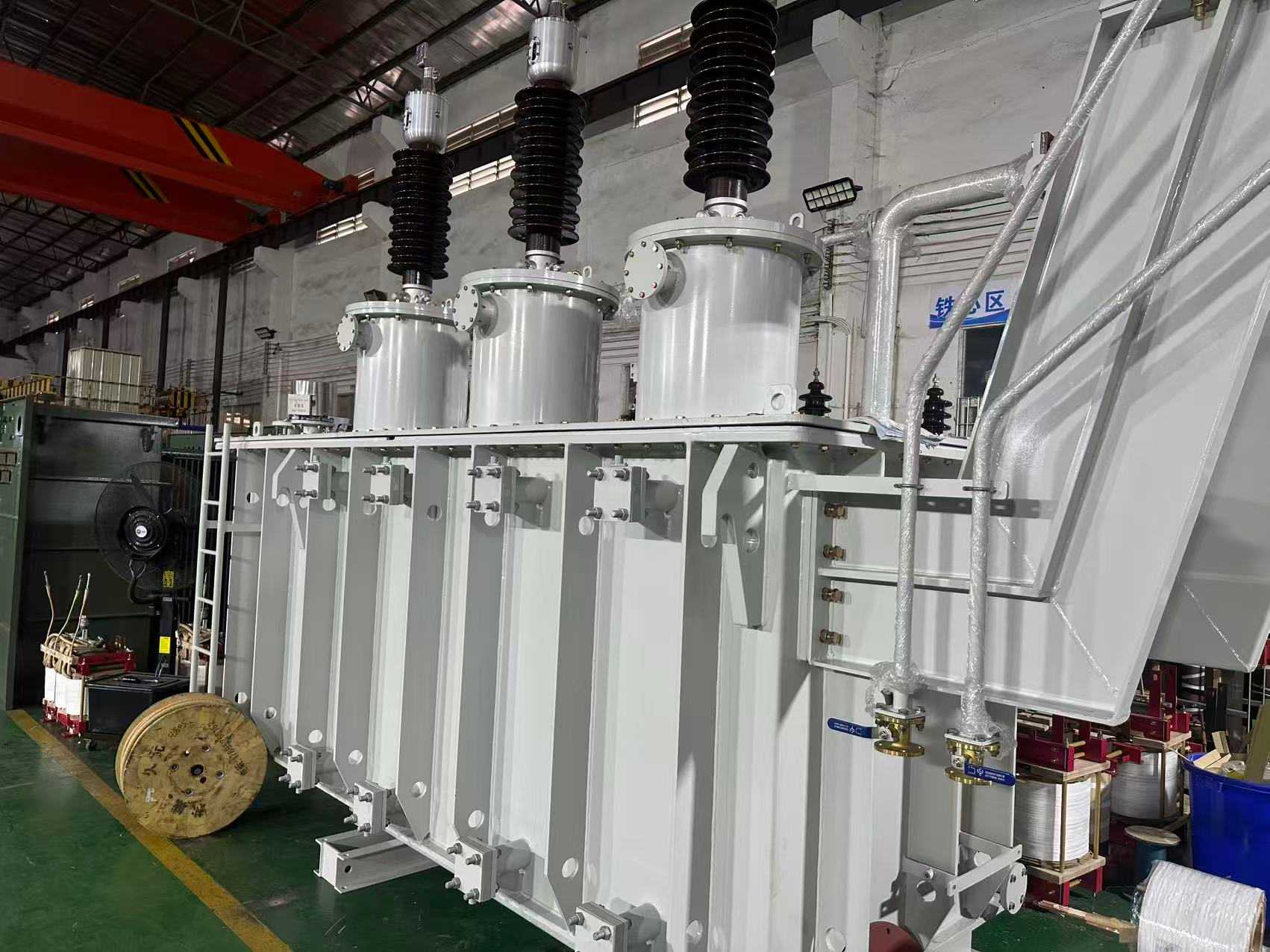
 Selection between Oil-Immersed Transformers and Dry-type transformers:Advantages and disadvantages of each
May 22, 2026
Advantages and disadvantages of Oil-Immersed Transformers:*Advantages:
Strong heat dissipation and overload capacity: The insulating oil has extremely high heat dissipation efficiency, can withstand short-term overloads, and is suitable for applications with large load fluctuations.
Large capacity and high voltage level: Mature technology allows for the manufacture of transformers with extremely large capacity and extremely high voltage levels, making it the core of power transmission and transformation systems.
Good insulation performance: The oil dielectric has high insulation strength, effectively protecting the internal windings.
Lower initial cost: For the same capacity, its manufacturing and purchase costs are generally lower than those of dry-type transformers.
Low operating noise: The oil dampens the vibration of the core and windings, resulting in relatively quiet operation.
*Disadvantages:
Fire Risk: Insulating oil is flammable and may cause fires or even explosions in the event of a malfunction, requiring extremely high fire safety standards.
Complex Maintenance: Requires regular monitoring of oil level, temperature, and quality (e.g., water content, acidity), and professional maintenance such as oil filtration and replenishment.
Leakage Risk: Aging seals may lead to oil leaks, polluting the environment and requiring remediation.
High Installation Requirements: Typically requires a separate distribution room or outdoor platform, and an emergency oil tank.
Environmental Issues: Waste insulating oil is hazardous waste and requires professional recycling and disposal.
Advantages and disadvantages of Dry-type transformers:
*Advantages:
Safe and Fireproof: Contains no flammable liquids, especially the epoxy resin cast type which is flame-retardant and explosion-proof, allowing direct installation at load centers (e.g., indoors, within buildings).
Maintenance-Free and Easy Installation: Requires no oil level or quality monitoring, essentially maintenance-free; simple structure and easy installation.
Environmentally Friendly and Clean: No risk of oil leaks, no toxic gases, environmentally friendly.
Good Overload Capacity (New Models): Modern design with improved heat dissipation significantly enhances overload capacity.
High Adaptability: Excellent moisture resistance, suitable for harsh environments such as humid and dusty conditions (requires appropriate protection level).
*Disadvantages:
Lower heat dissipation efficiency: Relying on air cooling, its heat dissipation capacity is inferior to oil cooling, and its overload capacity is still inferior to Oil-Immersed Transformers transformers of the same capacity.
Limited capacity and voltage: Due to limitations in heat dissipation and insulation materials, the capacity and voltage rating of a single unit are usually lower than those of Oil-Immersed Transformers transformers.
Higher initial cost: For the same capacity, the price is usually higher than that of Oil-Immersed Transformers transformers.
Higher operating noise: Vibrations of the core and windings are directly transmitted through the air, resulting in relatively high noise levels.
Sensitive to the operating environment: Open-ventilated (non-enclosed) types are susceptible to dust and moisture, requiring the environment to be kept clean.
In summary:
The key to choosing a substation lies in balancing safety, cost, and the environment. For outdoor or stand-alone substations prioritizing large capacity, low cost, and high efficiency, choose Oil-Immersed Transformers; for indoor or densely populated locations prioritizing high safety, maintenance-free operation, and environmental friendliness, choose dry-type substations.
Read More

 en
en fr
fr es
es



 IPv6 network supported