内页banner
Search
Home

Search

  • Why Pursue "Ultra-thin" Silicon Steel? Why Pursue "Ultra-thin" Silicon Steel?
    Nov 20, 2025
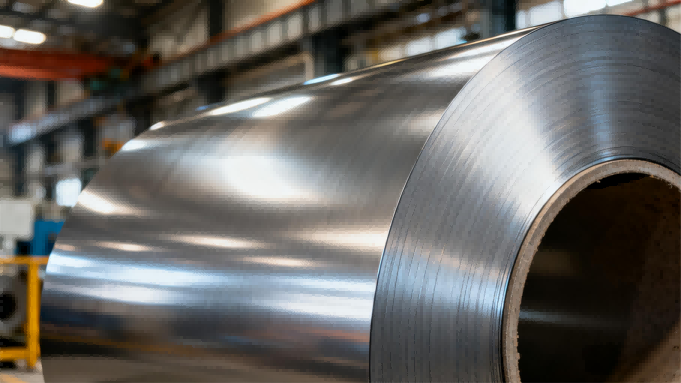
    The pursuit of "ultra-thin" silicon steel is driven by the core objective of achieving higher energy efficiency, meeting the demands of high-frequency applications, and promoting the miniaturization and lightweighting of equipment.   The fundamental advantage of the "ultra-thin silicon steel" design lies in the principles of physics. In an alternating magnetic field, eddy currents are generated inside the silicon steel sheet, causing energy to be lost as heat (eddy current loss). Thinner silicon steel sheets confine eddy currents to a narrower vertical cross-section, effectively increasing the resistance of the eddy current path and thus suppressing eddy current loss. Therefore, the higher the operating frequency, the thinner the silicon steel sheet needs to be.     However, the pursuit of "ultra-thin silicon steel" also comes with enormous technological challenges. Reducing thickness means an exponential increase in the demands of process control, especially in rolling and annealing, where even the slightest deviation can lead to strip breakage. Simultaneously, as the silicon content increases (aimed at improving resistivity and optimizing magnetic properties), the material's brittleness increases significantly, making the rolling and processing of ultra-thin products extremely difficult.     The development of "ultra-thin silicon steel" is driven by clear high-end application demands. For example, the new energy vehicle industry pursues high-speed electric drive systems (such as BYD's 30,000 RPM motor). High speed means high frequency, requiring the use of silicon steel sheets as thin as 0.20mm or even thinner to control iron losses, while simultaneously achieving motor miniaturization and weight reduction. In fields such as high-end medical equipment and eVTOL low-altitude aircraft, the extreme requirements for motor size, weight, and response speed are also driving the development of ultra-thin silicon steel technology at 0.15mm, 0.10mm, and even 0.04mm.     Shunge Steel's ultra-thin non-oriented silicon steel, with its superior magnetic properties, has become an ideal material choice for many high-end manufacturing fields. It features low iron loss, high magnetic permeability, and stable magnetic properties, significantly improving energy conversion efficiency. Shunge Steel closely monitors the technological frontiers and development trends of ultra-thin silicon steel, and is committed to providing customers with advanced material solutions.  
    Read More
  • Why pursue ultra-thin non-oriented silicon steel?What are the key advantages of this design? Why pursue ultra-thin non-oriented silicon steel?What are the key advantages of this design?
    Nov 14, 2025
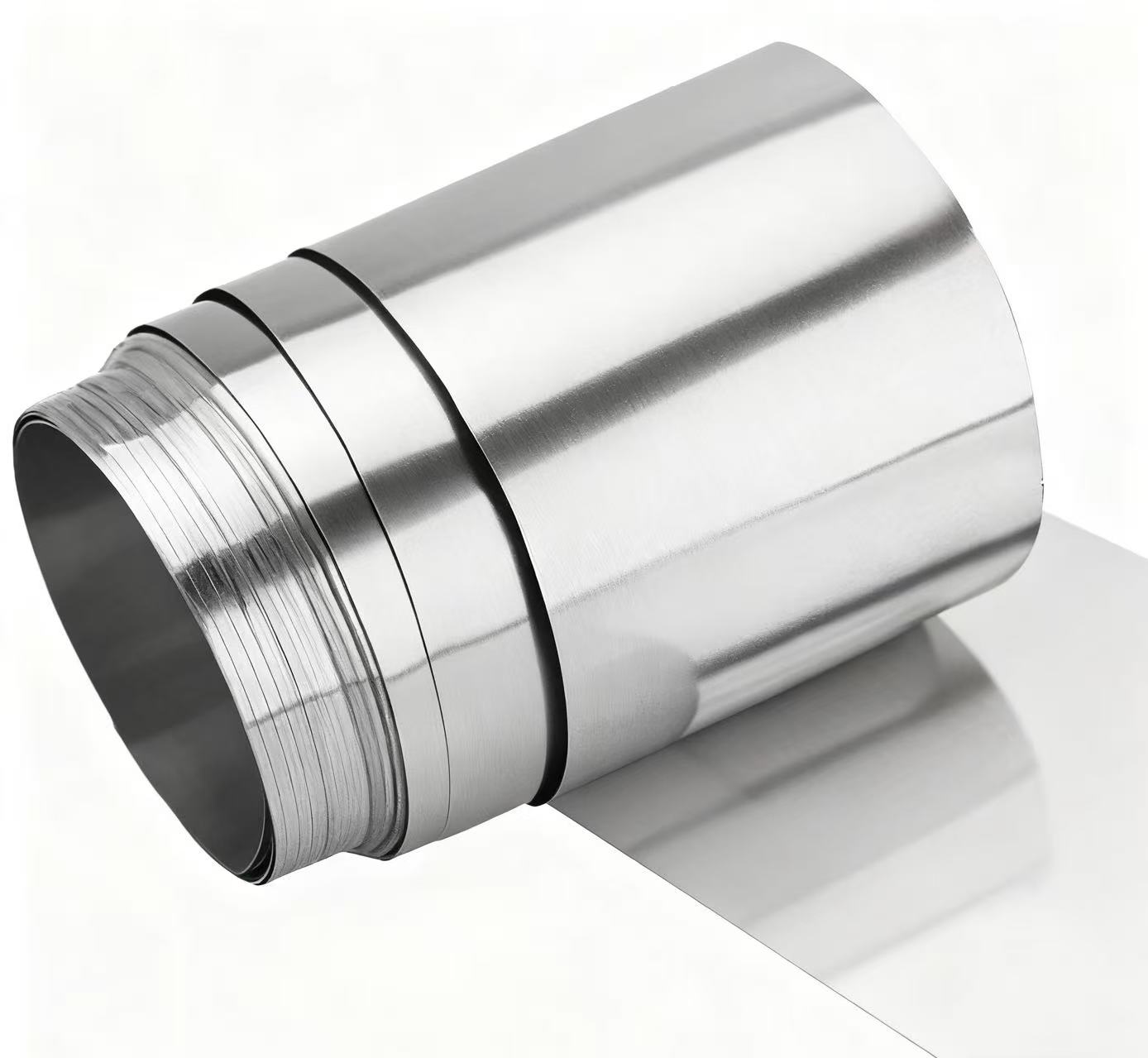
    The pursuit of ultra-thin non-oriented silicon steel (0.1-0.2mm) aims to significantly reduce energy loss (especially eddy current loss) in motor cores during high-frequency, high-speed operation, thereby improving motor efficiency and performance. This is crucial for fields with extremely high requirements for energy efficiency and power density, such as new energy vehicles, high-end industrial motors, drones, and humanoid robots. 0.2mm thickness: Compared to traditional 0.30mm silicon steel, iron loss can be reduced by 30%-40%; it helps to achieve motor miniaturization and high efficiency, with an average operating efficiency of up to 92%. 0.2mm ultra-thin non-oriented silicon steel has become the mainstream choice for drive motors in many new energy vehicles. 0.15mm thickness: High-frequency iron loss is further improved by more than 10%; it is more suitable for high-speed, low-vibration, and high-efficiency high-end application scenarios, and is generally used in high-end new energy vehicle drive motors, drones, and industrial motors with higher requirements. 0.1mm thickness: Iron loss value exceeds 9W/kg (typical value 8.5W/kg), the highest magnetic performance globally; supports ultra-high motor speeds up to 31,000rpm, generally used in humanoid robots, low-altitude aircraft, top-of-the-line new energy vehicles, and other fields with extreme performance requirements. Why does ultra-thinness reduce losses? This is mainly related to the generation principle of eddy current losses. When the motor core is in a rapidly changing alternating magnetic field, eddy currents are induced inside, generating heat and causing energy loss, i.e., eddy current losses. The magnitude of eddy current losses is proportional to the square of the thickness of the silicon steel sheet. Therefore, making the silicon steel sheet thinner can greatly restrict the flow of eddy currents in each narrow path, increase the loop resistance, and thus effectively reduce the overall eddy current intensity. The pursuit of ultra-thin silicon steel sheets is essentially an inevitable requirement for the development of modern motor technology towards high frequency, high speed, and high power density. It lays the material foundation for improving the efficiency of the entire energy conversion system by directly reducing core iron losses. So, is it difficult to purchase high-quality, low-cost ultra-thin silicon steel? Don't worry! Shunge Steel now offers a series of ultra-thin, non-oriented silicon steel produced , used in the production of motors for humanoid robots, high-end new energy vehicles, and eVTOL aircraft! Welcome to learn more!
    Read More

  • Why choose ultra-thin non-oriented electrical steel? Why choose ultra-thin non-oriented electrical steel?

    Nov 05, 2025
    Today, with increasingly strict energy efficiency standards for motors and transformers, ultra-thin non-oriented electrical steel is becoming a key material for enhancing the performance of electromagnetic equipment. So, why are more and more engineers choosing this material? Significantly reduce core loss The greatest advantage of ultra-thin non-oriented electrical steel lies in its outstanding energy-saving capacity. As the thickness decreases (typically 0.10mm-0.25mm), the eddy current loss of the material in an alternating magnetic field significantly reduces. Especially in medium and high-frequency application scenarios, the iron loss can be reduced by 30% to 50%, which is crucial for improving the efficiency of the motor.   Enhance the efficiency and power density of motors Modern motor design pursues higher power density and energy efficiency grades. Ultra-thin non-oriented electrical steel, with its excellent magnetic permeability and low loss characteristics, enables motors to achieve a smaller volume while maintaining the same output power, meeting the requirements of compact design.   Optimize high-frequency performance With the development of power electronics technology, the driving frequency of motors is constantly increasing. Traditional silicon steel experiences a sharp increase in loss at high frequencies, while ultra-thin non-oriented electrical steel is specifically optimized for high-frequency applications and can maintain stable magnetic properties within the frequency range of 400Hz to 2000Hz.   Adapt to the demands of intelligent manufacturing Ultra-thin non-oriented electrical steel features excellent stamping performance and surface quality, making it suitable for high-speed automated production. Its consistent material properties ensure the stability of motor performance in mass production, providing a reliable material basis for intelligent manufacturing.   Conclusion Choosing ultra-thin non-oriented electrical steel is not merely about selecting a material; it is about choosing higher energy efficiency standards, more compact design solutions, and superior high-frequency performance. With the continuous improvement of energy-saving requirements, this material is bound to become the mainstream choice in the motor industry.
    Read More

Need Help? leave a message

leave a message

We will contact you as soon as possible

Submit

home

products

whatsApp

contact

Need Help? Chat with us

Start a Conversation

Hi! Click one of our members below to chat on